Distributed ledger multiple servers in data center
1344×768 · AVIF · CC BY 4.0

Distributed ledger in a data center with multiple servers at dusk, captured by drone. Image symbolizing blockchain's decentralized infrastructure.
About this subject
The concept of a distributed ledger, popularized by blockchain, represents an advancement in how data is stored and validated. Unlike centralized databases where a single entity controls information, distributed ledgers replicate data across multiple servers, ensuring transparency and security. This technology underpins cryptocurrencies like Bitcoin and Ethereum, but also finds applications in supply chains, electronic voting, and smart contracts.
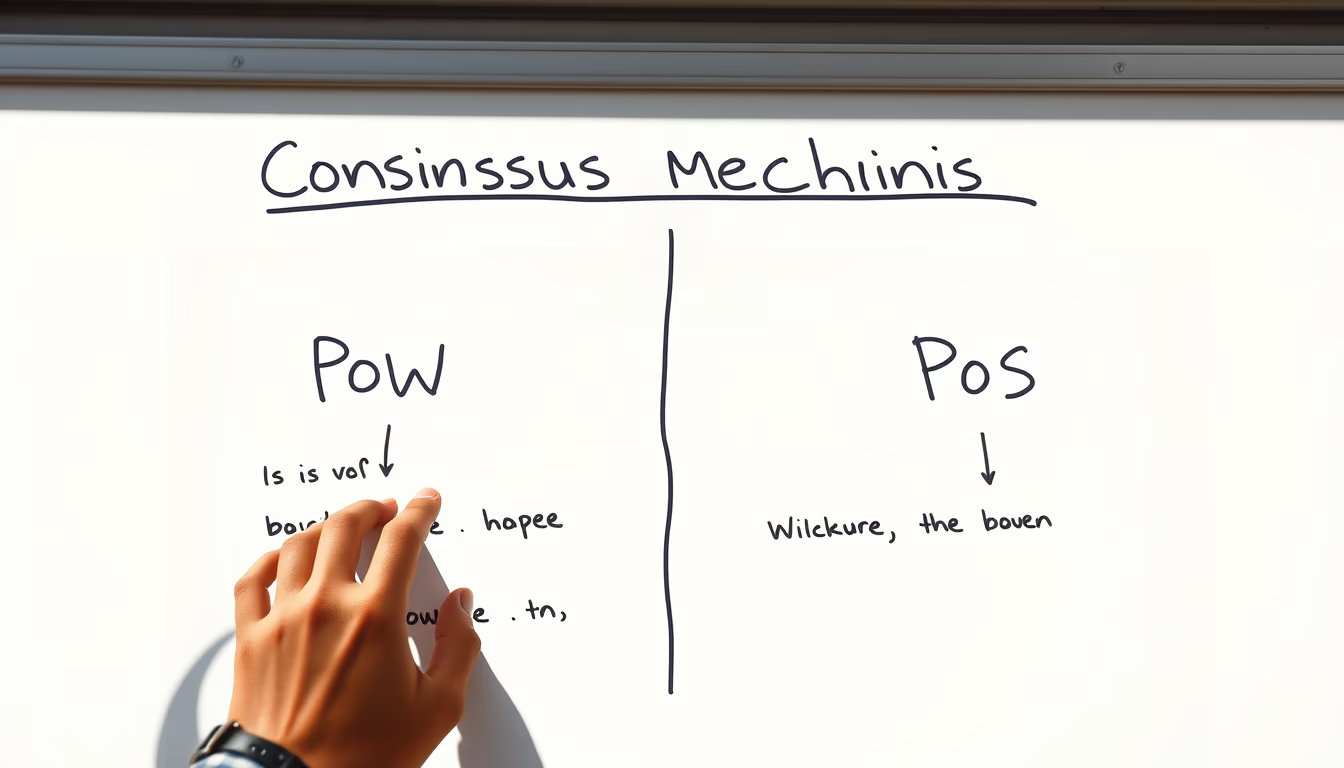
In data centers, implementing distributed ledgers requires robust infrastructure. Servers in different locations must constantly communicate to maintain consensus, using algorithms like Proof of Work (PoW) or Proof of Stake (PoS). The drone-captured image at dusk shows the scale of these facilities, with thousands of servers operating 24/7, consuming significant energy. It is estimated that the Bitcoin network annually consumes more electricity than some countries, such as Argentina.
The twilight hour, known as blue hour, gives the scene a technological and futuristic aesthetic. For data center operators, constant monitoring is crucial. Anomalies detected by AI systems can indicate hardware failures or cyberattacks, requiring rapid responses to maintain ledger integrity. Decentralization, while increasing security, also introduces latency and synchronization challenges, especially in global networks.
Frequently Asked Questions
What is a distributed ledger?
It is a database that replicates and synchronizes data across multiple servers without a central authority. Each participant maintains an updated copy, ensuring transparency and security.
How does consensus work in a distributed ledger?
Algorithms like Proof of Work (PoW) or Proof of Stake (PoS) allow servers to agree on the ledger's state. In PoW, miners solve mathematical problems to validate transactions.
Why do data centers consume so much energy for blockchain?
Maintaining consensus, especially with PoW, requires high computational power. Thousands of servers running continuously consume electricity comparable to entire countries.
Direct URL
https://pub-c7d6a6ea828543ac903a74a341ccb2e1.r2.dev/imagens/distributed-ledger-multiple-servers-in-data-center-aerial-drone-shot-twilight-blue-hour.avifHow to credit
Include a visible link back to UtilizAí. Copy one of the snippets below:
<a href="https://xn--utiliza-eza.com/en/midia/imagens/distributed-ledger-multiple-servers-in-data-center-aerial-drone-shot-twilight-blue-hour">Distributed ledger multiple servers in data center</a> by <a href="https://xn--utiliza-eza.com">UtilizAí</a>, licensed under <a href="https://creativecommons.org/licenses/by/4.0/">CC BY 4.0</a>.
[Distributed ledger multiple servers in data center](https://xn--utiliza-eza.com/en/midia/imagens/distributed-ledger-multiple-servers-in-data-center-aerial-drone-shot-twilight-blue-hour) by [UtilizAí](https://xn--utiliza-eza.com), CC BY 4.0
License: CC-BY-4.0
Tags
Related images
 Smart contract code on monitor with solidity syntax highlighted
 Consensus mechanism diagram on whiteboard showing PoW vs PoS
 Distributed ledger multiple servers in data center
 Hash function visualization cryptographic equations on glass screen
 Hash function visualization cryptographic equations on glass screen
 Hash function visualization cryptographic equations on glass screen