Dead vlei namibia trees
1344×768 · AVIF · CC BY 4.0
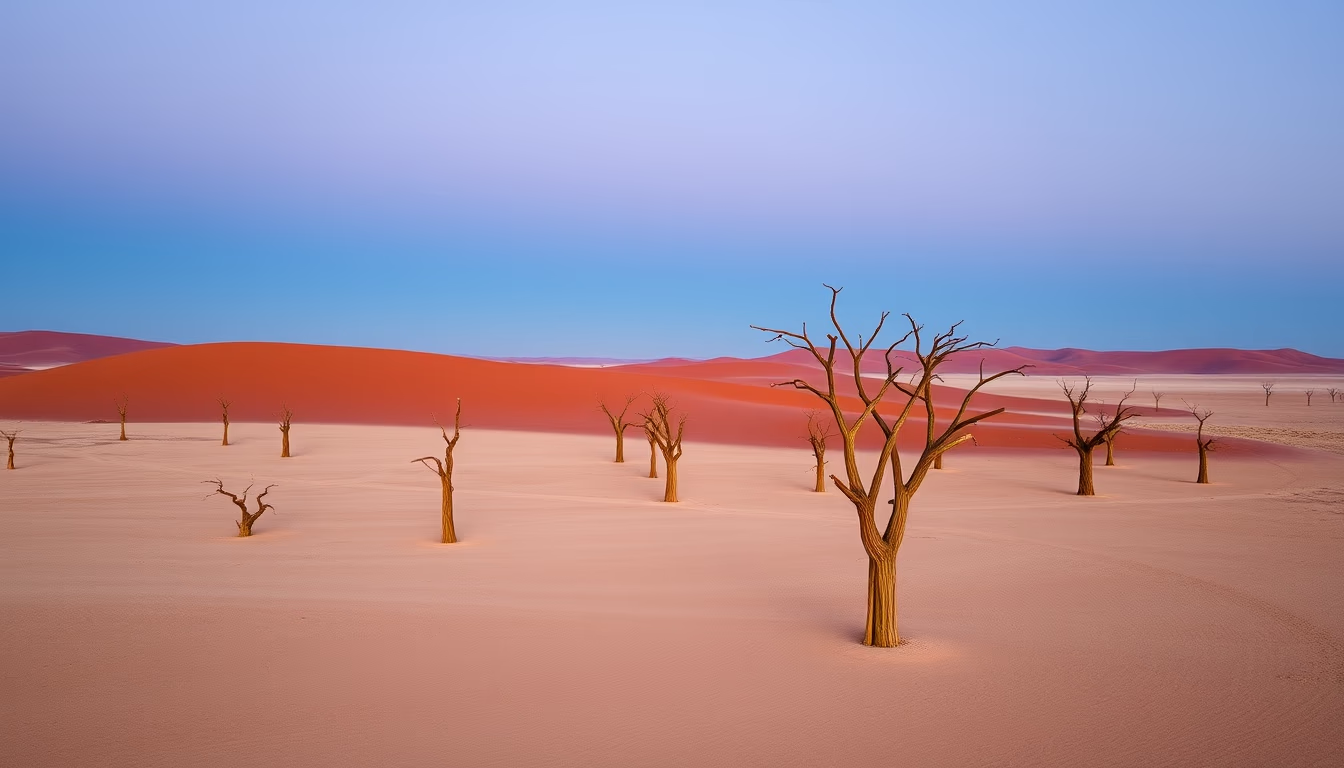
The dead trees of Deadvlei in Namibia are one of the most photographed scenes in the Kalahari Desert, with camel thorn skeletons dating back 600 to 900 years.
About this subject
Deadvlei is a white clay pan located near the famous Sossusvlei in the Namib-Naukluft National Park, Namibia. The name means "dead marsh" in Afrikaans. Surrounded by towering red sand dunes, the pan was formed when the Tsauchab River flooded and created a small marsh, allowing camel thorn trees (Vachellia erioloba) to grow. About 600 to 900 years ago, dunes encroached, blocking water flow and killing the trees due to drought. The extreme aridity prevented decomposition, preserving the blackened, cracked trunks that contrast starkly with the white clay and blue sky. These dead trees can be up to 900 years old, preserved by the hypersaline environment. Deadvlei is an iconic tourist destination, often likened to a lunar landscape. Unlike Sossusvlei, which occasionally receives water, Deadvlei remains completely dry, with a hardened mud surface. The area is known for its red sand dunes, rich in iron oxide, reaching heights of 200 meters. Photographers from around the world visit, especially at sunrise and sunset, to capture the elongated shadows of the trees. The trunks' black color results from natural carbonization due to extreme solar radiation. Aerial drone shots reveal the precise geometry of the trees relative to the dunes, showcasing the desolate yet beautiful impression of the place.
Frequently Asked Questions
What caused the trees in Deadvlei to die?
The trees died about 600 to 900 years ago when the sand dunes advanced and blocked the flow of the Tsauchab River, preventing water from reaching the marsh. The lack of rainfall killed them, and the dry climate preserved the trunks.
What is the difference between Deadvlei and Sossusvlei?
Sossusvlei occasionally receives water during heavy rains, forming a temporary lake. Deadvlei, however, has been completely dry for centuries, with no water flow, resulting in a hard white clay surface.
Why are the trees in Deadvlei black?
The black color of the trunks is due to natural carbonization caused by intense solar radiation over centuries, without moisture that would allow decomposition or fungal growth.
Direct URL
https://pub-c7d6a6ea828543ac903a74a341ccb2e1.r2.dev/imagens/dead-vlei-namibia-trees-aerial-drone-shot-p5.avifHow to credit
Include a visible link back to UtilizAí. Copy one of the snippets below:
<a href="https://xn--utiliza-eza.com/en/midia/imagens/dead-vlei-namibia-trees-aerial-drone-shot-p5">Dead vlei namibia trees</a> by <a href="https://xn--utiliza-eza.com">UtilizAí</a>, licensed under <a href="https://creativecommons.org/licenses/by/4.0/">CC BY 4.0</a>.
[Dead vlei namibia trees](https://xn--utiliza-eza.com/en/midia/imagens/dead-vlei-namibia-trees-aerial-drone-shot-p5) by [UtilizAí](https://xn--utiliza-eza.com), CC BY 4.0
License: CC-BY-4.0