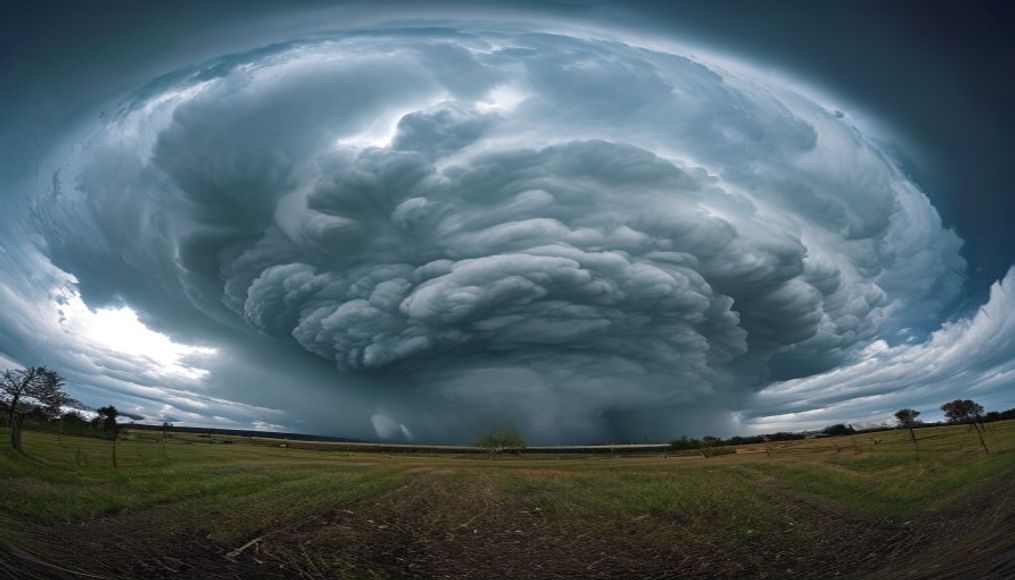
Cumulonimbus thunderhead
1344×768 · AVIF · CC BY 4.0

The cumulonimbus thunderhead, a towering storm cloud that dominates the sky with its anvil shape and meteorological power.
About this subject
Cumulonimbus clouds are the largest and most energetic storm clouds, extending from the low troposphere, at about 2 km altitude, up to the tropopause, exceeding 20 km in tropical regions. Their formation requires warm, moist air that rises rapidly in updrafts, cooling and condensing water vapor into droplets and ice crystals. The top often spreads into the characteristic anvil shape, caused by strong high-altitude winds flattening the cloud. These clouds produce the most intense weather phenomena: torrential rain, lightning and thunder, hail, microbursts, and even tornadoes. Meteorologically, a single cumulonimbus can release energy equivalent to dozens of atomic bombs in a short period. Globally, they are common in tropical and temperate regions during warm seasons, especially in the afternoon. For aviation, they pose severe hazards: turbulence, icing, wind shear, and reduced visibility. In art and culture, they evoke power and drama, often depicted in paintings and photos as symbols of nature's raw force. Their role in the water cycle and atmospheric energy transfer is crucial, as they pump moisture high into the atmosphere and help regulate Earth's climate.
Frequently Asked Questions
How does a cumulonimbus cloud form?
It forms when warm, moist air rises rapidly in updrafts, cooling and condensing vapor into droplets. Latent heat release accelerates the ascent, creating a massive vertical cloud.
What is the maximum height of a cumulonimbus?
At the top of the troposphere, between 12 km in mid-latitudes and up to 20 km in the tropics. The top can reach the stratosphere, flattening into an anvil shape.
What is the difference between cumulonimbus and nimbostratus?
Cumulonimbus is vertical, with thunderstorms and gusts, while nimbostratus is layered, producing steady light rain without lightning or hail.
Direct URL
https://pub-c7d6a6ea828543ac903a74a341ccb2e1.r2.dev/imagens/cumulonimbus-thunderhead-lo-fi-disposable-camera-p0.avifHow to credit
Include a visible link back to UtilizAí. Copy one of the snippets below:
<a href="https://xn--utiliza-eza.com/en/midia/imagens/cumulonimbus-thunderhead-lo-fi-disposable-camera-p0">Cumulonimbus thunderhead</a> by <a href="https://xn--utiliza-eza.com">UtilizAí</a>, licensed under <a href="https://creativecommons.org/licenses/by/4.0/">CC BY 4.0</a>.
[Cumulonimbus thunderhead](https://xn--utiliza-eza.com/en/midia/imagens/cumulonimbus-thunderhead-lo-fi-disposable-camera-p0) by [UtilizAí](https://xn--utiliza-eza.com), CC BY 4.0
License: CC-BY-4.0