Crampons mountaineering
1344×768 · AVIF · CC BY 4.0
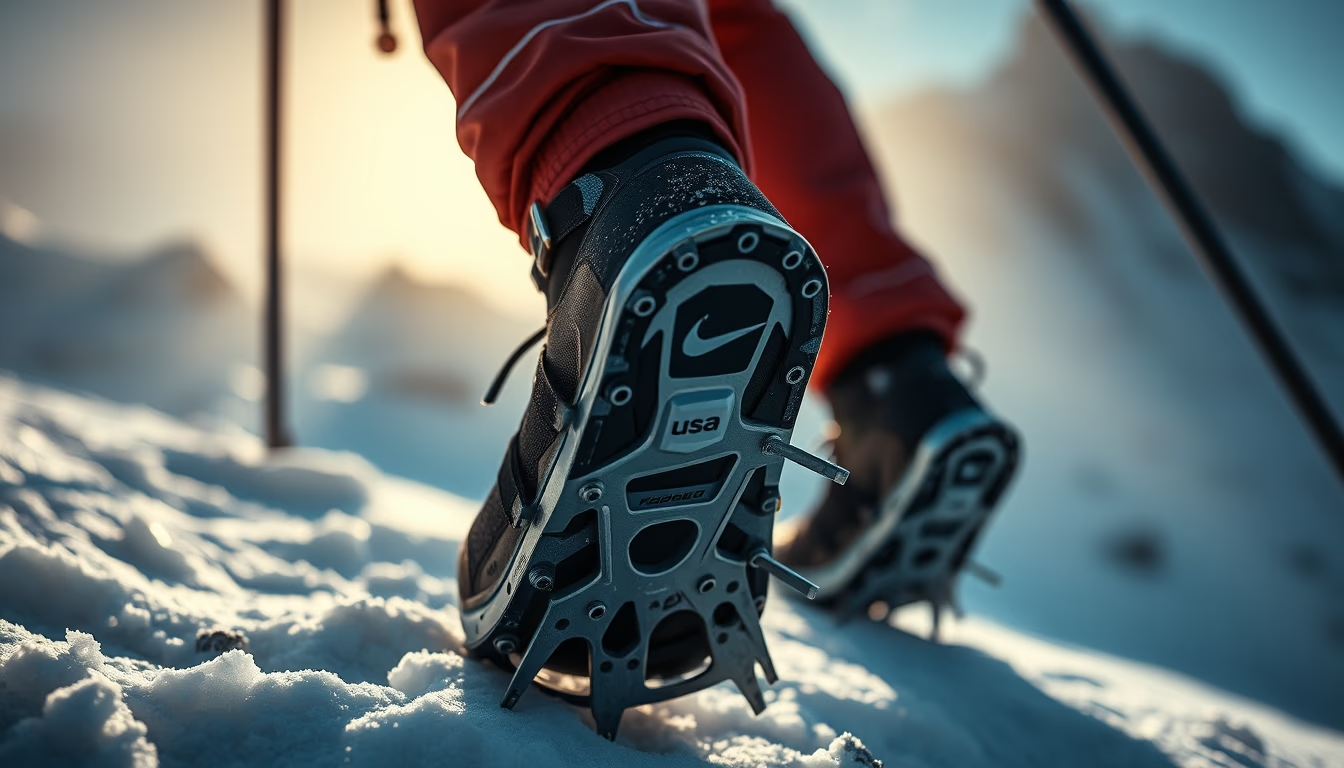
Crampons are traction devices for mountaineering boots, essential on snowy and icy terrain. Steel spikes provide grip on steep slopes and glaciers.
About this subject
Crampons are essential tools in mountaineering, particularly for glacier crossings and ascents of snow-capped peaks. Originally developed in the early 20th century by climbers like Oscar Eckenstein and later refined by companies such as Grivel and Charlet Moser, these devices evolved from simple iron bars with points to modern high-tech modular systems. Today's models use hardened steel for the spikes and aluminum alloys for the frame, providing lightness and strength.
There are different types of crampons, classified by attachment system and rigidity. Step-in crampons require boots with a specific welt, while strap-on models fit any boot. Hybrid systems combine both. The choice between rigid and flexible depends on the terrain: rigid crampons are ideal for vertical ice (front-pointing), while flexible ones offer more comfort on snow hikes. The number of points also varies: 10-point models are common for hiking, while 12 or more are used for ice climbing.
Technique is crucial for safe use. The climber must master foot placement to avoid tripping and distribute weight correctly. On compact snow, the French technique (flat-footing) is used with all points engaged; on steep ice, the German technique (front-pointing) uses only the two front points. Crampons are also vital for self-arrest in case of a fall on icy slopes, greatly increasing the chance of stopping a slide.
Proper maintenance prolongs crampon lifespan. It is important to keep spikes sharp and regularly check straps and buckles. Dry storage prevents rust. Although crampons are indispensable for experienced mountaineers, their use requires adequate training, as improper handling can lead to serious accidents. On less steep trails, microspikes (light traction) can safely substitute them.
Frequently Asked Questions
How do I choose the ideal crampon for my activity?
The choice depends on terrain and boot type. For snow hiking, flexible 10-point strap-on crampons suffice. For ice climbing, rigid 12+ point step-in crampons compatible with technical boots are preferred.
Can I use any mountaineering boot with crampons?
No. Step-in crampons require boots with a heel and/or toe welt. Strap-on crampons fit boots without welts but offer less stability. Check compatibility before purchasing.
Do I need training to use crampons?
Yes, improper use can cause tripping, boot damage, or accidents. It is recommended to learn basic techniques like flat-footing and front-pointing with an experienced instructor, as well as practicing self-arrest.
Direct URL
https://pub-c7d6a6ea828543ac903a74a341ccb2e1.r2.dev/imagens/crampons-mountaineering-fine-art-photography-fresh8.avifHow to credit
Include a visible link back to UtilizAí. Copy one of the snippets below:
<a href="https://xn--utiliza-eza.com/en/midia/imagens/crampons-mountaineering-fine-art-photography-fresh8">Crampons mountaineering</a> by <a href="https://xn--utiliza-eza.com">UtilizAí</a>, licensed under <a href="https://creativecommons.org/licenses/by/4.0/">CC BY 4.0</a>.
[Crampons mountaineering](https://xn--utiliza-eza.com/en/midia/imagens/crampons-mountaineering-fine-art-photography-fresh8) by [UtilizAí](https://xn--utiliza-eza.com), CC BY 4.0
License: CC-BY-4.0