Navio de carga cargo ocean
1344×768 · AVIF · CC BY 4.0
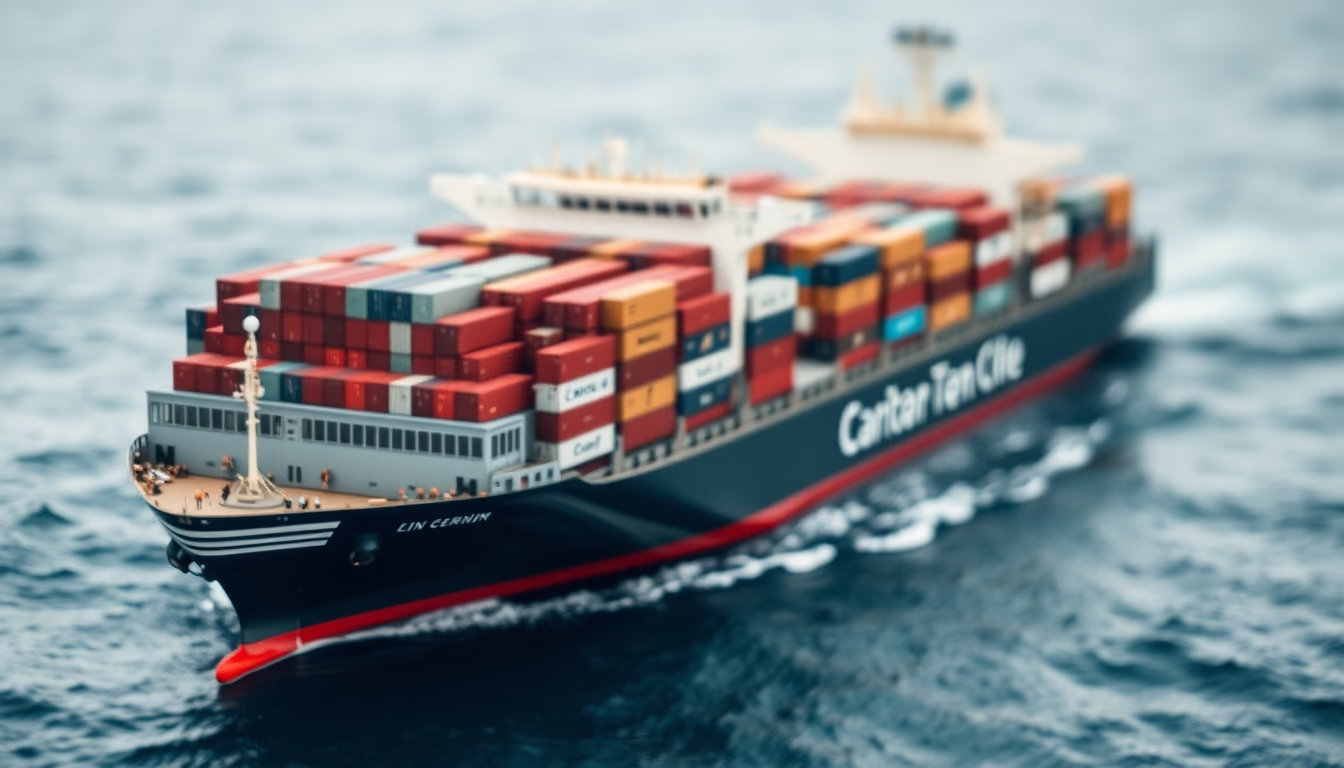
O navio de carga é a espinha dorsal do comércio global, transportando contêineres padronizados por oceanos e conectando continentes.
Sobre o tema
Os navios de carga, especialmente os porta-contêineres, são responsáveis por transportar cerca de 90% do volume do comércio mundial. Essas embarcações gigantescas, que podem ultrapassar 400 metros de comprimento (como os da classe Maersk Triple E), operam em rotas fixas entre os maiores portos do mundo, como Xangai, Singapura, Santos e Roterdã. A padronização dos contêineres de 20 ou 40 pés revolucionou a logística, permitindo que mercadorias sejam transferidas rapidamente entre navios, trens e caminhões.
A capacidade de um porta-contêineres é medida em TEUs (unidade equivalente a um contêiner de 20 pés). Os maiores navios atuais, da classe MSC Irina ou Evergreen A, ultrapassam 24 mil TEUs. Para suportar tamanho porte, exigem calados profundos e portos com infraestrutura adequada, como guindastes de pórtico e canais dragados. O efeito tilt-shift utilizado na imagem simula uma miniatura, mas essas máquinas são colossais: um único navio pode transportar até 200 mil toneladas de carga, equivalente a milhares de caminhões.
O setor enfrenta desafios ambientais significativos. A queima de óleo combustível pesado emite óxidos de enxofre, nitrogênio e CO2. Para mitigar, a Organização Marítima Internacional estabeleceu metas de redução de emissões, incentivando o uso de GNL, velocidades mais baixas e projetos de eficiência energética. O incidente do Ever Given no Canal de Suez em 2021 evidenciou a fragilidade da cadeia logística global: um único navio encalhado paralisou bilhões em comércio por dias.
Além dos gigantes oceânicos, há navios de cabotagem que fazem transporte costeiro, como no litoral brasileiro, onde o modal é crucial para escoar grãos do Centro-Oeste pelos portos de Santos e Paranaguá. A digitalização da navegação, com sistemas de roteamento otimizados e monitoramento por satélite, torna o transporte mais previsível e seguro.
Perguntas frequentes
Quanto tempo um navio de carga leva para cruzar o Oceano Atlântico?
Depende da rota e da velocidade. Um navio porta-contêineres fazendo a rota de Santos para Roterdã leva cerca de 12 a 15 dias, navegando a uma média de 20 a 25 nós (37 a 46 km/h).
Qual é o maior navio de contêineres do mundo atualmente?
Em 2024, o maior é o MSC Irina, com capacidade para 24.346 TEUs, seguido pelo Ever Alot (24.004 TEUs). Eles têm mais de 400 metros de comprimento e 60 metros de largura.
Como funciona a logística de contêineres para que as mercadorias cheguem ao destino final?
Os contêineres são carregados no porto de origem, transportados por navio até um porto hub, onde são transbordados para navios menores (alimentadores) ou para trens e caminhões. Rastreamento por sistemas como o ISO 6346 permite monitorar cada unidade em tempo real.
URL direta
https://pub-c7d6a6ea828543ac903a74a341ccb2e1.r2.dev/imagens/container-ship-cargo-ocean-tilt-shift-miniature-p0.avifComo creditar
Inclua um link visível de volta pro UtilizAí. Copie um dos snippets abaixo:
<a href="https://xn--utiliza-eza.com/midia/imagens/container-ship-cargo-ocean-tilt-shift-miniature-p0">Navio de carga cargo ocean</a> by <a href="https://xn--utiliza-eza.com">UtilizAí</a>, licensed under <a href="https://creativecommons.org/licenses/by/4.0/">CC BY 4.0</a>.
[Navio de carga cargo ocean](https://xn--utiliza-eza.com/midia/imagens/container-ship-cargo-ocean-tilt-shift-miniature-p0) by [UtilizAí](https://xn--utiliza-eza.com), CC BY 4.0
Licença: CC-BY-4.0