Chinese calligraphy brush stroke
1344×768 · AVIF · CC BY 4.0
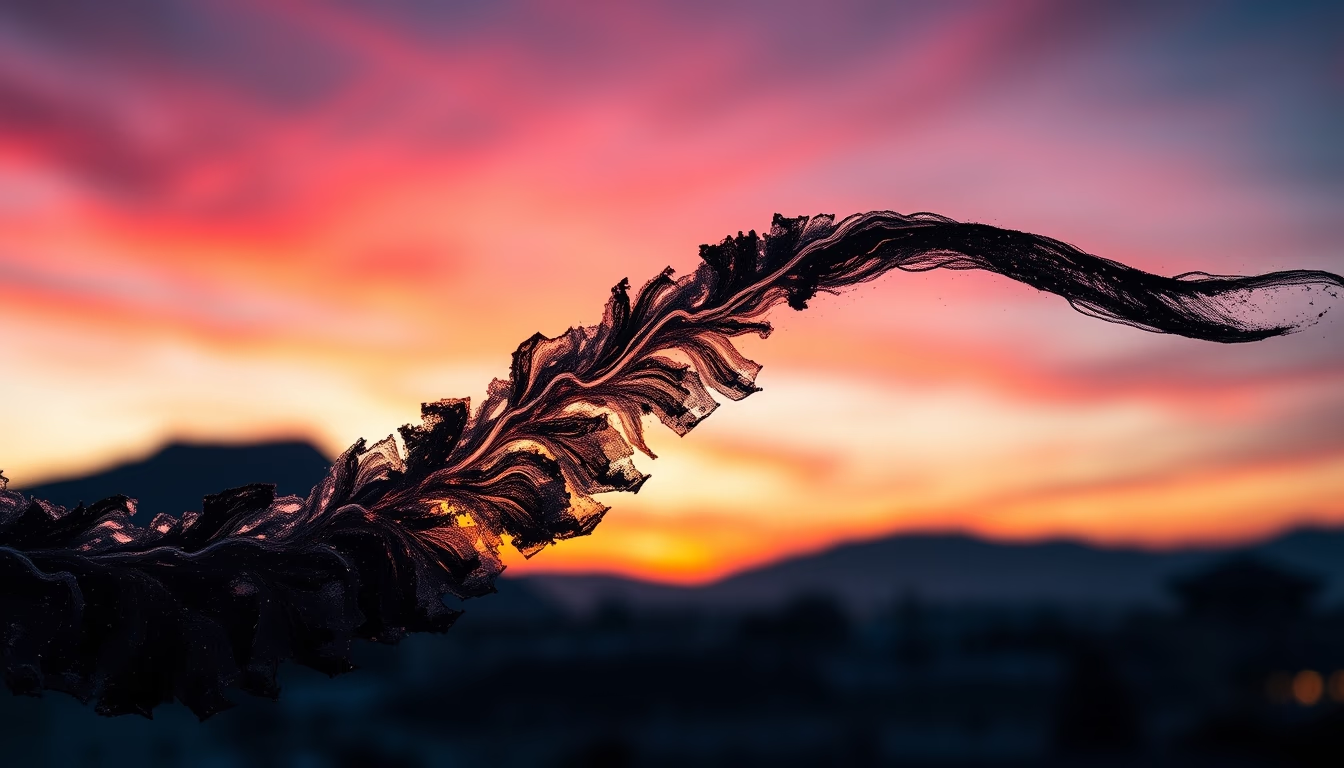
Chinese calligraphy brush strokes captured in long exposure reveal the millennia-old art's fluidity and precision.
About this subject
Chinese calligraphy, or shūfǎ (书法), is an art form that merges writing, aesthetics, and philosophy. Originating over 4,000 years ago, it evolved from primitive pictographs into established styles such as seal, cursive, and regular script. Each brushstroke carries intention: pressure, angle, and speed determine the thickness and dynamism of the line. In the image, a long exposure freezes the brush's movement, highlighting the continuity and energy (qì) that flows from the artist onto the rice paper.
Long exposure technique is rarely used to record live calligraphy, as it requires precise control of light and timing. In specialized studios, the photographer adjusts the camera to capture the entire path of the brush, transforming each character into a visual study of strength and grace. This approach reveals details imperceptible to the naked eye: acceleration through curves, pauses at corners, and ink splattering as micro-particles.
Culturally, Chinese calligraphy is regarded as one of the highest forms of artistic expression, alongside painting and poetry. Great masters such as Wang Xizhi (303, 361 AD) are venerated for works that balance tradition and innovation. Today, the practice remains alive in schools and academies, and modern exhibitions combine calligraphy with photography to explore new visual languages.
The tag “fresh18” suggests this image is part of a contemporary series that updates the classic theme. The soft lighting and dark background typical of long exposure create dramatic contrast, emphasizing the whiteness of the ink and the fluidity of the gesture, resulting in a work that dialogues between the ancient and the modern.
Frequently Asked Questions
What are the main styles of Chinese calligraphy?
The main styles are seal (zhuànshū), cursive (cǎoshū), regular (kǎishū), and running (xíngshū). Each differs in formality and fluidity, with regular being the most legible and cursive the most expressive and rapid.
How does long exposure affect the perception of calligraphy?
Long exposure captures the entire path of the brush, revealing the continuity and energy of the gesture, as well as details like pressure variations and ink splatters, which are not visible in a snapshot.
What materials are used in Chinese calligraphy?
The four treasures of the study are: brush (bǐ), ink (mò), rice paper (xuānzhǐ), and inkstone (yàn). The brush is typically made of animal hair, and ink is produced from soot sticks and water.
Direct URL
https://pub-c7d6a6ea828543ac903a74a341ccb2e1.r2.dev/imagens/chinese-calligraphy-brush-stroke-long-exposure-fresh18.avifHow to credit
Include a visible link back to UtilizAí. Copy one of the snippets below:
<a href="https://xn--utiliza-eza.com/en/midia/imagens/chinese-calligraphy-brush-stroke-long-exposure-fresh18">Chinese calligraphy brush stroke</a> by <a href="https://xn--utiliza-eza.com">UtilizAí</a>, licensed under <a href="https://creativecommons.org/licenses/by/4.0/">CC BY 4.0</a>.
[Chinese calligraphy brush stroke](https://xn--utiliza-eza.com/en/midia/imagens/chinese-calligraphy-brush-stroke-long-exposure-fresh18) by [UtilizAí](https://xn--utiliza-eza.com), CC BY 4.0
License: CC-BY-4.0