Chinese calligraphy brush stroke
1344×768 · AVIF · CC BY 4.0
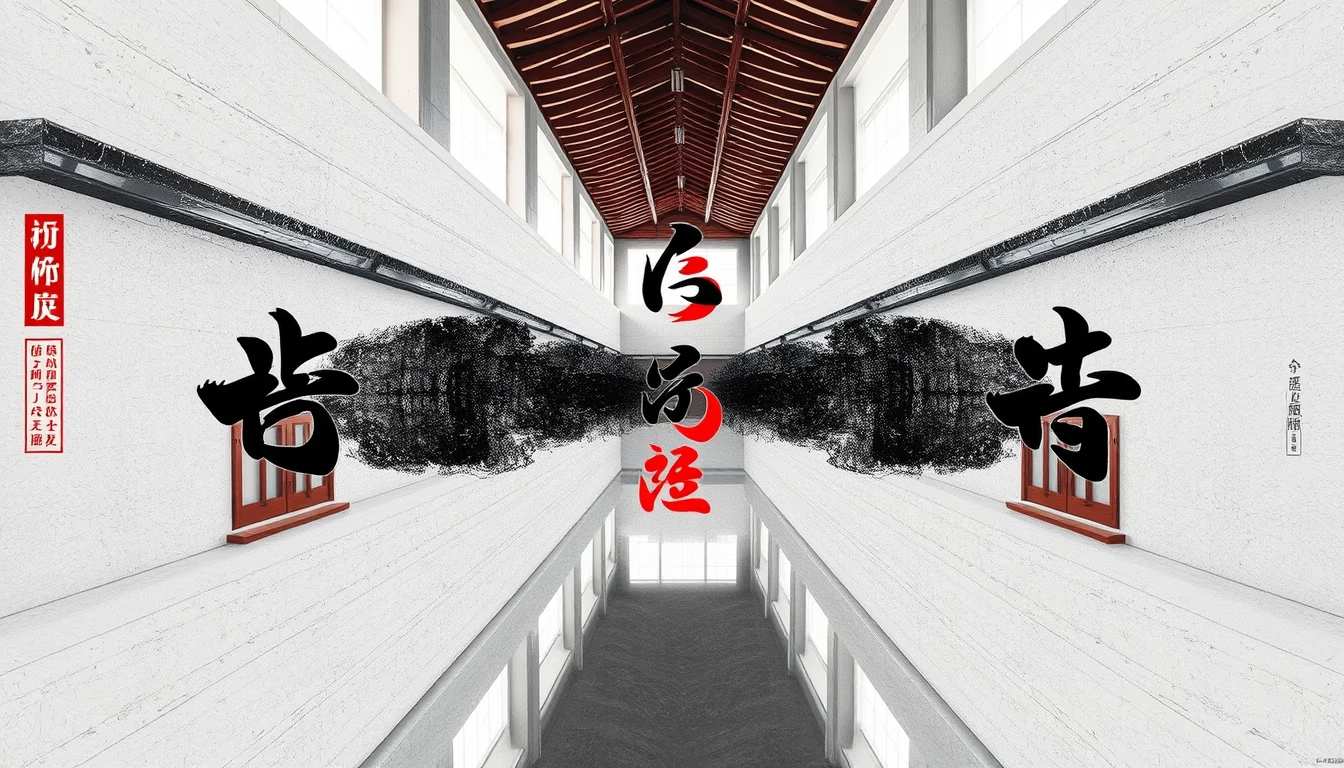
Chinese calligraphy brush strokes form the basis of a 3,000-year-old artistic tradition, blending expressive movement with precise character structure.
About this subject
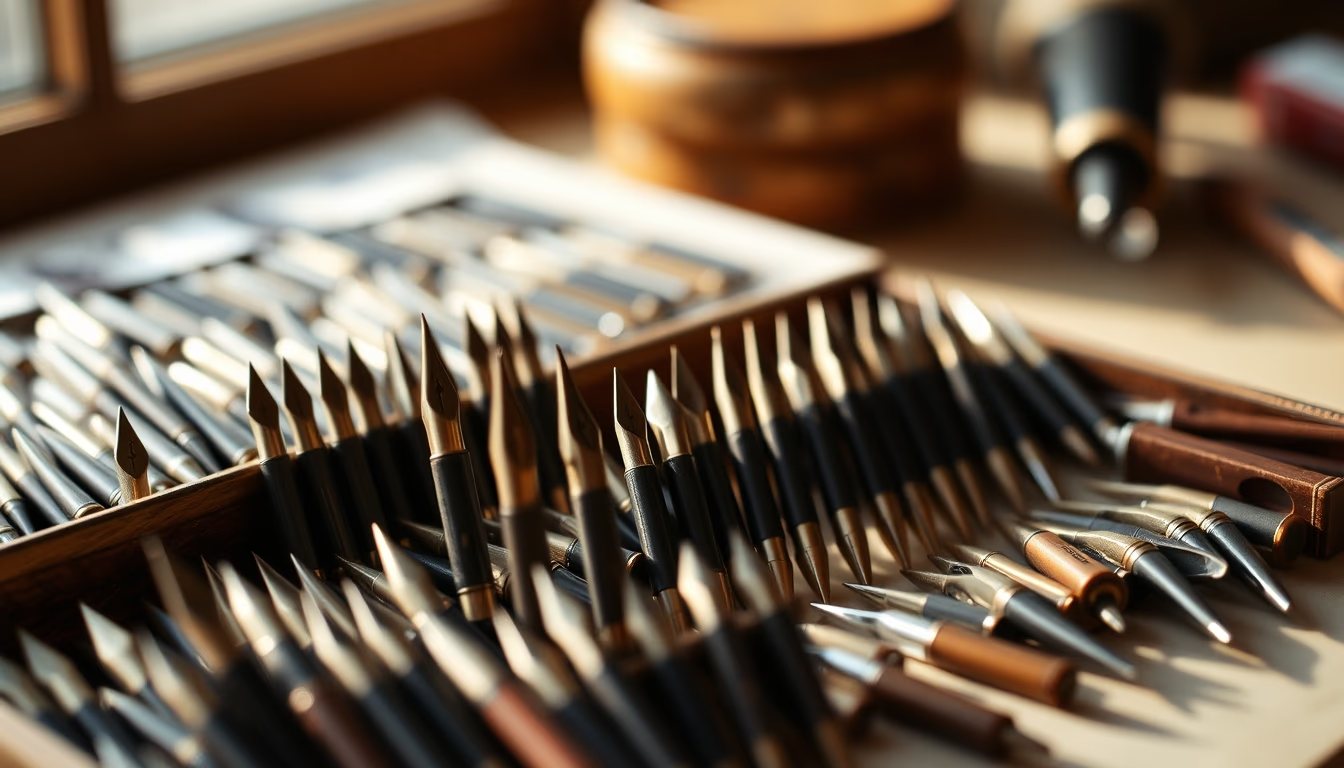
Chinese calligraphy is an art form dating back over three thousand years, evolving from inscriptions on oracle bones and tortoise shells. The brush stroke, a fundamental element, is executed using soot-based ink on rice paper, with a brush made from natural animal hairs and an inkstone. The technique demands precise control of pressure, speed, and angle, producing varying thicknesses and curves that bring characters to life. There are five main styles: seal (zhuànshū), clerical (lìshū), regular (kǎishū), running (xíngshū), and cursive (cǎoshū), each with specific construction rules. The regular style is the most taught today, while running and cursive are freer and more abstract, used by masters to express emotion and movement. Great calligraphers such as Wang Xizhi, known as the 'Sage of Calligraphy', left masterpieces like the 'Preface to the Orchid Pavilion', which have influenced generations. Practicing calligraphy is regarded as a form of meditation and discipline, valued in Chinese culture not only for written communication but also for aesthetic expression. The Four Treasures of the Study, brush, ink, paper, and inkstone, are revered as essential tools. Today, Chinese calligraphy is practiced worldwide and was recognized by UNESCO as an Intangible Cultural Heritage of Humanity in 2009.
Frequently Asked Questions
What are the differences between Chinese calligraphy styles?
The styles vary in formality and fluidity: seal script is the oldest with uniform strokes; clerical is angular and formal; regular is balanced and legible; running is semi-abstract with stroke connections; cursive is highly abstract and fast, emphasizing artistic expression.
What are the Four Treasures of the Study?
They are the brush (bǐ), ink (mò), paper (zhǐ), and inkstone (yàn). These tools are considered essential for Chinese calligraphy and painting, each with specific manufacturing and usage characteristics.
How is Chinese calligraphy learned?
Learning begins with copying models of famous calligraphers, practicing basic strokes and character structure. Discipline includes body posture, brush grip, and breath control, commonly taught in Chinese schools and cultural centers worldwide.
Direct URL
https://pub-c7d6a6ea828543ac903a74a341ccb2e1.r2.dev/imagens/chinese-calligraphy-brush-stroke-architectural-photography-fresh14.avifHow to credit
Include a visible link back to UtilizAí. Copy one of the snippets below:
<a href="https://xn--utiliza-eza.com/en/midia/imagens/chinese-calligraphy-brush-stroke-architectural-photography-fresh14">Chinese calligraphy brush stroke</a> by <a href="https://xn--utiliza-eza.com">UtilizAí</a>, licensed under <a href="https://creativecommons.org/licenses/by/4.0/">CC BY 4.0</a>.
[Chinese calligraphy brush stroke](https://xn--utiliza-eza.com/en/midia/imagens/chinese-calligraphy-brush-stroke-architectural-photography-fresh14) by [UtilizAí](https://xn--utiliza-eza.com), CC BY 4.0
License: CC-BY-4.0