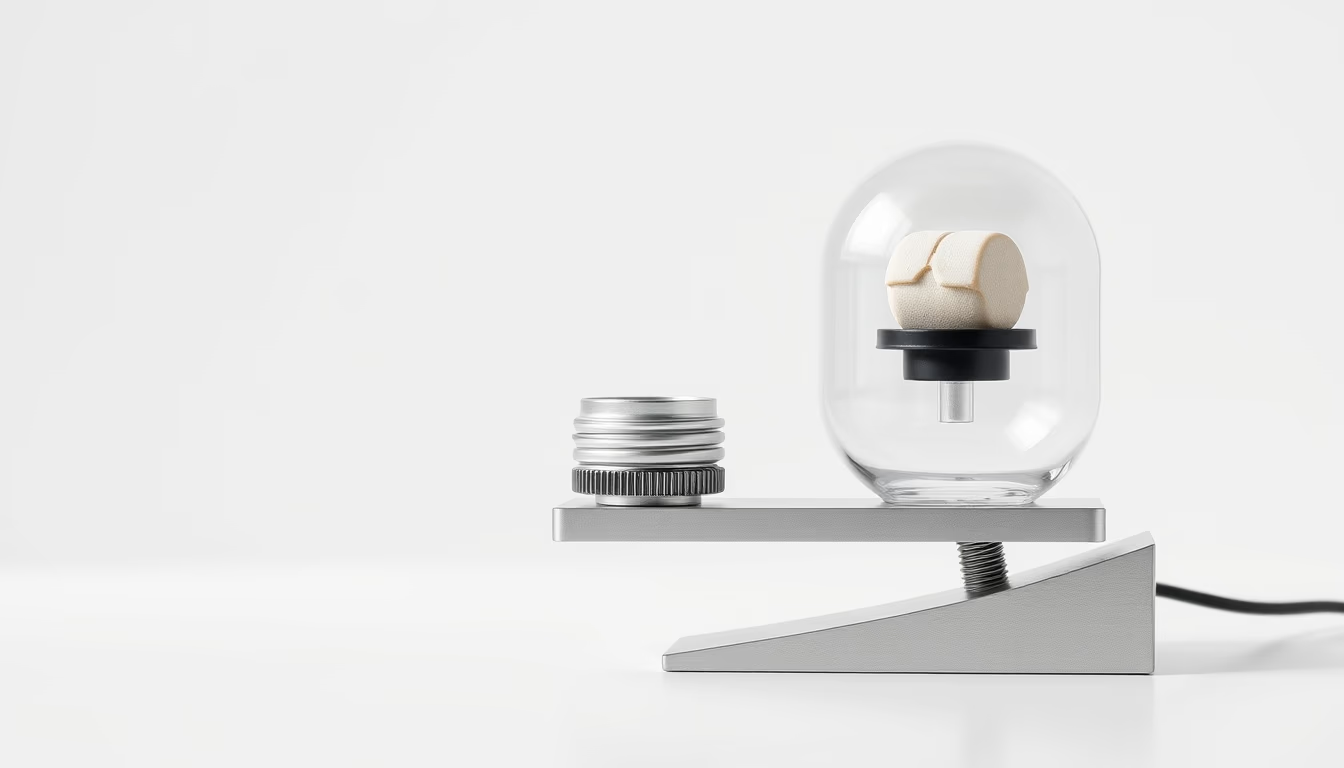
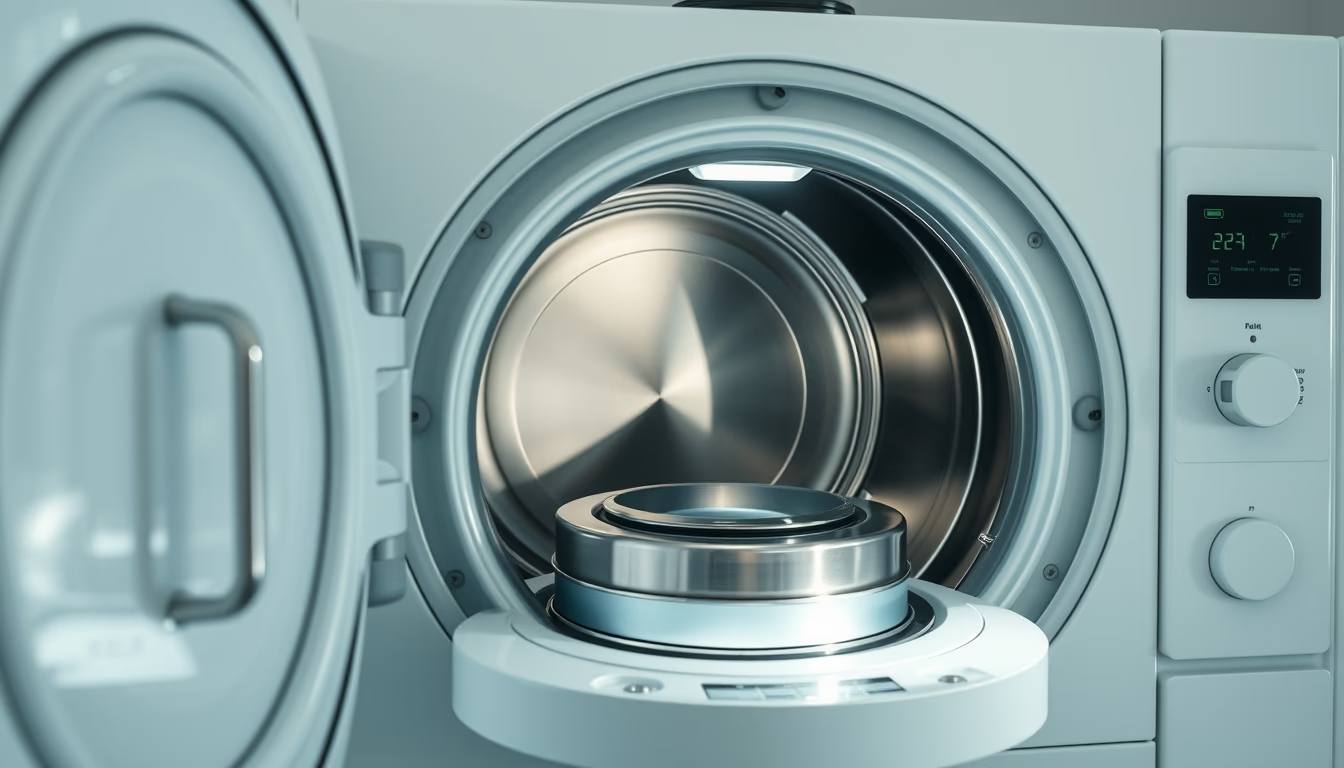
Centrifuge tubes spinning
1344×768 · AVIF · CC BY 4.0

Centrifuge tubes spinning to separate biological and chemical samples by density, an essential technique in laboratories.
About this subject
Centrifugation is a fundamental process in biology, chemistry, and medical laboratories. It uses centrifugal force to separate components of a mixture based on their densities. Centrifuge tubes, typically made of polypropylene or glass, are designed to withstand high revolutions per minute (RPM). During operation, samples are placed in the tubes and carefully balanced to avoid vibrations that could damage the equipment.
Tube types vary by application: microtubes for small volumes (up to 2 mL), conical tubes for 15 or 50 mL, and special tubes for ultracentrifuges that can reach up to 150,000 RPM. Material choice is critical; polypropylene tubes resist chemicals and can be autoclaved, while glass tubes are reusable but more fragile. Proper sealing is also important to prevent leaks of hazardous substances.
In clinical settings, centrifugation is used to separate plasma or serum from whole blood, enabling tests like complete blood count and biochemical assays. In research, it aids in purifying DNA, RNA, and proteins, and isolating cellular organelles such as mitochondria and nuclei. The technique is also applied in the food industry to clarify juices and in vaccine production.
Notably, ultracentrifugation developed by Theodor Svedberg in the 1920s earned him the Nobel Prize in Chemistry in 1926. Today, benchtop centrifuges are common in educational and diagnostic labs, demonstrating the versatility of this method from sample preparation to final analysis.
Frequently Asked Questions
What is the difference between a standard centrifuge and an ultracentrifuge?
Standard centrifuges operate up to about 15,000 RPM, suitable for quick separations of cells and large particles. Ultracentrifuges reach speeds above 60,000 RPM, enabling separation of molecules like proteins and nucleic acids.
How to properly balance centrifuge tubes?
Tubes must be paired with equal masses (including tube and sample weight). Use a balance to match each pair's weight and place them in opposite positions in the rotor.
Can glass tubes be used in any centrifuge?
No. Glass tubes are more fragile and may break at high speeds. They should only be used in low-speed centrifuges (< 3000 RPM) with specific rotors. Always check the maximum speed rating.
Direct URL
https://pub-c7d6a6ea828543ac903a74a341ccb2e1.r2.dev/imagens/centrifuge-tubes-spinning-minimalist-composition-fresh0.avifHow to credit
Include a visible link back to UtilizAí. Copy one of the snippets below:
<a href="https://xn--utiliza-eza.com/en/midia/imagens/centrifuge-tubes-spinning-minimalist-composition-fresh0">Centrifuge tubes spinning</a> by <a href="https://xn--utiliza-eza.com">UtilizAí</a>, licensed under <a href="https://creativecommons.org/licenses/by/4.0/">CC BY 4.0</a>.
[Centrifuge tubes spinning](https://xn--utiliza-eza.com/en/midia/imagens/centrifuge-tubes-spinning-minimalist-composition-fresh0) by [UtilizAí](https://xn--utiliza-eza.com), CC BY 4.0
License: CC-BY-4.0