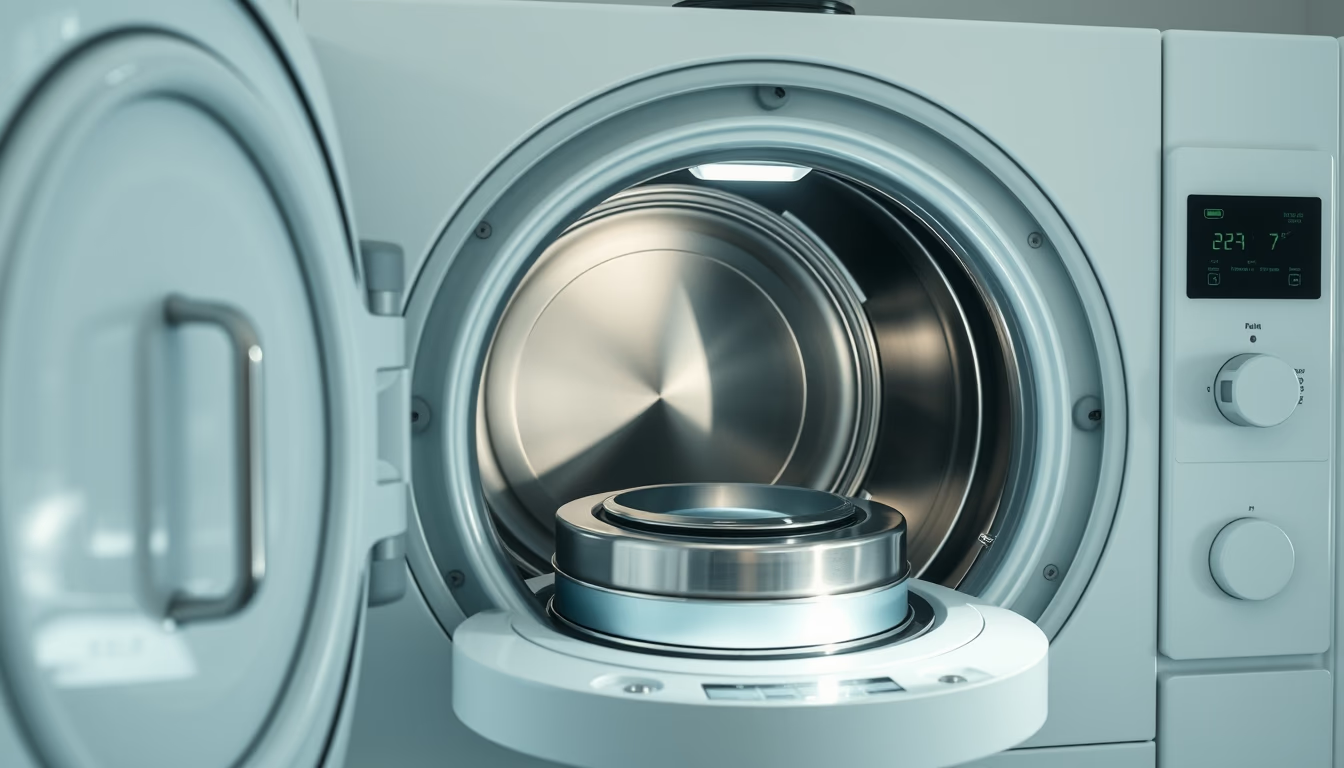
Centrifuge tubes spinning
1344×768 · AVIF · CC BY 4.0

Centrifuge tubes spinning at high speed are essential for separating components of biological and chemical samples in laboratories.
About this subject
A centrifuge is a laboratory device that uses centrifugal force to separate particles of different densities within a liquid sample. When centrifuge tubes spin at high speed, denser particles sediment to the bottom, forming a pellet, while the supernatant remains on top. This principle is widely applied in molecular biology, biochemistry, and medicine.
There are various types of centrifuges, from benchtop microcentrifuges operating up to about 15,000 rpm to ultracentrifuges exceeding 100,000 rpm. Ultracentrifuges are used to separate cellular organelles, viruses, and macromolecules like DNA and proteins. The choice of centrifuge and rotor depends on sample volume and required g-force.
In clinical settings, centrifugation is routine for separating plasma or serum from whole blood. Tubes with gel separators facilitate serum extraction after clotting. In research labs, the technique is crucial for nucleic acid extraction, protein purification, and exosome isolation. Safety is paramount: tubes must be precisely balanced to avoid vibrations and potential rotor failure.
Regular calibration and cleaning of the centrifuge extend its lifespan. Disposable centrifuge tubes are common, but reusable glass or polymer options exist. Refrigeration capability is important for temperature-sensitive samples like enzymes and living cells. Understanding speed limits and tube material prevents accidents and ensures reliable results.
Frequently Asked Questions
What is the difference between a standard centrifuge and an ultracentrifuge?
An ultracentrifuge reaches much higher speeds (above 100,000 rpm), generating centrifugal forces up to 1,000,000 g, enabling separation of subcellular particles like ribosomes and viruses. Standard centrifuges operate up to about 15,000 rpm, suitable for cells and bacteria.
Why is it necessary to balance tubes in a centrifuge?
Balancing prevents excessive vibrations that can damage the rotor and cause accidents. Unbalanced tubes create uneven forces, leading to noise, premature wear, and potential rotor failure.
What precautions should be taken when using centrifuge tubes?
Use tubes appropriate for the speed and rotor type, do not exceed the indicated maximum volume, and inspect for cracks or deformities. Polypropylene tubes are common for general use, but for high speeds polycarbonate or tempered glass tubes are recommended.
Direct URL
https://pub-c7d6a6ea828543ac903a74a341ccb2e1.r2.dev/imagens/centrifuge-tubes-spinning-film-grain-authentic-fresh7.avifHow to credit
Include a visible link back to UtilizAí. Copy one of the snippets below:
<a href="https://xn--utiliza-eza.com/en/midia/imagens/centrifuge-tubes-spinning-film-grain-authentic-fresh7">Centrifuge tubes spinning</a> by <a href="https://xn--utiliza-eza.com">UtilizAí</a>, licensed under <a href="https://creativecommons.org/licenses/by/4.0/">CC BY 4.0</a>.
[Centrifuge tubes spinning](https://xn--utiliza-eza.com/en/midia/imagens/centrifuge-tubes-spinning-film-grain-authentic-fresh7) by [UtilizAí](https://xn--utiliza-eza.com), CC BY 4.0
License: CC-BY-4.0