Centrifuge tubes spinning
1344×768 · AVIF · CC BY 4.0
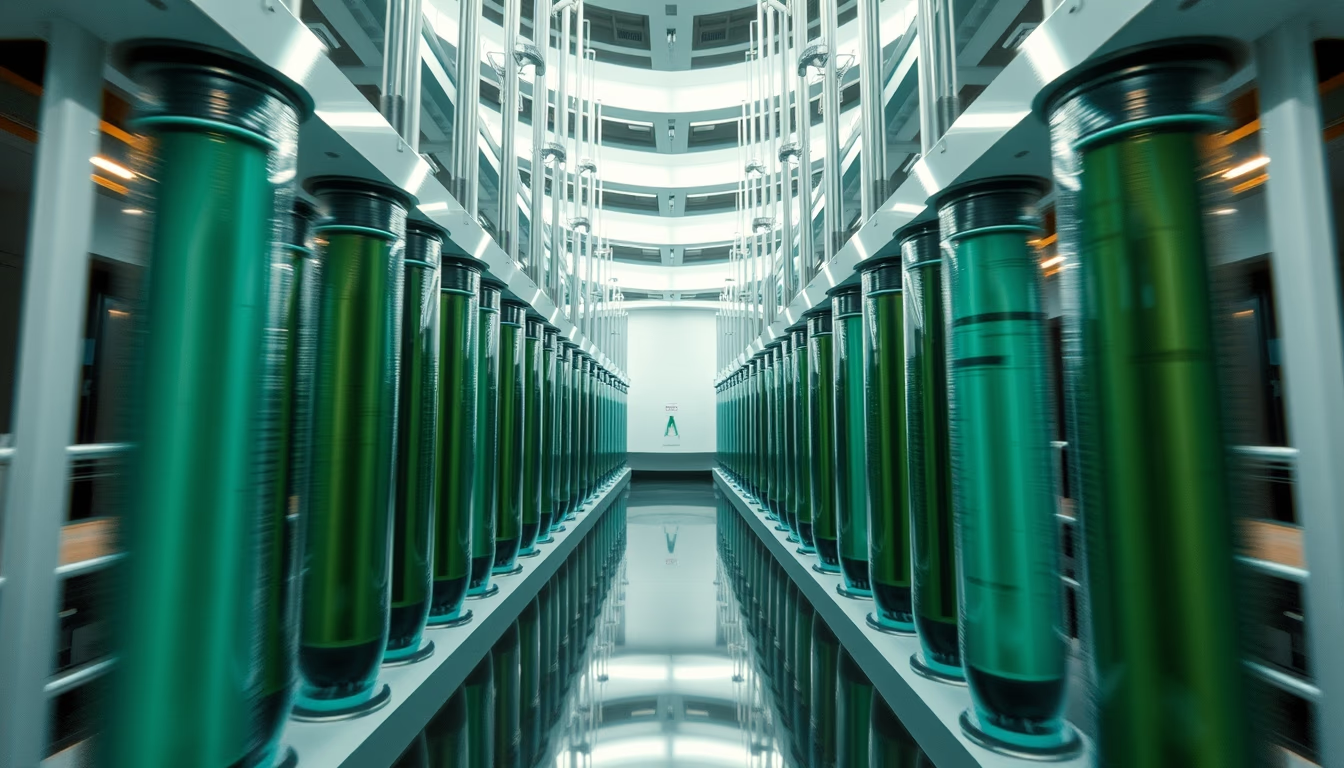
Spinning centrifuge tubes separate components by density, a critical process in clinical labs and biotechnology.
About this subject
Centrifugation is a separation method that uses centrifugal force to accelerate sedimentation of particles suspended in a liquid. In laboratories, centrifuge tubes of various sizes and capacities are used to process biological, chemical, or pharmaceutical samples. The principle is straightforward: high-speed rotation forces denser components to the tube bottom, forming a pellet, while the supernatant remains on top.
Applications are extensive. In clinical analysis, centrifugation separates plasma or serum from whole blood, enabling biochemical and serological tests. In molecular biology, it is essential for precipitating DNA, RNA, or proteins, as well as for plasmid purification and virus isolation. Specific tubes, such as microcentrifuge tubes (0.5, 2 mL capacity) and Falcon tubes (15 or 50 mL), are chosen based on volume and purpose. The material (polypropylene, polystyrene) affects chemical resistance and clarity.
Operational care is critical for safety and efficiency. Proper tube balancing prevents excessive vibration and equipment damage. Each rotor has speed limits (RCF or RPM) that must not be exceeded. Open or improperly sealed tubes may leak and contaminate the environment. Refrigerated centrifugation is used for heat-sensitive samples, such as enzymes and living cells.
Historically, the first documented use of centrifugation to separate milk was by Antonin Prandtl in 1864, but the modern electric centrifuge patented by Carl Lundgren in 1901 revolutionized laboratories. Today, benchtop centrifuges are ubiquitous, reaching up to 30,000 rpm, while ultracentrifuges spin at up to 150,000 rpm to separate macromolecules and nanoparticles.
Frequently Asked Questions
What is the typical speed of a benchtop centrifuge?
Common benchtop centrifuges run at 3,000, 6,000 rpm for 15/50 mL tubes, and microcentrifuges reach 14,000, 15,000 rpm. The relative centrifugal force (RCF) is more important, as it depends on rotor radius.
Can I centrifuge open tubes?
No, it is dangerous and not recommended. Open tubes can release aerosols and contaminate the environment. Always use proper caps or seals, especially with biological or volatile chemical samples.
What does RPM stand for?
RPM stands for revolutions per minute, a measure of rotor angular speed. More critical is RCF (relative centrifugal force), which accounts for radius and is expressed in g. RCF indicates the actual force applied to the sample.
Direct URL
https://pub-c7d6a6ea828543ac903a74a341ccb2e1.r2.dev/imagens/centrifuge-tubes-spinning-architectural-photography-fresh6.avifHow to credit
Include a visible link back to UtilizAí. Copy one of the snippets below:
<a href="https://xn--utiliza-eza.com/en/midia/imagens/centrifuge-tubes-spinning-architectural-photography-fresh6">Centrifuge tubes spinning</a> by <a href="https://xn--utiliza-eza.com">UtilizAí</a>, licensed under <a href="https://creativecommons.org/licenses/by/4.0/">CC BY 4.0</a>.
[Centrifuge tubes spinning](https://xn--utiliza-eza.com/en/midia/imagens/centrifuge-tubes-spinning-architectural-photography-fresh6) by [UtilizAí](https://xn--utiliza-eza.com), CC BY 4.0
License: CC-BY-4.0