Visualização de rede blockchain nós brilhantes conectados por linhas em fundo escuro
1344×768 · AVIF · CC BY 4.0

Nós brilhantes e linhas interconectadas formam uma representação visual de uma rede blockchain, destacando a estrutura descentralizada dos registros digitais.
Sobre o tema
A imagem ilustra conceitos fundamentais da tecnologia blockchain, como a descentralização e a imutabilidade dos dados. Cada nó brilhante representa um computador na rede, e as linhas que os conectam simbolizam as transações ou blocos de informação validados. Essa estrutura peer-to-peer elimina a necessidade de intermediários, como bancos ou governos, para validar transações. O blockchain surgiu em 2008 com o Bitcoin, criado pelo pseudônimo Satoshi Nakamoto, e desde então evoluiu para aplicações além das criptomoedas, incluindo contratos inteligentes e cadeias de suprimentos. A visualização em fundo escuro com cores vibrantes é comum em infográficos e apresentações para transmitir a ideia de uma rede segura e transparente. A tecnologia blockchain é considerada uma inovação disruptiva porque permite que múltiplas partes mantenham um registro sincronizado sem confiar umas nas outras. Redes como Ethereum e Hyperledger são exemplos de blockchains públicas e privadas que utilizam esse modelo. A segurança é garantida por algoritmos de consenso, como Prova de Trabalho (PoW) ou Prova de Participação (PoS), que exigem que os nós concordem sobre o estado do livro-razão. Essa representação gráfica ajuda a compreender a complexidade das interações em uma rede distribuída, onde cada nó mantém uma cópia completa do histórico de transações.
Perguntas frequentes
O que são os nós em uma rede blockchain?
Nós são computadores ou servidores que mantêm uma cópia do blockchain e participam da validação de transações. Cada nó é um ponto na rede que se comunica com outros para garantir a consistência dos dados.
Como a segurança é garantida em uma rede blockchain?
A segurança é garantida por algoritmos de consenso, como Prova de Trabalho (PoW) ou Prova de Participação (PoS), que exigem que os nós concordem sobre o estado do livro-razão. Além disso, a criptografia protege as transações e a imutabilidade do histórico.
Qual a diferença entre blockchain pública e privada?
Blockchains públicas, como Bitcoin e Ethereum, são abertas a qualquer pessoa e não têm controle centralizado. Blockchains privadas, como Hyperledger, restringem o acesso a participantes autorizados, oferecendo maior controle e privacidade.
URL direta
https://pub-c7d6a6ea828543ac903a74a341ccb2e1.r2.dev/imagens/blockchain-network-visualization-glowing-nodes-connected-by-lines-on-dark-backgr-editorial-portrait-morning-natural-light.avifComo creditar
Inclua um link visível de volta pro UtilizAí. Copie um dos snippets abaixo:
<a href="https://xn--utiliza-eza.com/midia/imagens/blockchain-network-visualization-glowing-nodes-connected-by-lines-on-dark-backgr-editorial-portrait-morning-natural-light">Visualização de rede blockchain nós brilhantes conectados por linhas em fundo escuro</a> by <a href="https://xn--utiliza-eza.com">UtilizAí</a>, licensed under <a href="https://creativecommons.org/licenses/by/4.0/">CC BY 4.0</a>.
[Visualização de rede blockchain nós brilhantes conectados por linhas em fundo escuro](https://xn--utiliza-eza.com/midia/imagens/blockchain-network-visualization-glowing-nodes-connected-by-lines-on-dark-backgr-editorial-portrait-morning-natural-light) by [UtilizAí](https://xn--utiliza-eza.com), CC BY 4.0
Licença: CC-BY-4.0
Tags
Imagens relacionadas
 Código de smart contract em monitor com solidity destacado
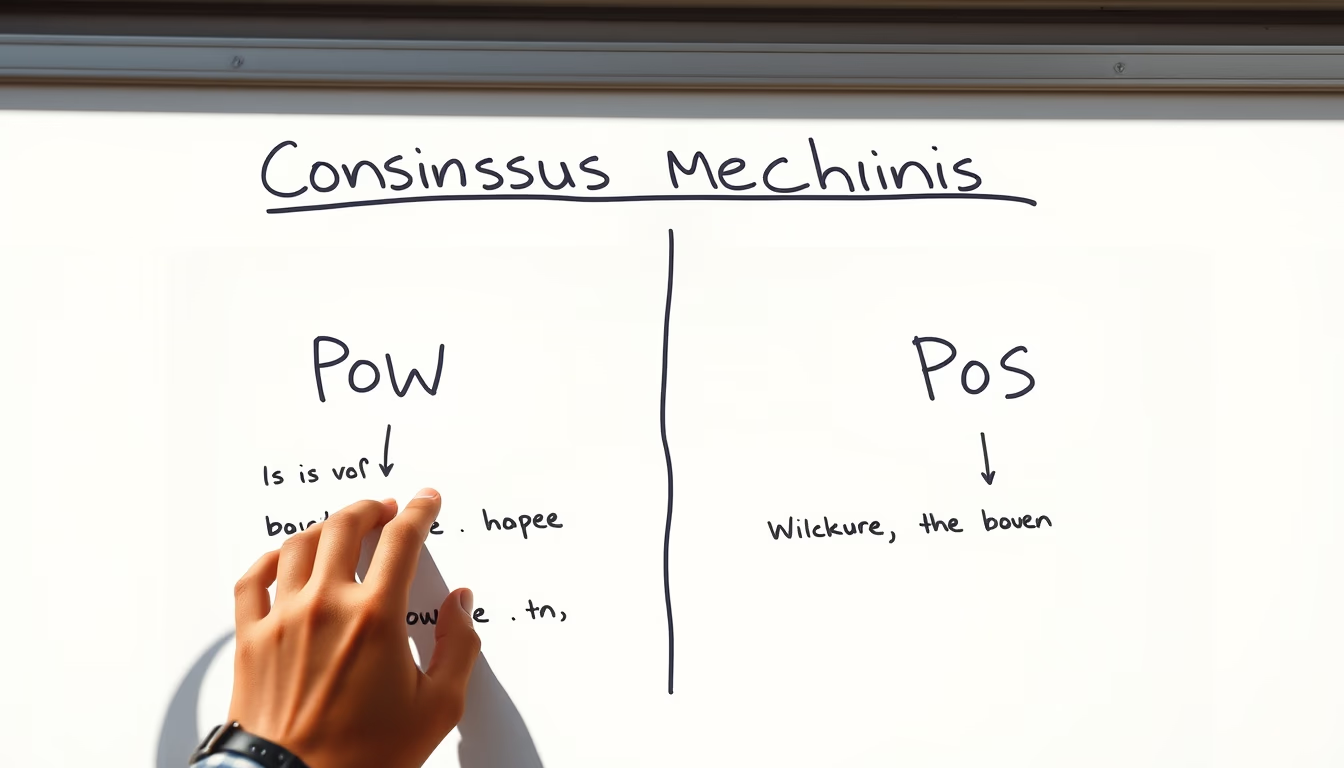 Diagrama de mecanismo de consenso em quadro branco mostrando PoW vs PoS
 Ledger distribuído múltiplos servidores em data center
 Visualização de função hash equações criptográficas em tela de vidro
 Visualização de função hash equações criptográficas em tela de vidro
 Visualização de função hash equações criptográficas em tela de vidro