Blockchain network visualization glowing nodes connected by lines on dark background
1344×768 · AVIF · CC BY 4.0

Visualization of glowing interconnected nodes in a blockchain network, highlighting decentralized architecture and cryptographic security.
About this subject
The image depicts a blockchain network, where each glowing node represents a participant or device maintaining a copy of the distributed ledger. This decentralized structure is the foundation of cryptocurrencies like Bitcoin and Ethereum, eliminating the need for a central authority. The lines connecting the nodes symbolize transactions and communication between them, ensuring all records are synchronized and immutable.
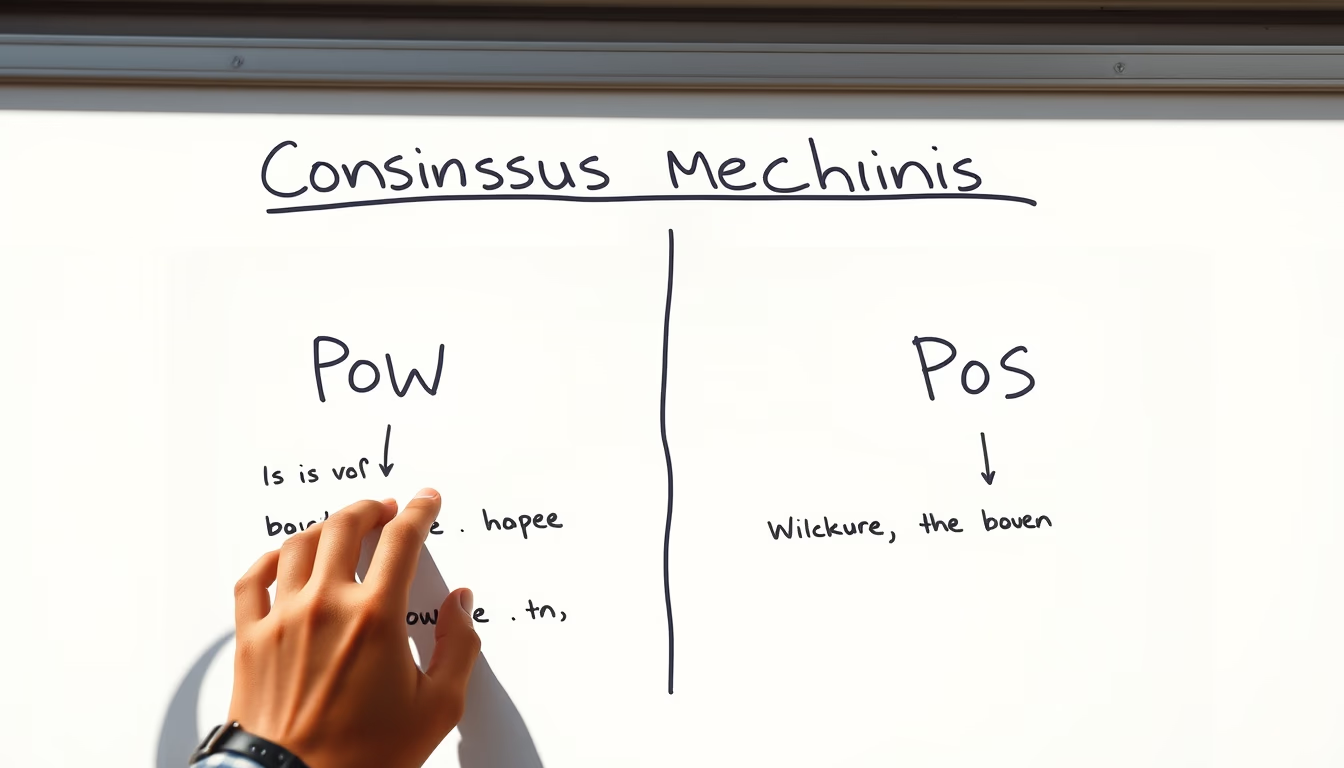
Blockchains are often compared to distributed databases, but with unique features: once a block of data is added to the chain, it cannot be altered without consensus from the majority of the network. This property, known as immutability, is achieved through cryptographic hash functions and consensus mechanisms like Proof of Work (PoW) or Proof of Stake (PoS). In Bitcoin's case, PoW requires miners to solve complex mathematical problems to validate transactions, consuming significant electrical energy.
The visualization with glowing nodes on a dark background is common in artistic and technical representations of blockchain, as it conveys the idea of a global, 24/7 active network. Although the image is conceptual, it reflects the reality of thousands of nodes worldwide. As of 2024, the Bitcoin network has approximately 15,000 public nodes, while Ethereum has about 6,000. These numbers vary depending on voluntary participation by users running the full protocol software.
Beyond cryptocurrencies, blockchain technology has applications in supply chains, electronic voting, digital identity, and smart contracts. Companies like IBM, Microsoft, and Amazon offer blockchain services for product tracking and process automation. In Brazil, blockchain is used by the government for electronic invoice registration and by the Federal Revenue Service for monitoring financial operations.
Frequently Asked Questions
What is a node in a blockchain?
A node is any device (computer, server) that maintains a full or partial copy of the blockchain ledger and participates in validating and propagating transactions.
How are transactions validated in a blockchain?
Transactions are grouped into blocks and validated by consensus mechanisms like Proof of Work (mining) or Proof of Stake (staking). Once validated, the block is added to the chain.
Is blockchain truly immutable?
Yes, in practice. Altering a block would require consensus from over 50% of the network (51% attack), which is extremely difficult and costly in large networks like Bitcoin and Ethereum.
Direct URL
https://pub-c7d6a6ea828543ac903a74a341ccb2e1.r2.dev/imagens/blockchain-network-visualization-glowing-nodes-connected-by-lines-on-dark-backgr-aerial-drone-shot-twilight-blue-hour.avifHow to credit
Include a visible link back to UtilizAí. Copy one of the snippets below:
<a href="https://xn--utiliza-eza.com/en/midia/imagens/blockchain-network-visualization-glowing-nodes-connected-by-lines-on-dark-backgr-aerial-drone-shot-twilight-blue-hour">Blockchain network visualization glowing nodes connected by lines on dark background</a> by <a href="https://xn--utiliza-eza.com">UtilizAí</a>, licensed under <a href="https://creativecommons.org/licenses/by/4.0/">CC BY 4.0</a>.
[Blockchain network visualization glowing nodes connected by lines on dark background](https://xn--utiliza-eza.com/en/midia/imagens/blockchain-network-visualization-glowing-nodes-connected-by-lines-on-dark-backgr-aerial-drone-shot-twilight-blue-hour) by [UtilizAí](https://xn--utiliza-eza.com), CC BY 4.0
License: CC-BY-4.0
Tags
Related images
 Smart contract code on monitor with solidity syntax highlighted
 Consensus mechanism diagram on whiteboard showing PoW vs PoS
 Distributed ledger multiple servers in data center
 Hash function visualization cryptographic equations on glass screen
 Hash function visualization cryptographic equations on glass screen
 Hash function visualization cryptographic equations on glass screen