Basalt columnar formations
1344×768 · AVIF · CC BY 4.0

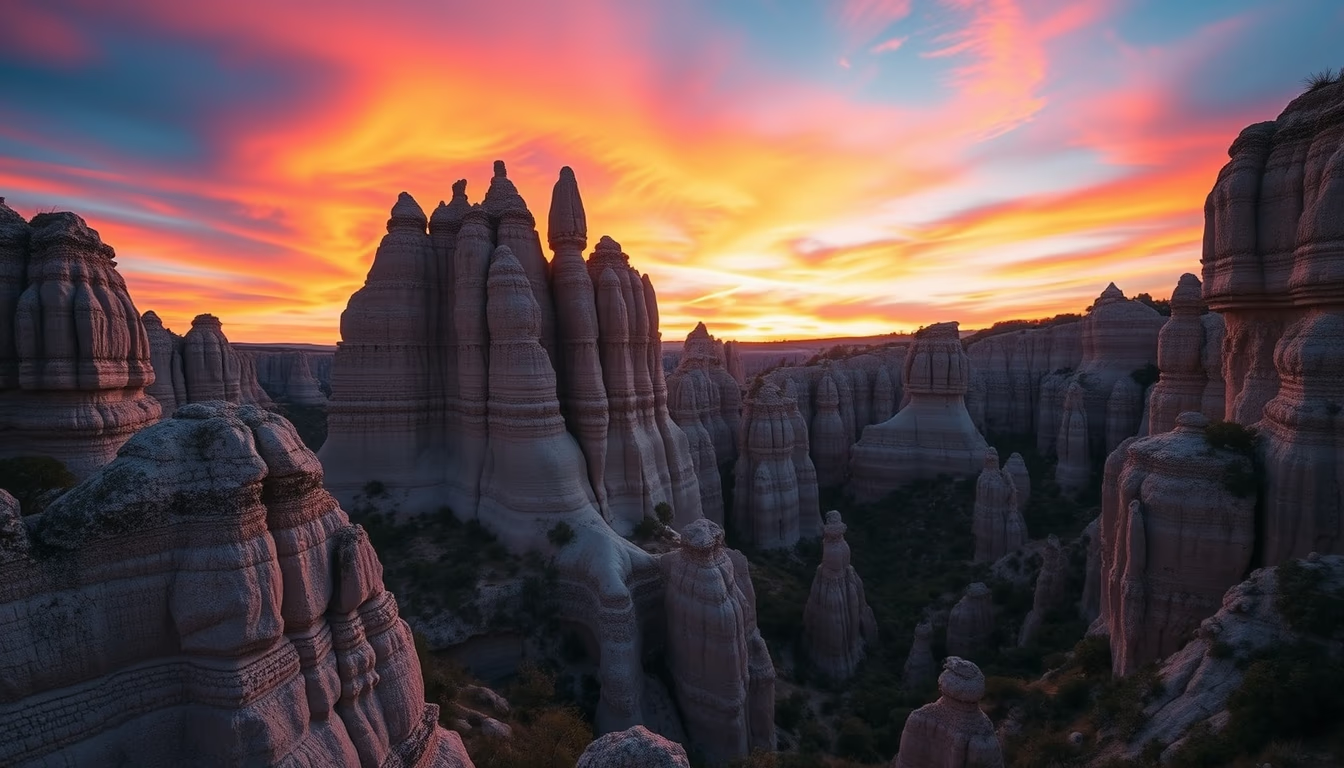
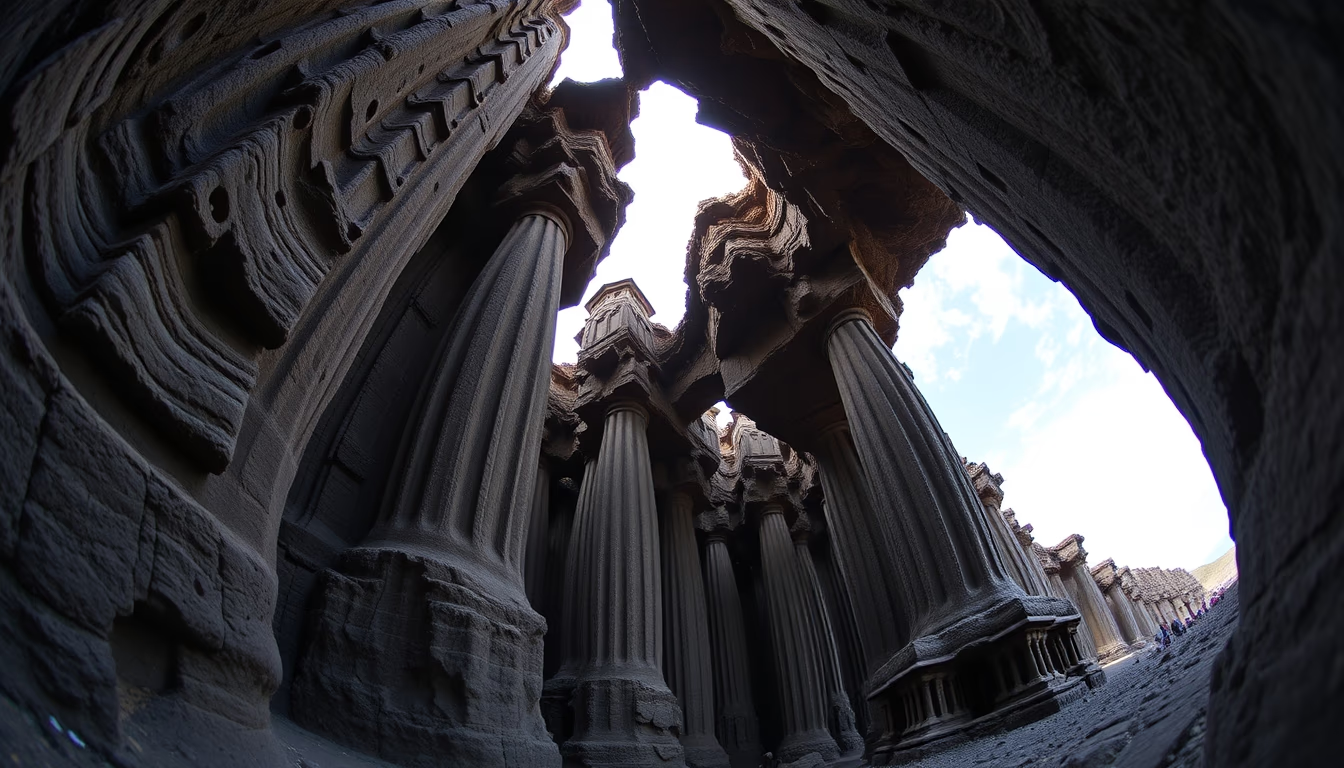
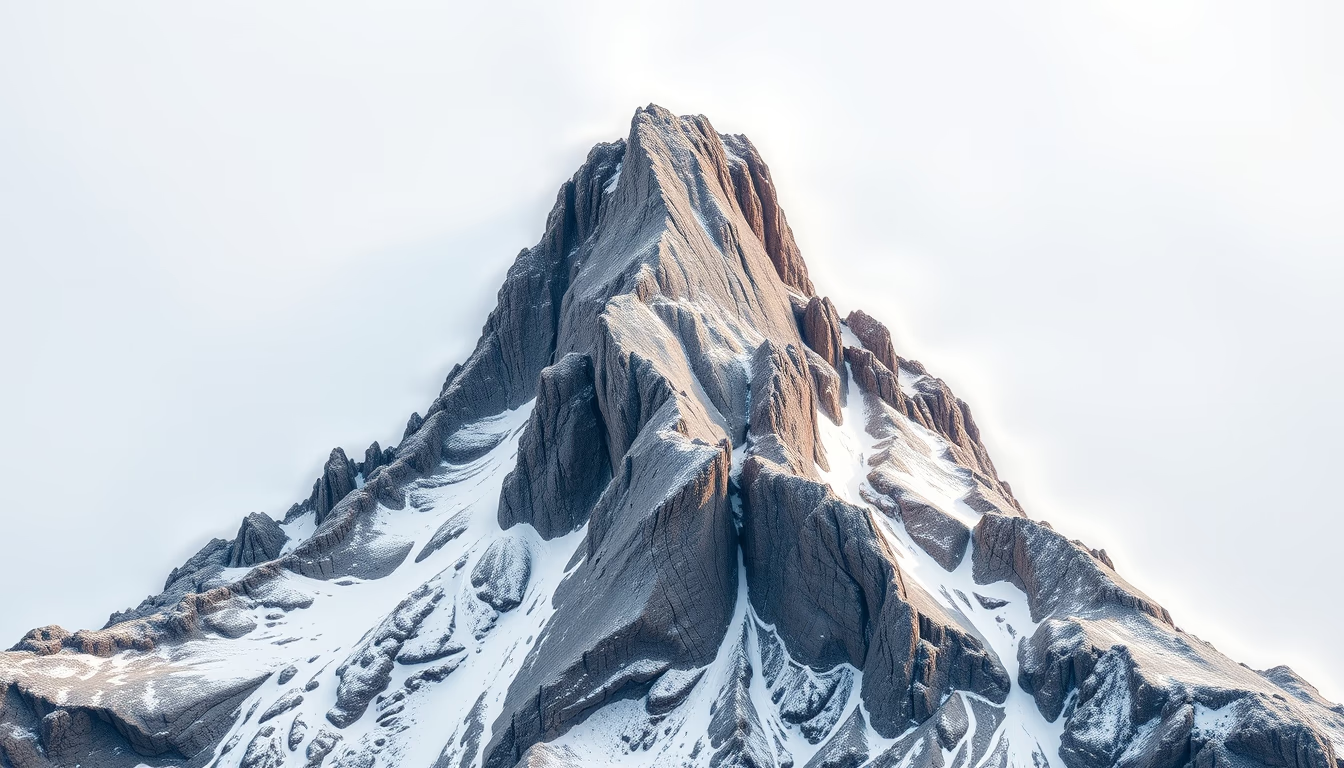
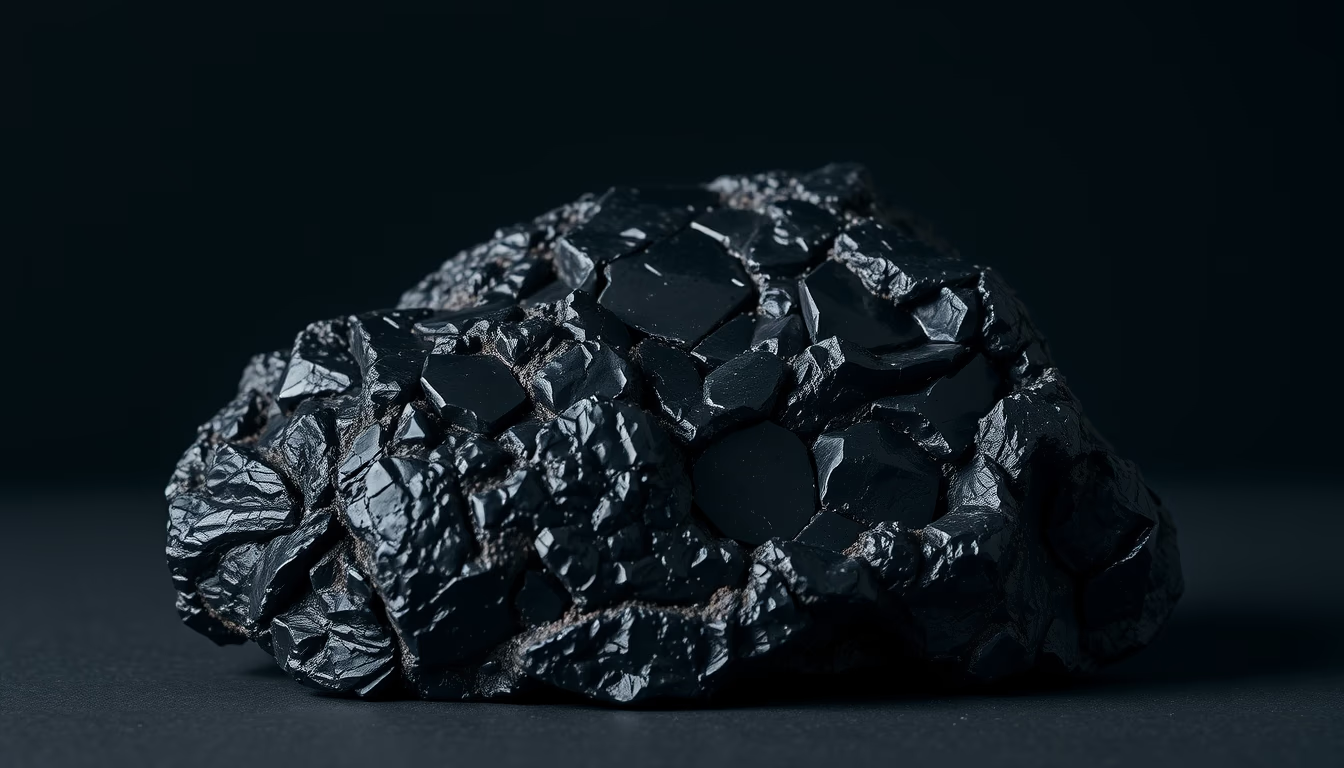
Basalt columnar formations, volcanic rocks with hexagonal geometry, are found in various locations worldwide, such as the Giant's Causeway in Ireland.
About this subject
Basalt columnar formations are impressive geological structures that form from the slow and uniform cooling of basaltic lava. As the lava cools, it contracts and fractures into polygonal columns, typically hexagonal but also pentagonal or octagonal. This process occurs under specific temperature and cooling rate conditions, resulting in patterns resembling honeycombs.
One of the most famous examples is the Giant's Causeway in Northern Ireland, with about 40,000 basalt columns extending into the sea. Other notable locations include the Hinunangan Lake Grotto in the Philippines and Devils Postpile National Monument in California, USA. In Brazil, similar formations can be found in the Torres region of Rio Grande do Sul and the Serra do Mar in São Paulo, though less known.
These columns can reach heights of up to 30 meters and have varying diameters. The natural symmetry of these rocks fascinates scientists and tourists, being a subject of studies on volcanism and fluid dynamics. Additionally, columnar basalt is used as ornamental stone and in construction due to its durability and unique appearance.
Interestingly, similar formations have been discovered on Mars, suggesting past volcanic activity on the planet. Studying these structures helps understand the geological history of celestial bodies and the cooling processes of magma.
Frequently Asked Questions
How do basalt columns form?
They form when basaltic lava cools slowly and uniformly, contracting and creating fractures that result in polygonal columns, usually hexagonal.
Where can I see basalt columnar formations in Brazil?
In Brazil, there are occurrences in Torres (RS) and Serra do Mar (SP), as well as other regions with ancient volcanic activity.
Are basalt columns always hexagonal?
No, although hexagonal is most common, they can also be pentagonal, octagonal, or other shapes depending on cooling conditions.
Direct URL
https://pub-c7d6a6ea828543ac903a74a341ccb2e1.r2.dev/imagens/basalt-columnar-formations-long-exposure-fresh16.avifHow to credit
Include a visible link back to UtilizAí. Copy one of the snippets below:
<a href="https://xn--utiliza-eza.com/en/midia/imagens/basalt-columnar-formations-long-exposure-fresh16">Basalt columnar formations</a> by <a href="https://xn--utiliza-eza.com">UtilizAí</a>, licensed under <a href="https://creativecommons.org/licenses/by/4.0/">CC BY 4.0</a>.
[Basalt columnar formations](https://xn--utiliza-eza.com/en/midia/imagens/basalt-columnar-formations-long-exposure-fresh16) by [UtilizAí](https://xn--utiliza-eza.com), CC BY 4.0
License: CC-BY-4.0