Volcanic rock obsidian
1344×768 · AVIF · CC BY 4.0
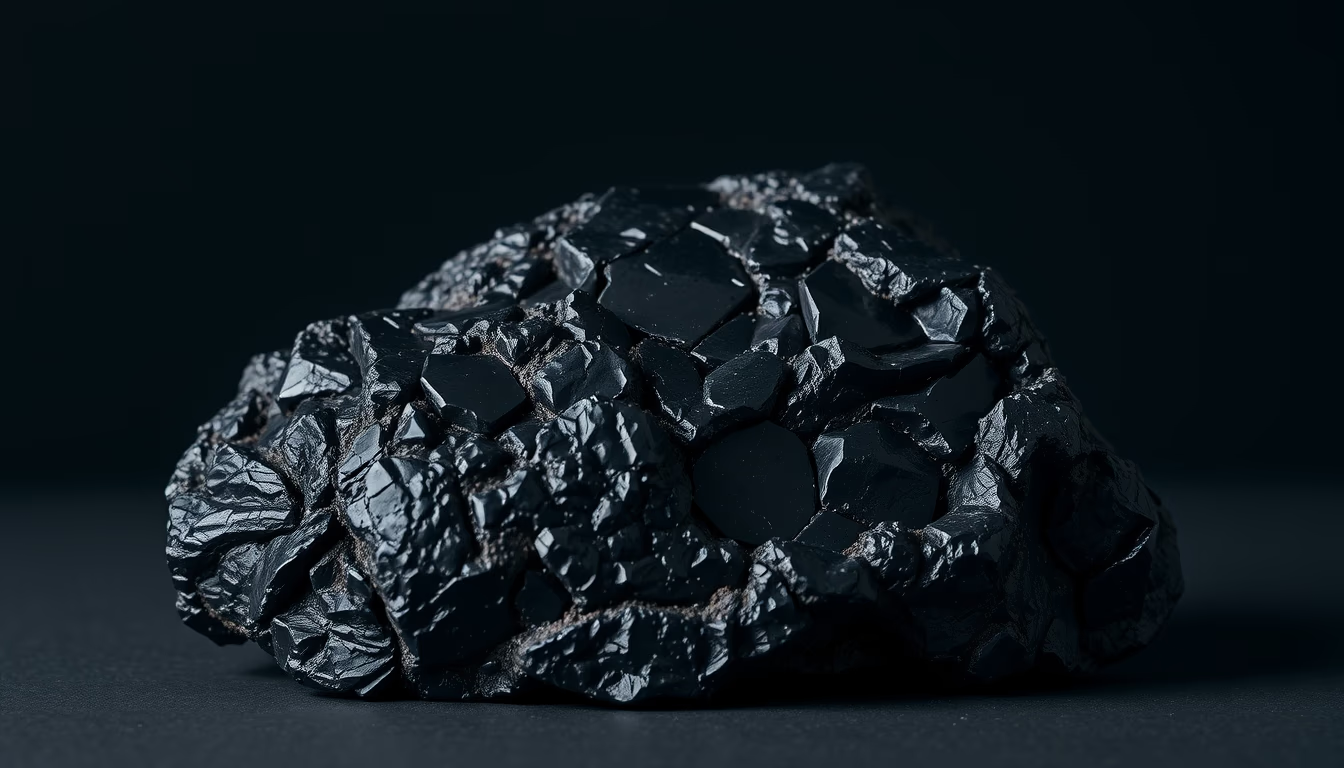
Obsidian is a volcanic glass rock formed by rapid cooling of lava, known for its conchoidal fracture and extremely sharp edges.
About this subject
Obsidian is a natural volcanic glass, not a mineral, formed when silica-rich lava cools too rapidly to allow crystal growth. Its composition is primarily silicon dioxide, with inclusions that can create colors such as black, brown, green, or rainbow. Major deposits occur in active volcanic regions: Iceland, Italy's Lipari Island, Mexico, the United States (Obsidian Cliff in Yellowstone National Park), and Peru.
Historically, obsidian has been widely used since the Paleolithic era for cutting tools and weapons, including knives, arrowheads, and spear points. Its conchoidal fracture produces edges of nanometric sharpness, superior to steel. Archaeologists use obsidian sourcing through techniques like X-ray fluorescence spectrometry to trace ancient trade routes, as each deposit has a unique chemical signature.
In modern medicine, obsidian blades are used in surgical scalpels, particularly for ophthalmic and precision surgeries, because they cut with less tissue damage than steel, promoting faster healing. Obsidian is also popular in jewelry and decorative objects, and valued in alternative healing practices for supposed energetic properties. A cultural curiosity: "Apache tears" are small obsidian droplets associated with Native American legends.
The name obsidian derives from Obsius, a Roman who, according to Pliny the Elder, discovered the stone in Ethiopia. In Mesoamerica, the Aztecs used it for ritual mirrors and sacrifice knives. Obsidian remains fascinating for both its beauty and its unique physical properties.
Frequently Asked Questions
How is obsidian formed?
Obsidian forms when silica-rich lava cools extremely quickly, preventing crystal growth and creating an amorphous volcanic glass.
What is obsidian's archaeological importance?
Obsidian was used for prehistoric tools and weapons. Its chemical signature allows sourcing, helping trace ancient trade networks.
Is obsidian used in modern medicine?
Yes, obsidian blades are used in high-precision surgical scalpels, as they produce sharper cuts with less tissue damage.
Direct URL
https://pub-c7d6a6ea828543ac903a74a341ccb2e1.r2.dev/imagens/volcanic-rock-obsidian-studio-still-life-fresh18.avifHow to credit
Include a visible link back to UtilizAí. Copy one of the snippets below:
<a href="https://xn--utiliza-eza.com/en/midia/imagens/volcanic-rock-obsidian-studio-still-life-fresh18">Volcanic rock obsidian</a> by <a href="https://xn--utiliza-eza.com">UtilizAí</a>, licensed under <a href="https://creativecommons.org/licenses/by/4.0/">CC BY 4.0</a>.
[Volcanic rock obsidian](https://xn--utiliza-eza.com/en/midia/imagens/volcanic-rock-obsidian-studio-still-life-fresh18) by [UtilizAí](https://xn--utiliza-eza.com), CC BY 4.0
License: CC-BY-4.0