Baobab tree madagascar
1344×768 · AVIF · CC BY 4.0
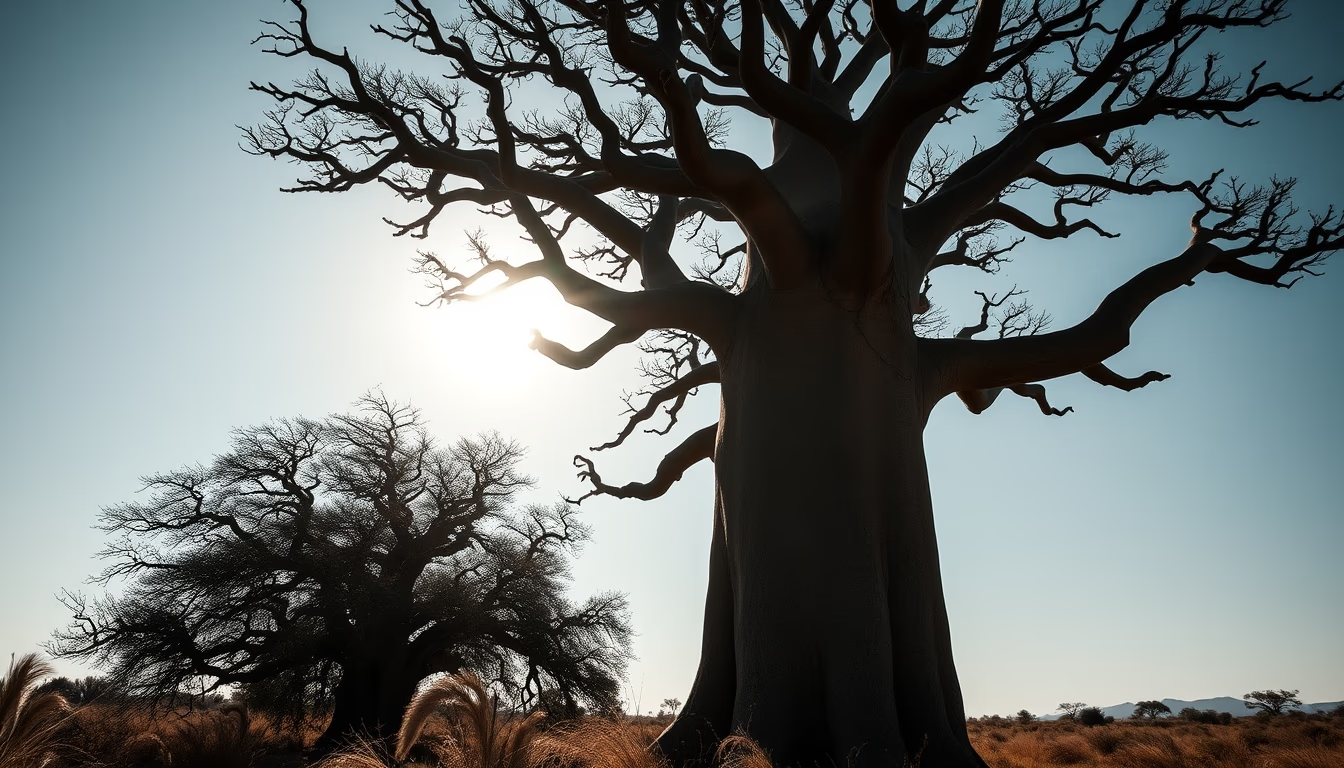
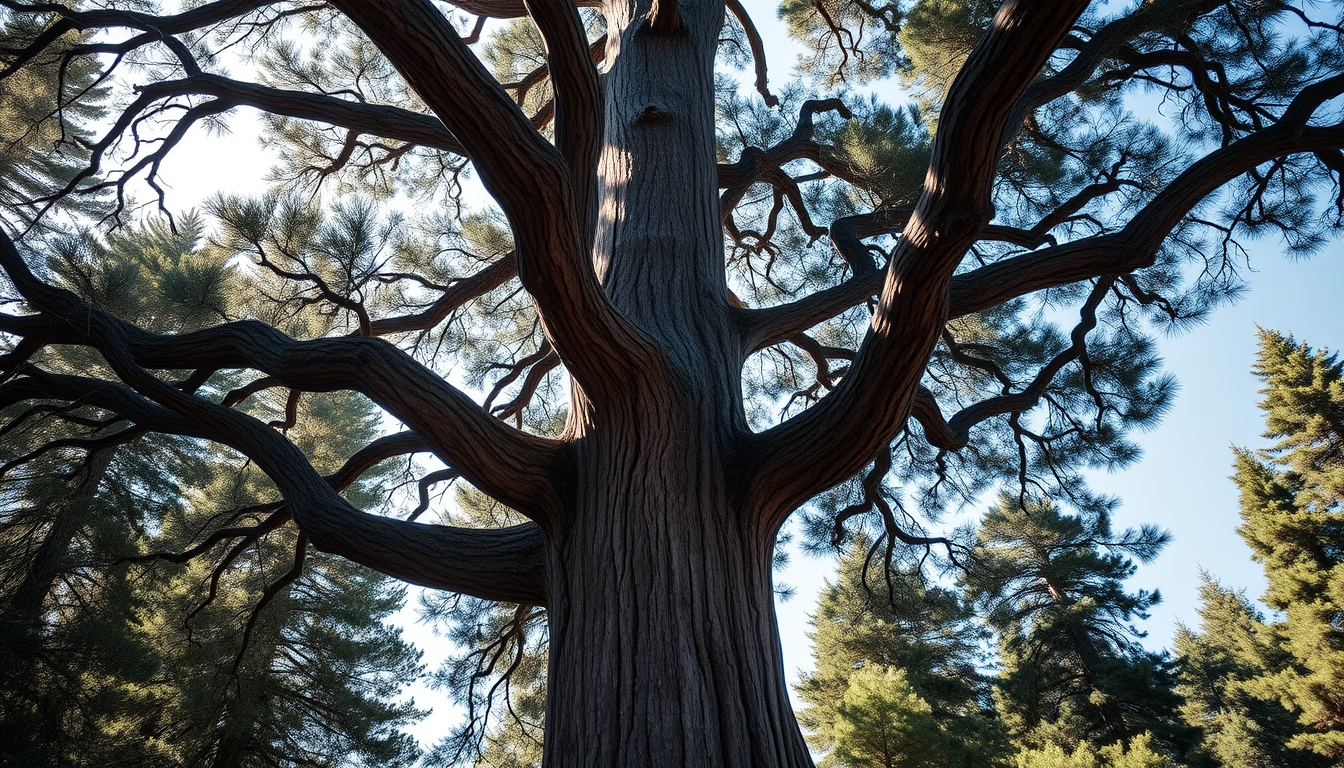
The baobab, iconic tree of Madagascar, impresses with its longevity and unique shapes, symbolizing the landscape and local culture.
About this subject
The baobab (Adansonia) is a tree native to Madagascar, Africa, and Australia, but it is on the island of Madagascar that the most emblematic species are found. In the Menabe region, the Avenue of the Baobabs concentrates dozens of Adansonia grandidieri, some over 800 years old. These trees can reach 30 meters in height and their massive trunks store up to 120,000 liters of water to withstand drought.
Baobabs hold deep cultural significance in Madagascar. They are called "reniala" (mother of the forest) and considered sacred, with legends associating them with ancestral spirits. Their bark and fruits are used in traditional medicine and food. The fruit, known as monkey bread, is rich in vitamin C and calcium. Dried pulp is made into juices and sorbets.
Ecologically, baobabs are keystone species in Madagascar's dry ecosystem. They provide shelter and food for lemurs, birds such as the Madagascar green parrot, and fruit bats. The white flowers open at dusk and are pollinated by bats and sphinx moths. The fibrous, light wood is not used for construction, but the bark is harvested for ropes and cloth.
Conservation of baobabs faces challenges. Deforestation, climate change, and land clearing for agriculture have reduced their natural habitat. Two of the six species in Madagascar are critically endangered. The Avenue of the Baobabs is protected as a reserve and attracts tourists worldwide, but sustainable management is vital to preserve these plant giants for future generations.
Frequently Asked Questions
How old can a baobab tree live?
Some baobabs can live over 1,000 years, though exact age is hard to determine because the trees do not form reliable annual growth rings. The largest specimens in the Avenue of the Baobabs are estimated to be between 800 and 1,200 years old.
Why is the baobab trunk so thick?
The massive trunk stores water during the rainy season to survive long drought periods in Madagascar. Storage capacity can reach up to 120,000 liters. The bark is fibrous and fire-resistant.
Where is the Avenue of the Baobabs?
The Avenue of the Baobabs is located in the Menabe region, western Madagascar, between the towns of Morondava and Belon'i Tsiribihina. It is a dirt road lined with dozens of Adansonia grandidieri baobabs and is one of the country's most famous tourist attractions.
Direct URL
https://pub-c7d6a6ea828543ac903a74a341ccb2e1.r2.dev/imagens/baobab-tree-madagascar-fine-art-photography-p9.avifHow to credit
Include a visible link back to UtilizAí. Copy one of the snippets below:
<a href="https://xn--utiliza-eza.com/en/midia/imagens/baobab-tree-madagascar-fine-art-photography-p9">Baobab tree madagascar</a> by <a href="https://xn--utiliza-eza.com">UtilizAí</a>, licensed under <a href="https://creativecommons.org/licenses/by/4.0/">CC BY 4.0</a>.
[Baobab tree madagascar](https://xn--utiliza-eza.com/en/midia/imagens/baobab-tree-madagascar-fine-art-photography-p9) by [UtilizAí](https://xn--utiliza-eza.com), CC BY 4.0
License: CC-BY-4.0