Baobab tree madagascar
1344×768 · AVIF · CC BY 4.0
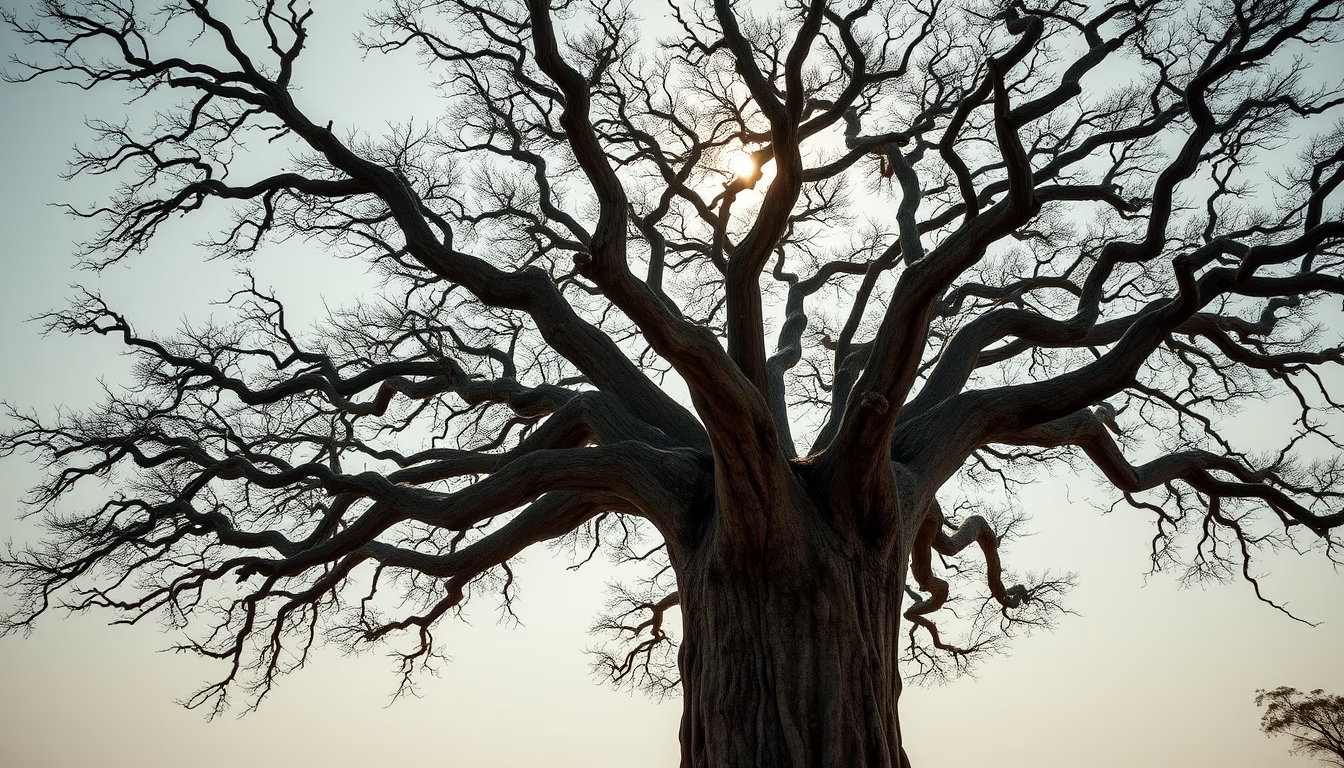
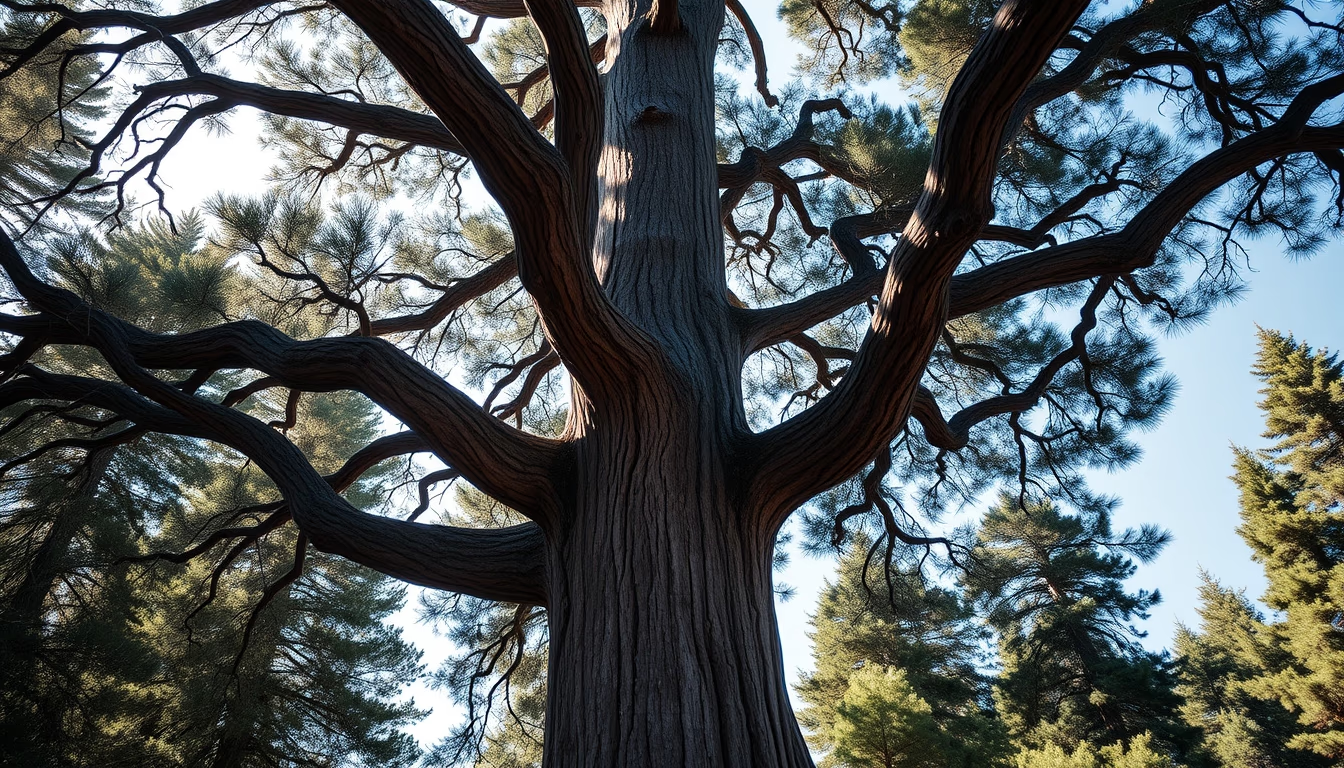
Madagascar's baobab tree: an iconic island tree, known as the 'tree of life', with a massive trunk and millennial longevity.
About this subject
Baobabs (Adansonia spp.) are iconic trees of Madagascar, where six of the world's eight species are endemic. The most famous is Adansonia grandidieri, which lines the famous Avenue of the Baobabs in the Menabe region, western Madagascar. These trees can live over 1,000 years and reach up to 30 meters in height, with trunks up to 11 meters in diameter. Their ability to store water in fibrous trunks allows them to survive arid climates, acting as natural reservoirs during dry seasons.
Culturally, baobabs are revered in Malagasy folklore: their flowers were thought to house spirits, and bark could cure ailments. The seeds are edible and rich in vitamin C, while the fruit pulp, known as 'monkey bread', is used in drinks and cooking. Ecologically, baobabs provide food and shelter for lemurs, bats, and birds, and sustain human communities with their fruit and fibers.
Despite their hardiness, baobabs are threatened. Deforestation for agriculture and global warming are shrinking their habitat. Recent studies show that the oldest specimens are dying prematurely, possibly due to climate change. In 2018, Madagascar's largest known baobab, aged 2,000 years, collapsed. Conservation efforts include planting seedlings in protected areas and promoting sustainable tourism at the Avenue of the Baobabs, which attracts visitors from around the world.
Frequently Asked Questions
How many baobab species are found in Madagascar?
Madagascar is home to six of the eight known baobab species, all endemic to the island. The other two species are found in mainland Africa and Australia.
What is the cultural significance of the baobab for Malagasy people?
The baobab is considered a sacred tree in Malagasy culture. Its flowers are believed to house ancestral spirits, and parts of the tree, such as bark and fruit, are thought to have healing properties.
Why are baobabs threatened with extinction?
The main threats are deforestation for agriculture and livestock, climate change intensifying droughts, and overharvesting of fruits and bark. Baobab populations in Madagascar are estimated to decline drastically in the coming decades.
Direct URL
https://pub-c7d6a6ea828543ac903a74a341ccb2e1.r2.dev/imagens/baobab-tree-madagascar-documentary-photography-p3.avifHow to credit
Include a visible link back to UtilizAí. Copy one of the snippets below:
<a href="https://xn--utiliza-eza.com/en/midia/imagens/baobab-tree-madagascar-documentary-photography-p3">Baobab tree madagascar</a> by <a href="https://xn--utiliza-eza.com">UtilizAí</a>, licensed under <a href="https://creativecommons.org/licenses/by/4.0/">CC BY 4.0</a>.
[Baobab tree madagascar](https://xn--utiliza-eza.com/en/midia/imagens/baobab-tree-madagascar-documentary-photography-p3) by [UtilizAí](https://xn--utiliza-eza.com), CC BY 4.0
License: CC-BY-4.0