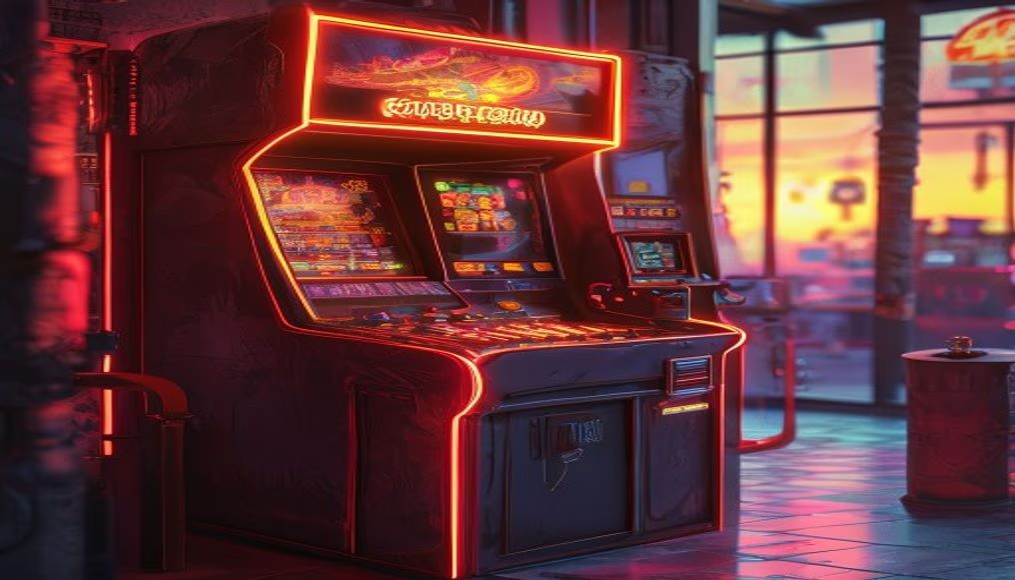
Arcade machine retro neon
1344×768 · AVIF · CC BY 4.0
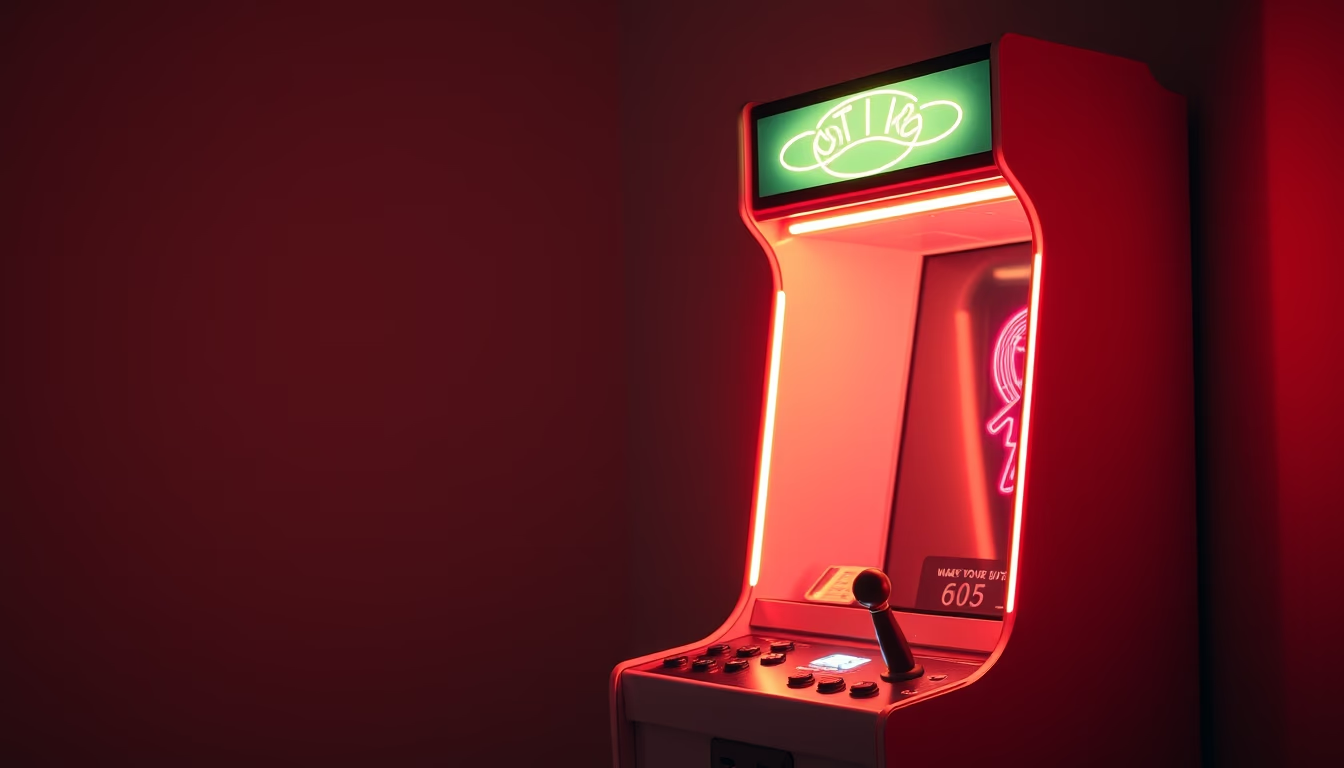
Retro arcade machines with neon lighting represent the golden age of video games, from the late 1970s to the mid-1980s.
About this subject
Arcade machines were the primary way the public experienced video games before home consoles became widespread. The golden age of arcades, from 1978 to 1985, introduced classics like Space Invaders (1978), Pac-Man (1980), and Donkey Kong (1981), which established gameplay mechanics and characters that became cultural icons. The machines were designed to attract players in public spaces: colorful cabinets, instruction panels, and neon lighting that highlighted the game's name and created a vibrant atmosphere in dimly lit arcades.
Neon lighting on arcade machines served both aesthetic and functional purposes. It acted as signage, indicating which game was available and inviting players to approach. Neon tubes, often in red, blue, pink, and green, formed letters or geometric shapes, complementing the cabinet art. This combination of light and color directly influenced arcade interior design and later inspired the retro aesthetic of themed bars and entertainment venues.
Interestingly, the visual style of retro arcades, with neon lights and pixelated graphics, has made a comeback in decoration and fashion, especially among millennials and Gen Z. This revival is driven by nostalgia and the recognition of gaming culture as historical heritage. In cities like São Paulo and Tokyo, establishments dedicated to classic arcades preserve the original experience with restored machines and neon lighting that recreate the 1980s atmosphere.
For enthusiasts, maintaining these machines is an art form: neon tubes need periodic replacement, and internal electronics require specialized knowledge. Many original machines have been converted to run modern games, but purists seek to preserve the original configuration, including the signature lighting. The legacy of neon arcades extends beyond gaming; it shaped the visual language of video games and continues to inspire artists and designers.
Frequently Asked Questions
What was the first arcade game to use neon lighting?
There is no clear consensus, but games like Space Invaders (1978) already used colored lights on the cabinet. Tubular neon became more common in the early 1980s, with machines like Pac-Man (1980) and Donkey Kong (1981).
How did neon lighting influence gaming culture?
Neon lighting helped create a striking visual identity for arcades, associating video games with a vibrant, nighttime atmosphere. This aesthetic was incorporated into games, movies, and even geek-themed decor.
Can you find retro arcade machines with working neon lights in Brazil?
Yes, in cities like São Paulo, Rio de Janeiro, and Belo Horizonte, there are themed bars and arcades that maintain restored original machines. There are also private collectors who preserve these setups.
Direct URL
https://pub-c7d6a6ea828543ac903a74a341ccb2e1.r2.dev/imagens/arcade-machine-retro-neon-minimalist-composition.avifHow to credit
Include a visible link back to UtilizAí. Copy one of the snippets below:
<a href="https://xn--utiliza-eza.com/en/midia/imagens/arcade-machine-retro-neon-minimalist-composition">Arcade machine retro neon</a> by <a href="https://xn--utiliza-eza.com">UtilizAí</a>, licensed under <a href="https://creativecommons.org/licenses/by/4.0/">CC BY 4.0</a>.
[Arcade machine retro neon](https://xn--utiliza-eza.com/en/midia/imagens/arcade-machine-retro-neon-minimalist-composition) by [UtilizAí](https://xn--utiliza-eza.com), CC BY 4.0
License: CC-BY-4.0