Arabic calligraphy mosque
1344×768 · AVIF · CC BY 4.0
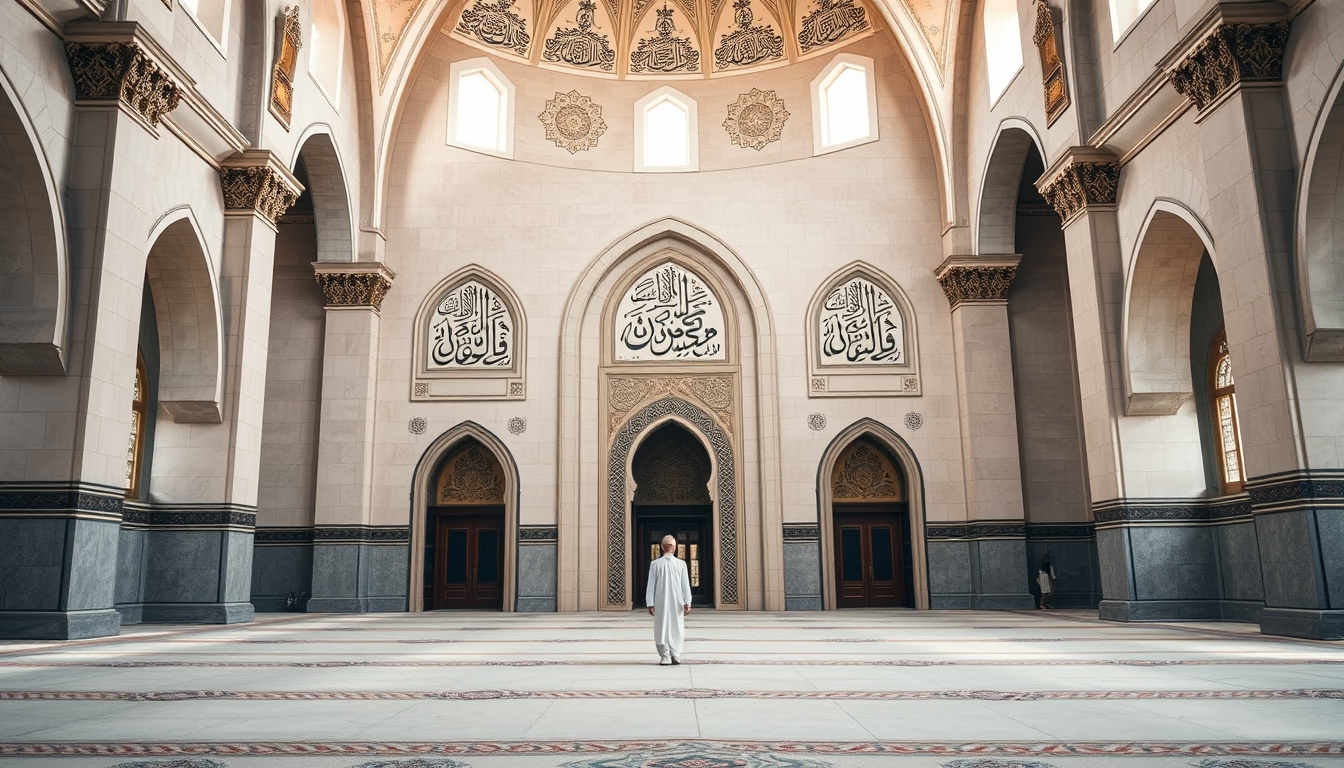
Arabic calligraphy in mosques combines art and faith, with Quranic verses adorning walls and domes for centuries.
About this subject
Arabic calligraphy is a central art form in mosque architecture, where Quranic verses are carved, painted, or mosaicked on walls, domes, and mihrabs. This tradition dates back to the 7th century, when Kufic script, one of the earliest, was used to record the Quran. Over time, styles like Thuluth, Naskh, and Diwani gained prominence, each with geometric or fluid characteristics. The choice of style often reflects the era and region: Kufic predominates in ancient Maghreb mosques, while Thuluth is common in the Ottoman Empire.
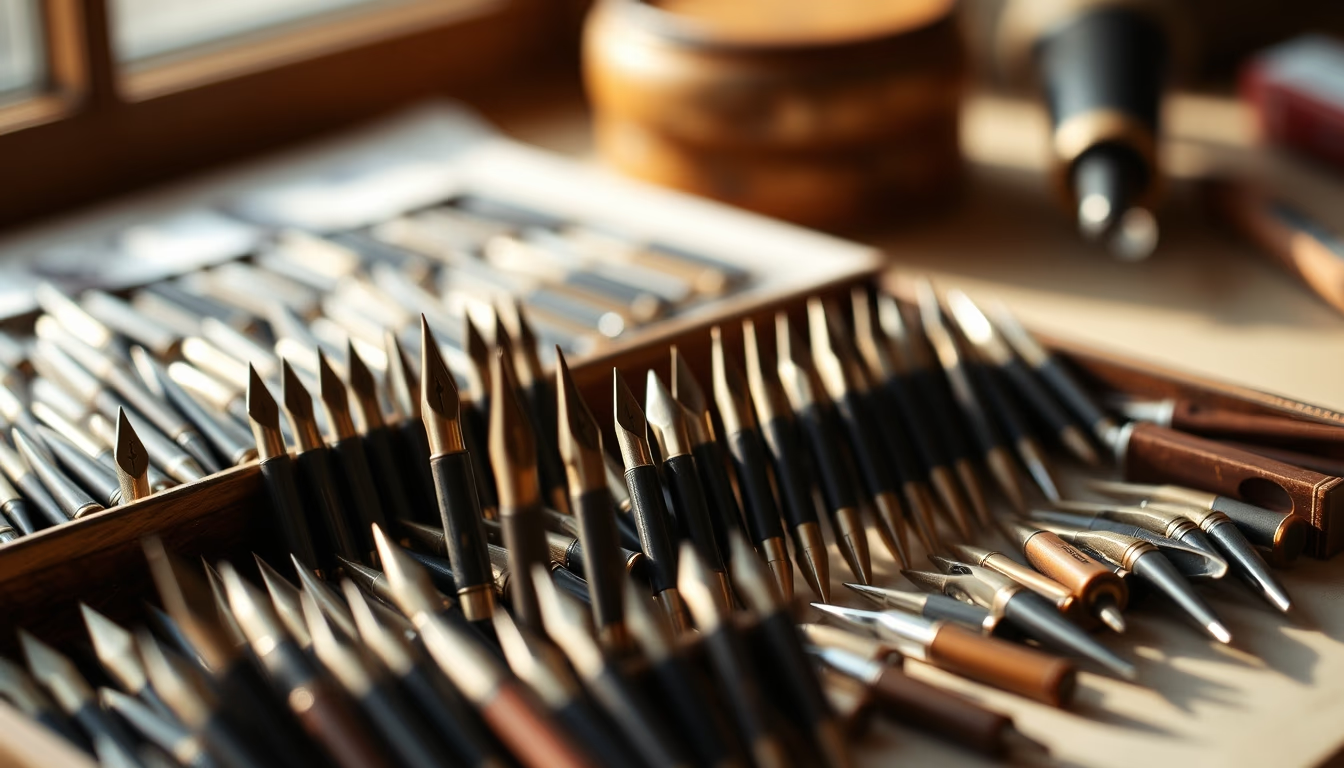
In the Sultan Ahmed Mosque in Istanbul, 17th-century calligraphy panels by Seyyid Kasim Gubari display verses in Thuluth and Naskh. In the Great Mosque of Córdoba, Spain, Kufic inscriptions in marble and wood adorn the arches. Calligraphy is not merely decorative; it has a religious function, reminding the faithful of the divine word. The calligrapher, or khattat, spends years training proportions and rhythm, using tools like the qalam (reed pen) and natural ink.
Interestingly, Arabic calligraphy also appears on everyday objects within mosques, such as prayer rugs, lamps, and doors. In 2021, UNESCO recognized Arabic calligraphy as Intangible Cultural Heritage of Humanity. This highlights its importance beyond religion, as an artistic and historical link connecting cultures from the Middle East to North Africa and Asia. The combination of sacred text with minimalist design, as seen in the suggested image, is a contemporary trend that simplifies forms while preserving spirituality.
Frequently Asked Questions
What are the main styles of Arabic calligraphy used in mosques?
The most common styles are Kufic, geometric and angular, used in ancient inscriptions; Thuluth, cursive and elegant, frequent in decorative panels; and Naskh, clear and legible, used in Quran copies. Each region has preferences: the Maghreb uses Maghrebi Kufic, while the Ottoman Empire favored Thuluth.
Why is Arabic calligraphy so important in mosque decoration?
It serves to convey the word of Allah in a beautiful and reverent manner. Since Islam discourages figurative representations, calligraphy became the primary artistic expression in sacred spaces, combining faith and aesthetics to inspire worshippers.
Is Arabic calligraphy in mosques created only by specialized artists?
Yes, calligraphers (khattat) spend years learning proportions, strokes, and traditional techniques. Many are trained in calligraphy schools, such as those in Cairo and Istanbul, and use specific materials like the qalam (reed pen) and natural inks made from soot or minerals.
Direct URL
https://pub-c7d6a6ea828543ac903a74a341ccb2e1.r2.dev/imagens/arabic-calligraphy-mosque-minimalist-composition-fresh12.avifHow to credit
Include a visible link back to UtilizAí. Copy one of the snippets below:
<a href="https://xn--utiliza-eza.com/en/midia/imagens/arabic-calligraphy-mosque-minimalist-composition-fresh12">Arabic calligraphy mosque</a> by <a href="https://xn--utiliza-eza.com">UtilizAí</a>, licensed under <a href="https://creativecommons.org/licenses/by/4.0/">CC BY 4.0</a>.
[Arabic calligraphy mosque](https://xn--utiliza-eza.com/en/midia/imagens/arabic-calligraphy-mosque-minimalist-composition-fresh12) by [UtilizAí](https://xn--utiliza-eza.com), CC BY 4.0
License: CC-BY-4.0