Arabic calligraphy ink
1344×768 · AVIF · CC BY 4.0
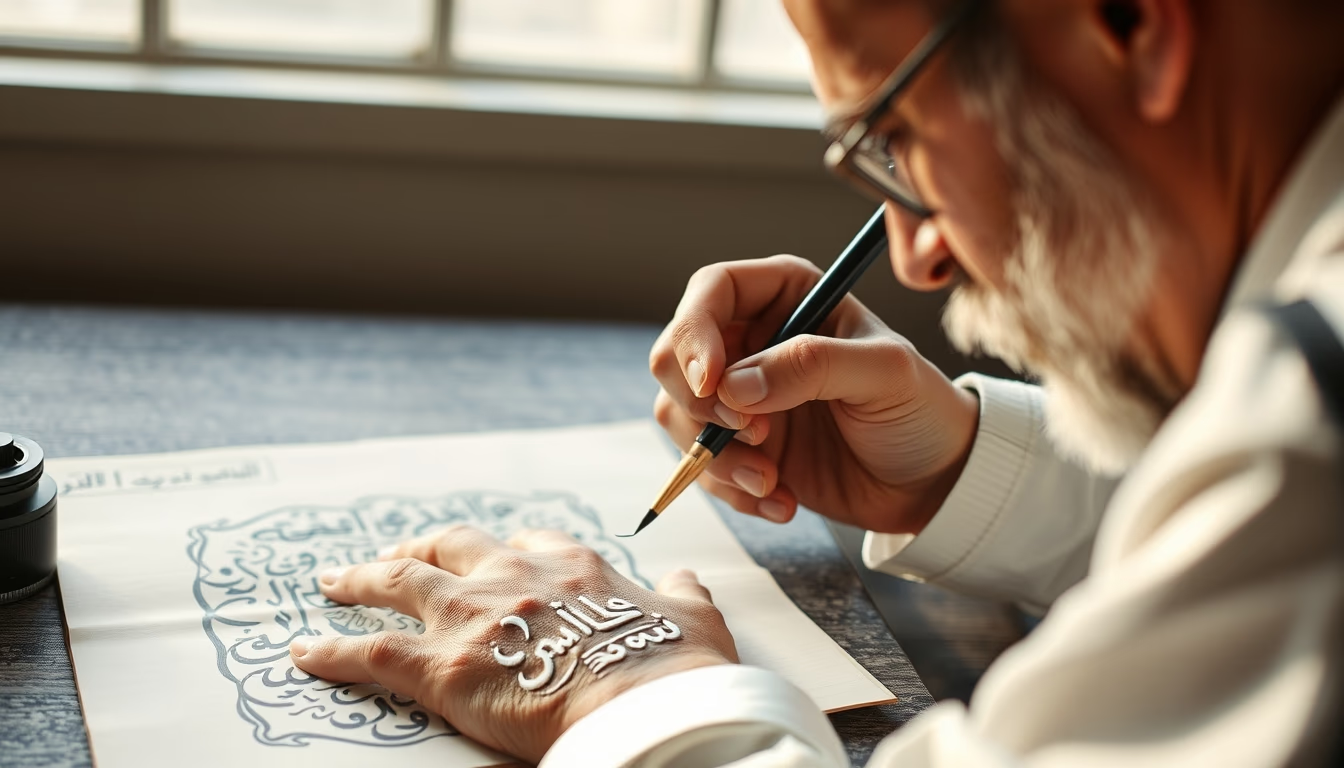
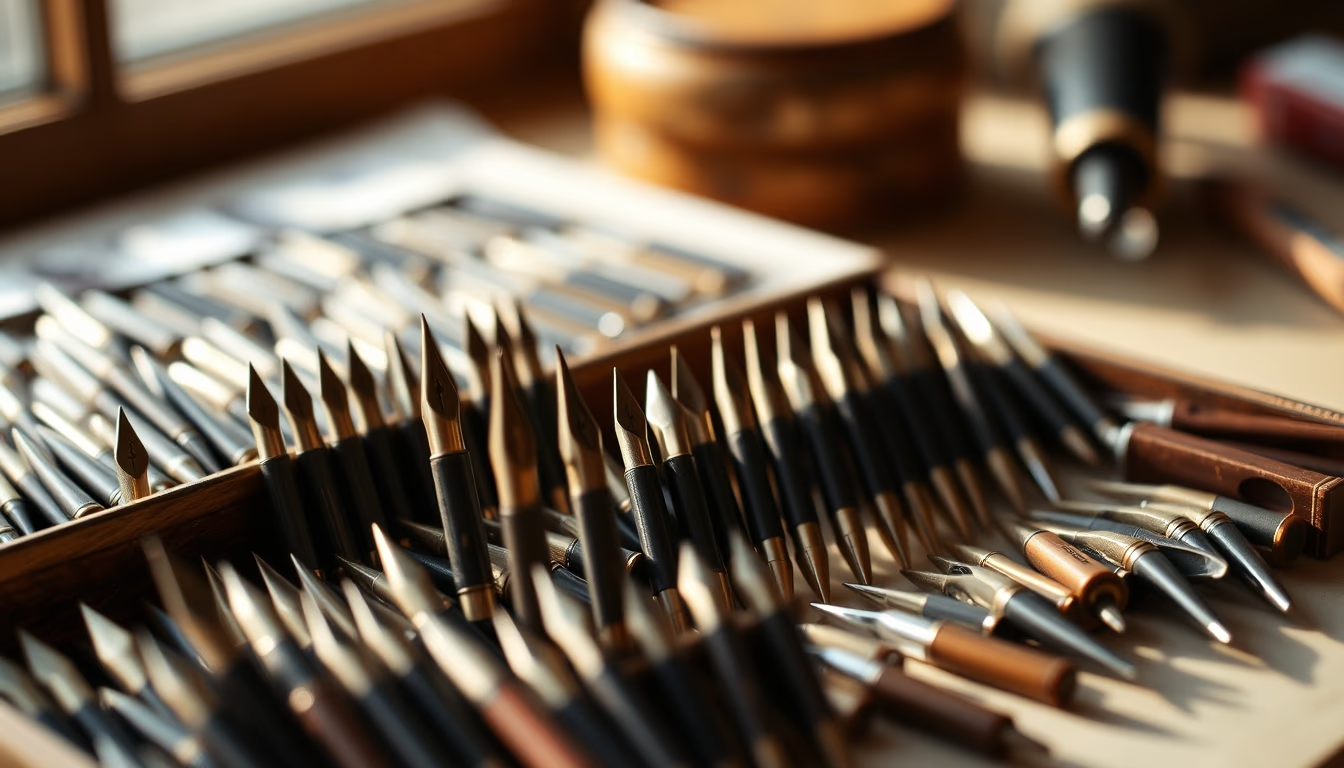
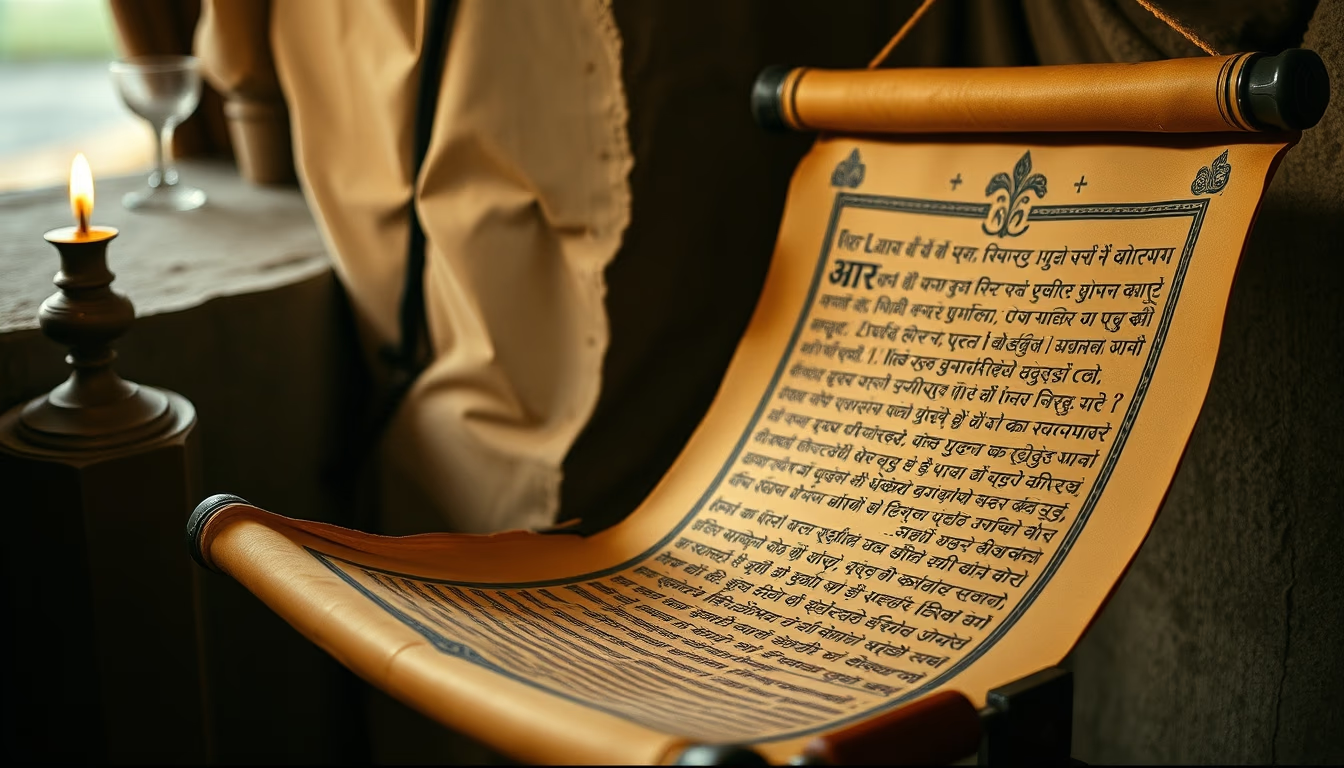
Arabic calligraphy ink, traditionally made from soot and gum arabic, is essential for the fluid and artistic writing of the Arabic alphabet.
About this subject
Arabic calligraphy ink has a long history dating back to the early centuries of Islam. Traditionally, black ink (midād) was made from lamp soot mixed with gum arabic and water, resulting in a viscous texture that allowed precise strokes. This basic recipe varied by region: in the Maghreb, honey was added for shine; in the Middle East, rose water was used for fragrance. Ink quality was crucial for manuscript preservation, and calligraphers like Ibn Muqla and Yaqut al-Musta'simi established strict rules for its preparation.
Today, industrial ink has replaced handmade ink in most practices, but artisans still produce traditional inks in places like Fez (Morocco) and Cairo (Egypt). The ink must flow smoothly from the reed pen (qalam) without bleeding, requiring an exact balance of pigment and binder. Black is the most common color, but brown, blue, and red inks were also used for titles and ornaments.
Interestingly, the Portuguese word 'tinta' comes from Latin 'tincta', but the Arabic ink-making technique influenced medieval European calligraphy through Islamic Spain. Manuscripts such as the Blue Qur'an of Córdoba (10th century) used gold ink on blue-dyed parchment, showing the sophistication of materials.
Arabic calligraphy ink symbolizes the connection between the spiritual and the material in the Islamic world, where writing the Qur'an is considered an act of devotion. Every stroke requires quality ink to honor the divine word.
Frequently Asked Questions
What is traditional Arabic calligraphy ink made of?
Traditionally, it is made from lamp soot, gum arabic, and water. Variations may include honey or rose water.
Why does the ink need to be viscous for Arabic calligraphy?
The viscosity allows the ink to flow smoothly from the reed pen without bleeding, ensuring precise and fluid strokes characteristic of Arabic script.
Is there a difference between Arabic ink and Chinese ink?
Yes. Arabic ink uses gum arabic as a binder, while traditional Chinese ink uses animal glue. Also, Arabic ink is more fluid to suit the reed pen (qalam).
Direct URL
https://pub-c7d6a6ea828543ac903a74a341ccb2e1.r2.dev/imagens/arabic-calligraphy-ink-documentary-photography-fresh4.avifHow to credit
Include a visible link back to UtilizAí. Copy one of the snippets below:
<a href="https://xn--utiliza-eza.com/en/midia/imagens/arabic-calligraphy-ink-documentary-photography-fresh4">Arabic calligraphy ink</a> by <a href="https://xn--utiliza-eza.com">UtilizAí</a>, licensed under <a href="https://creativecommons.org/licenses/by/4.0/">CC BY 4.0</a>.
[Arabic calligraphy ink](https://xn--utiliza-eza.com/en/midia/imagens/arabic-calligraphy-ink-documentary-photography-fresh4) by [UtilizAí](https://xn--utiliza-eza.com), CC BY 4.0
License: CC-BY-4.0