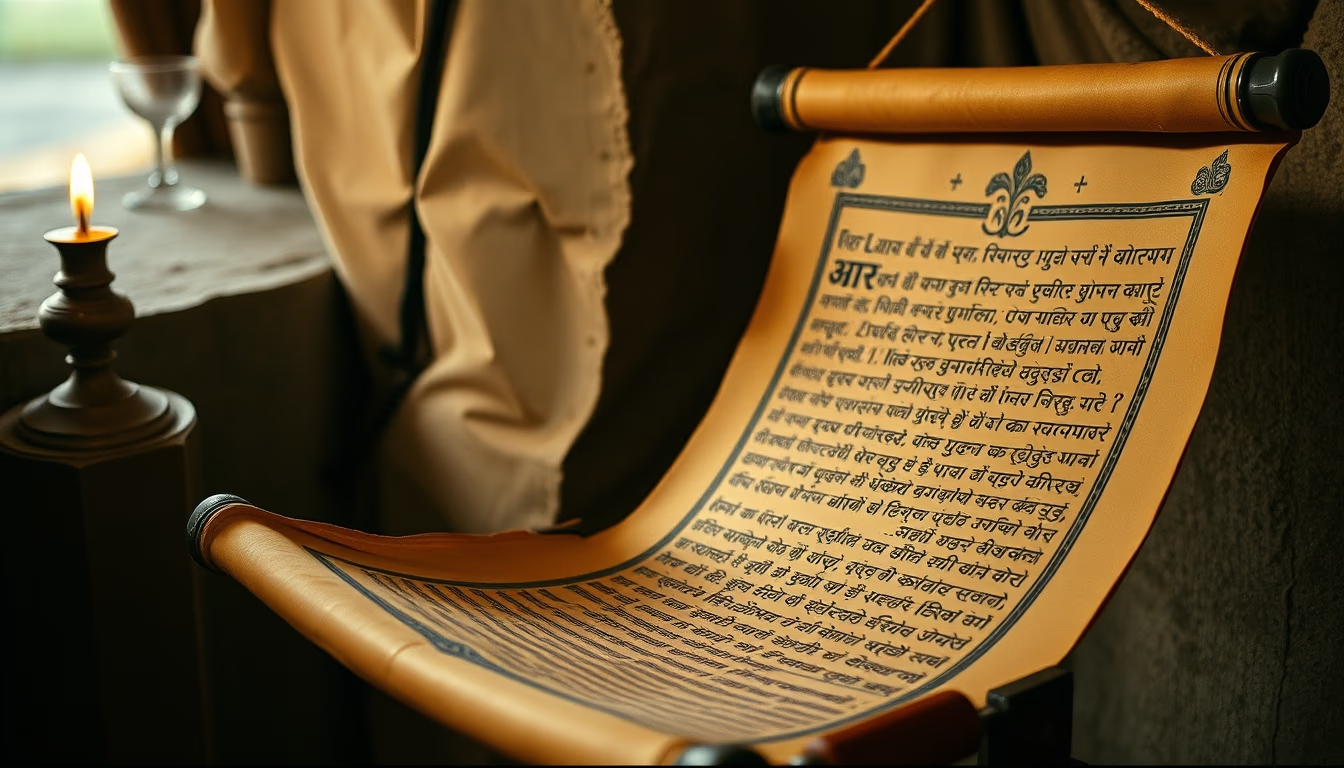
Arabic calligraphy ink
1344×768 · AVIF · CC BY 4.0
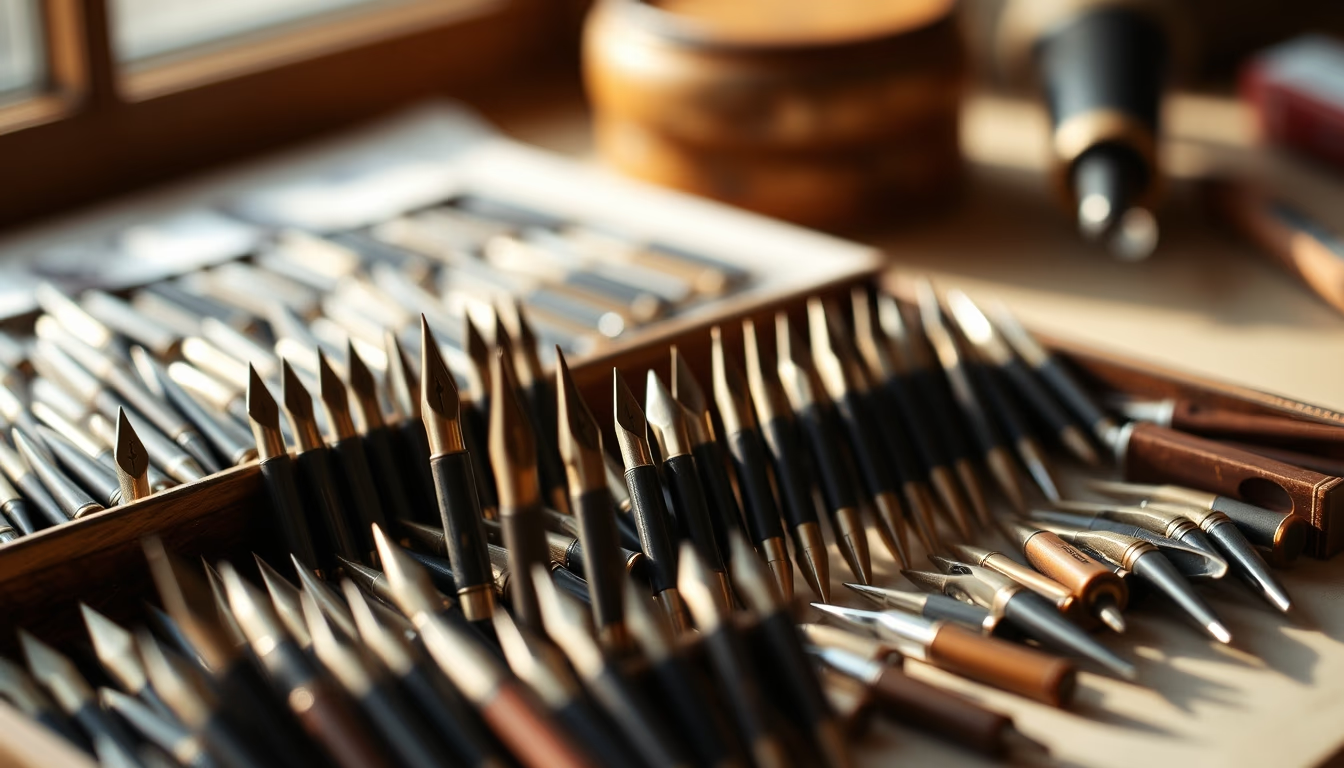
Ink for Arabic calligraphy, traditionally made from natural ingredients like soot and gum arabic, essential in Islamic art.
About this subject
Ink for Arabic calligraphy is one of the most important tools in Islamic art, used to write the Quran and other sacred texts since the 7th century. Traditionally, it was made from lampblack (soot from oil lamps), mixed with gum arabic as a binder, and diluted with water. This mixture produced a deep, lasting black that resisted light and humidity. Recipes varied by region: in the Maghreb, honey was added for shine; in Persia, saffron gave golden tones. The artisanal production involved a ritualistic process where the master calligrapher ground the ingredients in a stone mortar for hours until achieving the ideal consistency.
With the spread of Islam, Arabic calligraphy expanded from the Iberian Peninsula to Indonesia, increasing the demand for quality inks. In the Ottoman period, specialized workshops (hane) produced carbon-based inks, while Persian calligraphers favored sumi ink imported from China. Exact compositions were each master's secret, passed down orally. In the 19th century, industrial inks (like India ink) simplified the process, but traditional calligraphers still value handmade ink for its fluidity and stability.
Culturally, Arabic calligraphy ink transcends technical use: it is seen as a symbol of purity and wisdom. Many masters insist on preparing it personally, believing the writer's energy transfers to the ink. Besides lampblack, ingredients like pomegranate juice, iron rust, and even gold were used for special colors. Today, commercial manufacturers produce acrylic and water-based inks inspired by historical recipes, but purists still rely on artisanal suppliers in Egypt, Turkey, and Iran.
Preserving this tradition faces challenges from pollution and the disappearance of natural soot sources, but museums like the Museum of Islamic Art in Cairo hold demonstration workshops. For the contemporary calligrapher, understanding ink chemistry is as important as mastering the strokes. The right ink ensures that the curved and straight lines of Arabic calligraphy styles (Naskh, Thuluth, Diwani) maintain their beauty and legibility for centuries.
Frequently Asked Questions
What are the traditional ingredients of Arabic calligraphy ink?
Traditional ingredients include lampblack (carbon black), gum arabic as a binder, and water. Some recipes add honey, saffron, or iron rust for different colors and properties.
Why do traditional calligraphers prefer handmade ink?
Handmade ink offers superior flow, controlled drying, and lightfastness that industrial inks often lack. Additionally, the manual process is seen as a spiritual connection to the art.
Is Arabic calligraphy ink only used for religious writing?
No, although it originated from writing the Quran, Arabic calligraphy is used in decorative art, architecture, and secular documents. The ink serves both sacred and contemporary works.
Direct URL
https://pub-c7d6a6ea828543ac903a74a341ccb2e1.r2.dev/imagens/arabic-calligraphy-ink-cinematic-wide-shot-fresh5.avifHow to credit
Include a visible link back to UtilizAí. Copy one of the snippets below:
<a href="https://xn--utiliza-eza.com/en/midia/imagens/arabic-calligraphy-ink-cinematic-wide-shot-fresh5">Arabic calligraphy ink</a> by <a href="https://xn--utiliza-eza.com">UtilizAí</a>, licensed under <a href="https://creativecommons.org/licenses/by/4.0/">CC BY 4.0</a>.
[Arabic calligraphy ink](https://xn--utiliza-eza.com/en/midia/imagens/arabic-calligraphy-ink-cinematic-wide-shot-fresh5) by [UtilizAí](https://xn--utiliza-eza.com), CC BY 4.0
License: CC-BY-4.0