Antelope canyon arizona
1344×768 · AVIF · CC BY 4.0
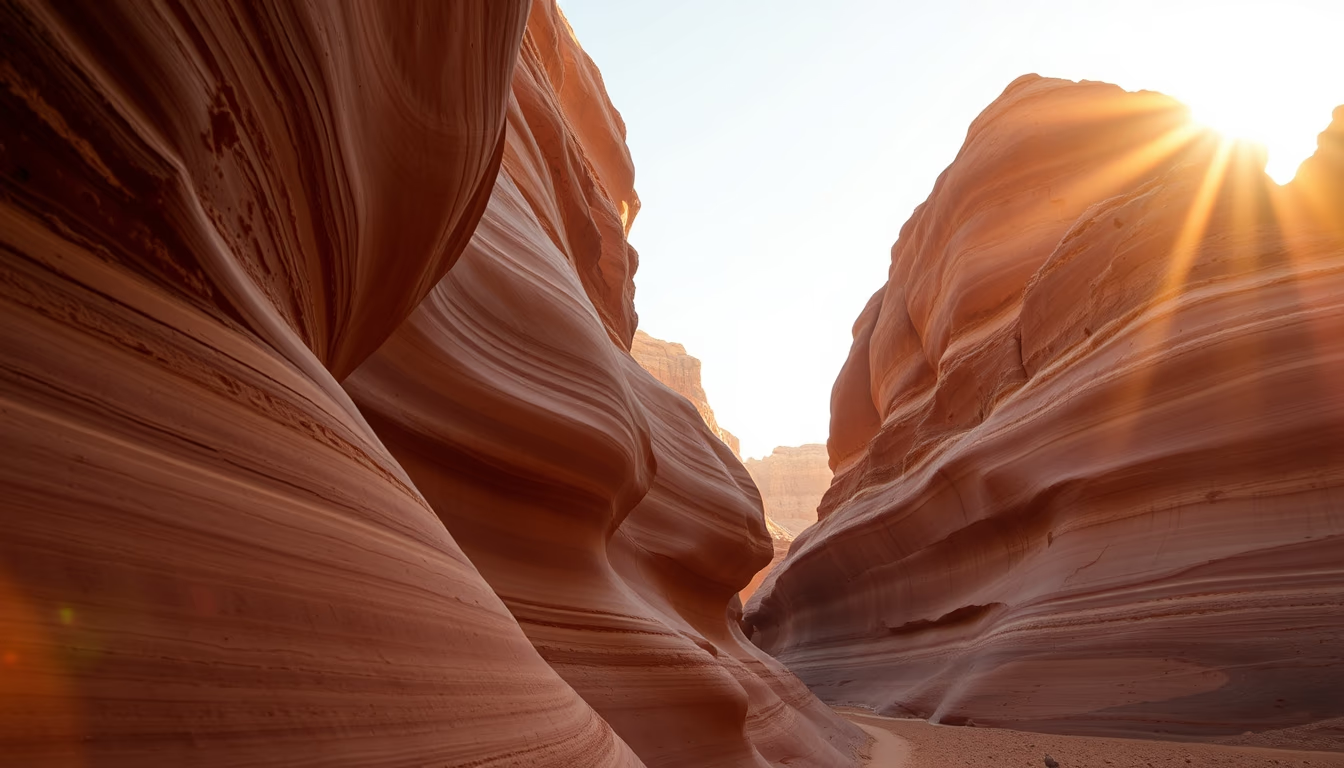
Antelope Canyon in Arizona (USA) is a sandstone slot canyon carved by flash floods, renowned for its smooth curves and colorful light beams.
About this subject
Antelope Canyon is located on Navajo Nation land near Page, Arizona. It is a narrow slot canyon formed over millennia by erosion of Navajo Sandstone, a fine-grained Jurassic sandstone. Flash floodwaters carved sinuous, smooth passages, narrowing in some spots to less than a meter wide. The name comes from antelopes that once grazed the area; in Navajo it is called Tsé bighánílíní, 'the place where water runs through rocks'.
The canyon is divided into two main sections: Upper Antelope Canyon, more accessible and famous for light beams penetrating the slot at certain times, and Lower Antelope Canyon, more challenging with ladders and narrow passages but equally stunning. The vibrant colors, oranges, reds, pinks, purples, result from iron and manganese oxides deposited in the rock, plus the effect of light reflecting off the walls.
Because it is sacred and fragile territory, Antelope Canyon can only be visited with authorized Navajo guides. Photography is extremely popular, especially during summer when the noon sun creates light pillars in the Upper Canyon. Despite its beauty, the site poses risks: flash floods can occur even without visible rain (as in the 1997 tragedy that killed 11 tourists). Access is tightly controlled and closed during bad weather.
Geologically, Antelope Canyon is a classic example of differential erosion: harder sandstone layers form ledges and cornices, while softer parts are sculpted into organic curves. Studies indicate the widening process takes tens of thousands of years, and that present shapes continue changing with each flood. The wavy texture of the walls, called 'flowstone', attracts geologists and photographers worldwide.
Frequently Asked Questions
How was Antelope Canyon formed?
It was formed by erosion of Navajo Sandstone by flash floods over millennia. Water carved narrow passages and smooth curves, while iron and manganese oxide deposits gave it characteristic colors.
Can you visit Antelope Canyon without a guide?
No, access is controlled by the Navajo Nation, requiring authorized guides. This protects the fragile ecosystem and visitor safety from sudden flash floods.
What is the best time to photograph the light beams?
The famous light beams in Upper Antelope Canyon occur from May to September, around noon. Reservations for specific tours are needed, and arriving early is advisable due to high demand.
Direct URL
https://pub-c7d6a6ea828543ac903a74a341ccb2e1.r2.dev/imagens/antelope-canyon-arizona-travel-photography-p3.avifHow to credit
Include a visible link back to UtilizAí. Copy one of the snippets below:
<a href="https://xn--utiliza-eza.com/en/midia/imagens/antelope-canyon-arizona-travel-photography-p3">Antelope canyon arizona</a> by <a href="https://xn--utiliza-eza.com">UtilizAí</a>, licensed under <a href="https://creativecommons.org/licenses/by/4.0/">CC BY 4.0</a>.
[Antelope canyon arizona](https://xn--utiliza-eza.com/en/midia/imagens/antelope-canyon-arizona-travel-photography-p3) by [UtilizAí](https://xn--utiliza-eza.com), CC BY 4.0
License: CC-BY-4.0