Anchor large rusty
1344×768 · AVIF · CC BY 4.0
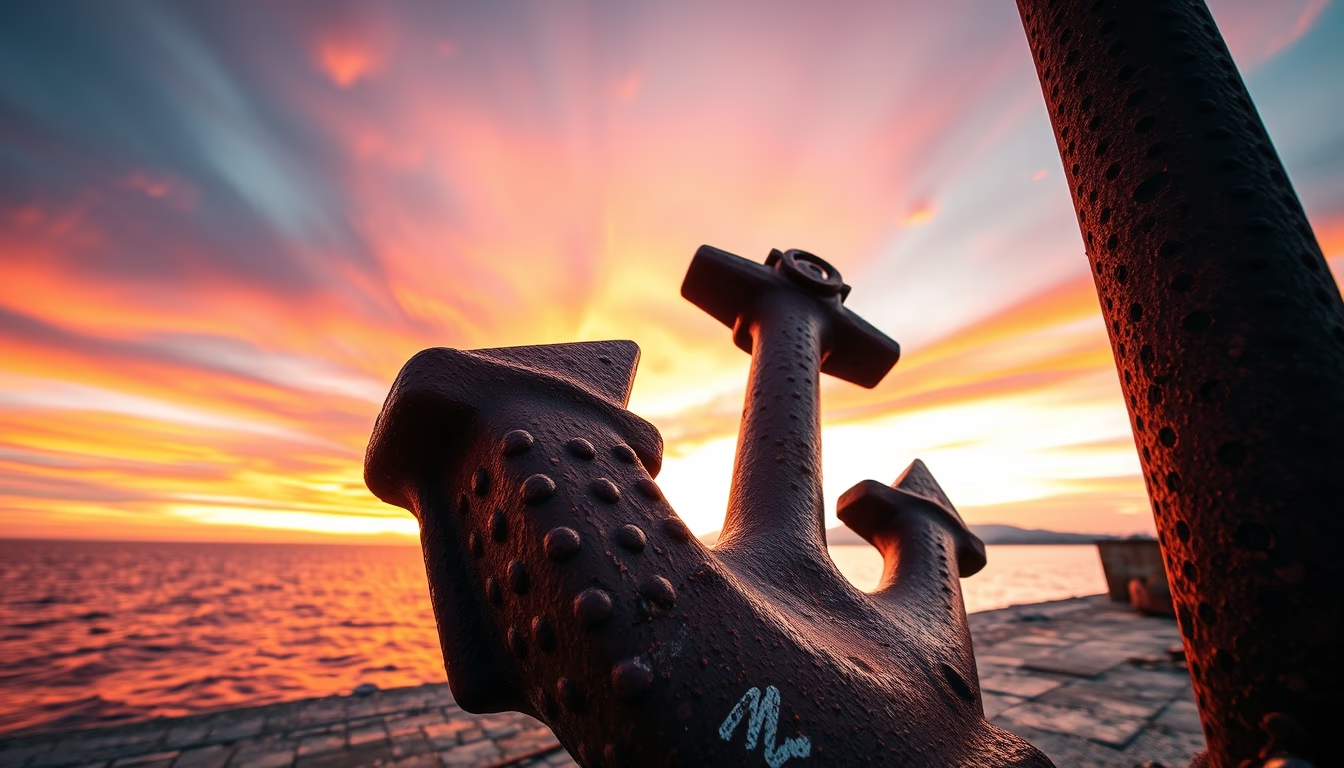
Large rusty anchor, symbol of navigation and abandonment at sea.
About this subject
Anchors are ancient devices used to secure vessels to the seabed, riverbeds, or lake floors. The earliest anchors were made of stone or wood, but during the Iron Age they began to be forged from metal. The classic Admiralty pattern, with two curved flukes and a transverse stock, dominated for centuries. Modern designs such as the Danforth or plow anchors are lighter, more efficient, and lack the stock.
Large anchors, like the one depicted, were common on merchant and naval ships until the 20th century. They could weigh several tons and were raised by manual winches or engines. Over time, exposure to saltwater and air causes oxidation, forming a layer of rust. The process is accelerated by sodium chloride, which corrodes iron unevenly. Abandoned anchors in ports, beaches, or shipyards become silent witnesses to maritime history.
In popular culture, a rusty anchor carries strong symbolism. In art and literature, it represents stability, hope, but also abandonment and decay. Many old anchors are preserved as monuments or decorative pieces, while others are scrapped and reused in construction. Long-exposure photography, which captures water motion around the subject, further emphasizes the sense of stillness and the passage of time.
Notably, the largest anchor ever recovered belonged to the RMS Titanic and weighs about 16 tons. In Brazil, colonial anchors are found in historic shipwrecks, such as those in Baía de Todos os Santos. These artifacts are protected by IPHAN and studied by marine archaeologists, revealing navigation techniques and trade routes from past centuries.
Frequently Asked Questions
What does a rusty anchor symbolize?
A rusty anchor symbolizes abandonment, the passage of time, and decay, but it can also represent stability and connection to the sea. In maritime context, it is an object that has fulfilled its function now rests as a historical witness.
How does the rusting process occur on anchors?
Rust results from the oxidation of iron or steel in contact with oxygen and moisture. Saltwater accelerates the process due to sodium chloride, which acts as a catalyst. Corrosion forms porous layers of iron oxide that flake off over time.
Why are old anchors found on beaches?
Old anchors are found on beaches due to shipwrecks, abandonment of vessels, or intentional disposal. Sea currents and storms can bring these objects ashore. Many are recovered by fishermen or divers and later displayed in museums or public squares.
Direct URL
https://pub-c7d6a6ea828543ac903a74a341ccb2e1.r2.dev/imagens/anchor-large-rusty-long-exposure-p9.avifHow to credit
Include a visible link back to UtilizAí. Copy one of the snippets below:
<a href="https://xn--utiliza-eza.com/en/midia/imagens/anchor-large-rusty-long-exposure-p9">Anchor large rusty</a> by <a href="https://xn--utiliza-eza.com">UtilizAí</a>, licensed under <a href="https://creativecommons.org/licenses/by/4.0/">CC BY 4.0</a>.
[Anchor large rusty](https://xn--utiliza-eza.com/en/midia/imagens/anchor-large-rusty-long-exposure-p9) by [UtilizAí](https://xn--utiliza-eza.com), CC BY 4.0
License: CC-BY-4.0