Anchor large rusty
1344×768 · AVIF · CC BY 4.0
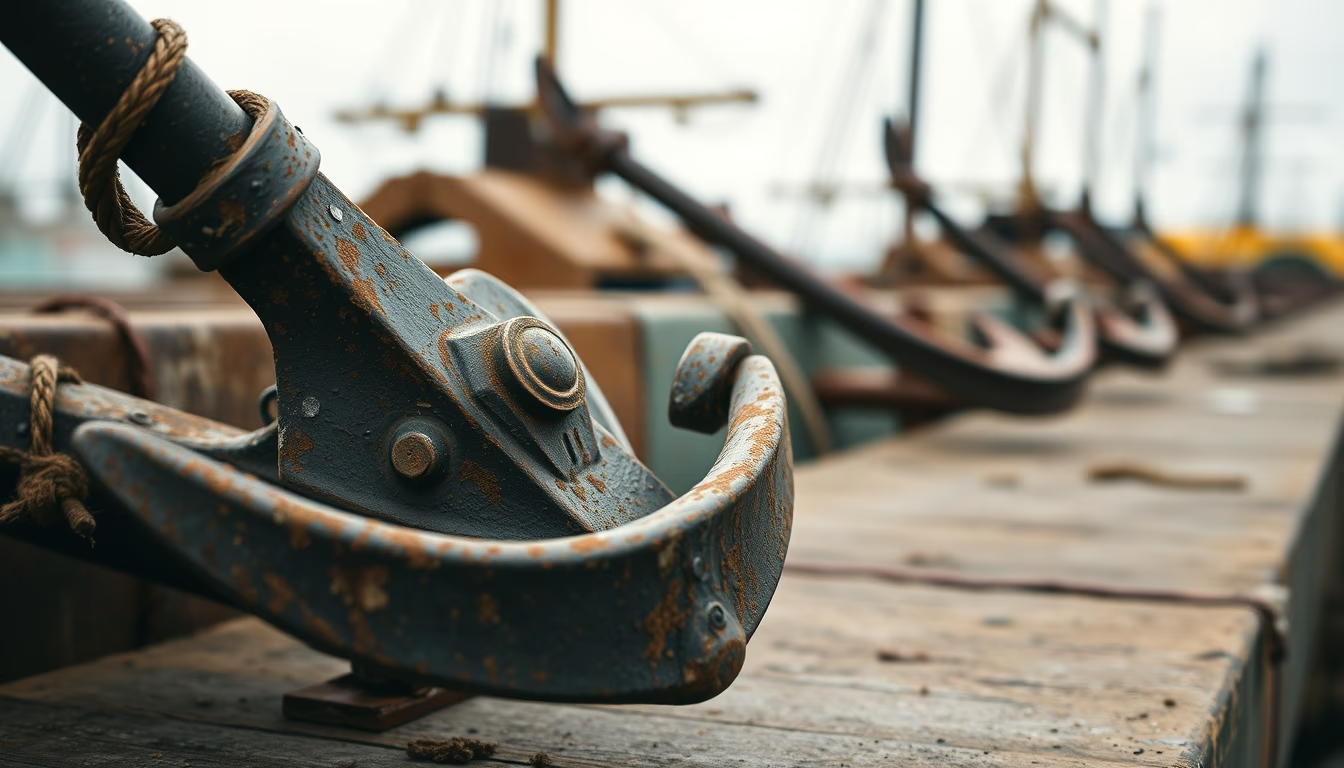
Large rusty anchor, symbol of endurance and time in the maritime environment, highlighting the effects of salt corrosion.
About this subject
Anchors are devices used for millennia to secure vessels to the seabed, riverbeds, or lake bottoms. The classic design, like the one depicted, features a vertical shaft called the shank and two curved arms, the flukes, which dig into the substrate. The heavy rust is a result of prolonged exposure to saltwater and humid air, an electrochemical process that oxidizes iron. This patina not only indicates age but may also hint at stories of shipwrecks, abandonment, or decades of service in busy ports.
Historically, anchors evolved from stones and stone baskets to forged iron designs by the Greeks and Romans. In the 19th century, the Admiralty pattern became standard in the British navy, with hinged arms. The large rusty anchor often represents an industrial or naval past, commonly found in museums and coastal historic sites. In Brazil, examples can be seen at the National Museum of the Sea in São Francisco do Sul or at the Port of Santos, where old anchors are preserved as heritage.
Corrosion, though degradative, also lends aesthetic and symbolic value. Artists and photographers seek these textures to convey endurance, nostalgia, and the passage of time. Interestingly, the word "anchor" comes from the Greek "ankyra," meaning "curved," referring to the shape of the arms. In religious contexts, the anchor is a symbol of hope and steadfastness, appearing in early Christianity as a representation of the cross.
Frequently Asked Questions
How does an anchor work?
An anchor works by creating friction or digging into the seabed. When dropped, the arms tilt and grip the substrate, while the chain or rope holds the vessel in place. Its weight and design allow it to set in different bottom types, such as sand, mud, or rock.
What is the difference between a plow anchor and an Admiralty anchor?
A plow anchor has a shape similar to a farming plow, with a single broad blade that buries itself, commonly used in modern vessels. The Admiralty anchor is a classic design with two curved arms and a fixed shank, typical of historic ships but less effective in hard bottoms.
Why do anchors rust in the sea?
Rust is caused by the oxidation of iron or steel in contact with oxygen and saltwater, which accelerates the electrochemical process. The salt acts as an electrolyte, facilitating electron transfer. Continuous exposure to humid air and waves also contributes to the formation of hydrated iron oxide, or rust.
Direct URL
https://pub-c7d6a6ea828543ac903a74a341ccb2e1.r2.dev/imagens/anchor-large-rusty-film-grain-authentic-p6.avifHow to credit
Include a visible link back to UtilizAí. Copy one of the snippets below:
<a href="https://xn--utiliza-eza.com/en/midia/imagens/anchor-large-rusty-film-grain-authentic-p6">Anchor large rusty</a> by <a href="https://xn--utiliza-eza.com">UtilizAí</a>, licensed under <a href="https://creativecommons.org/licenses/by/4.0/">CC BY 4.0</a>.
[Anchor large rusty](https://xn--utiliza-eza.com/en/midia/imagens/anchor-large-rusty-film-grain-authentic-p6) by [UtilizAí](https://xn--utiliza-eza.com), CC BY 4.0
License: CC-BY-4.0