Analytical balance closeup
1344×768 · AVIF · CC BY 4.0

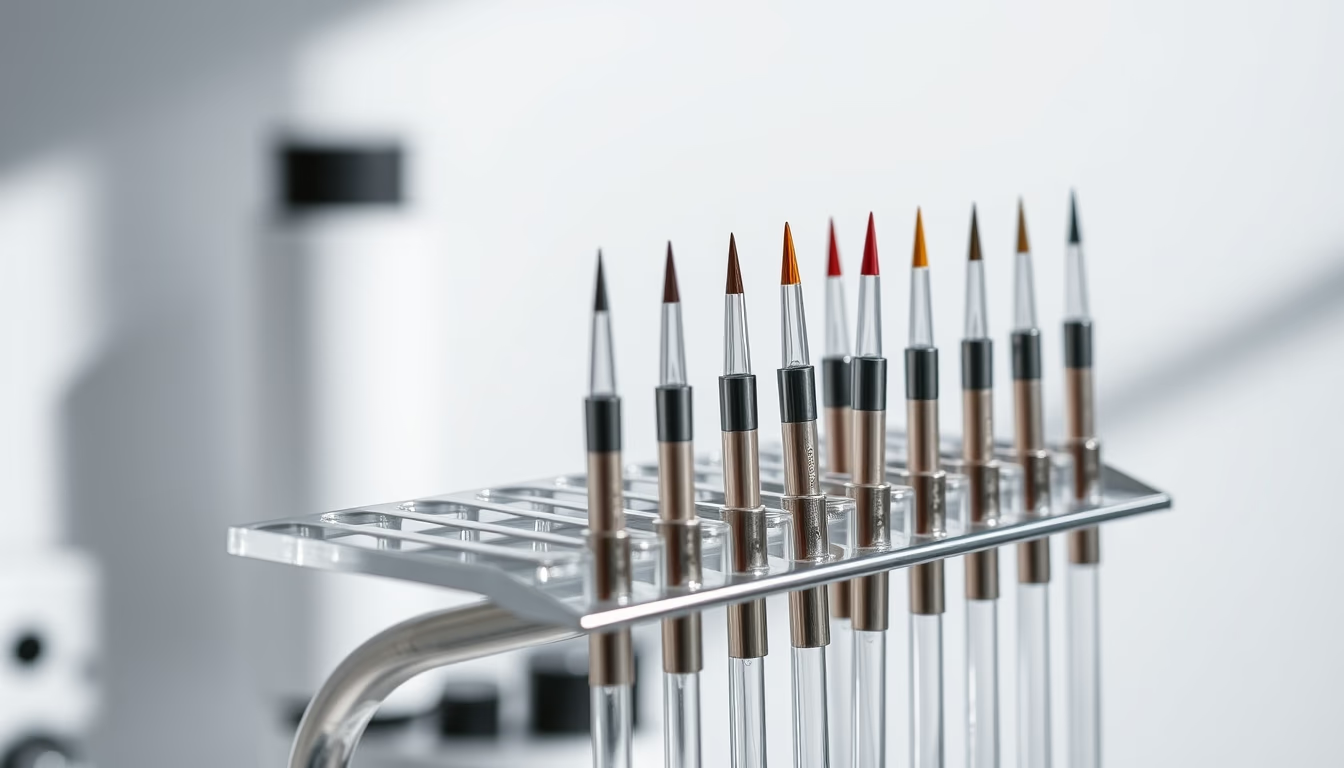
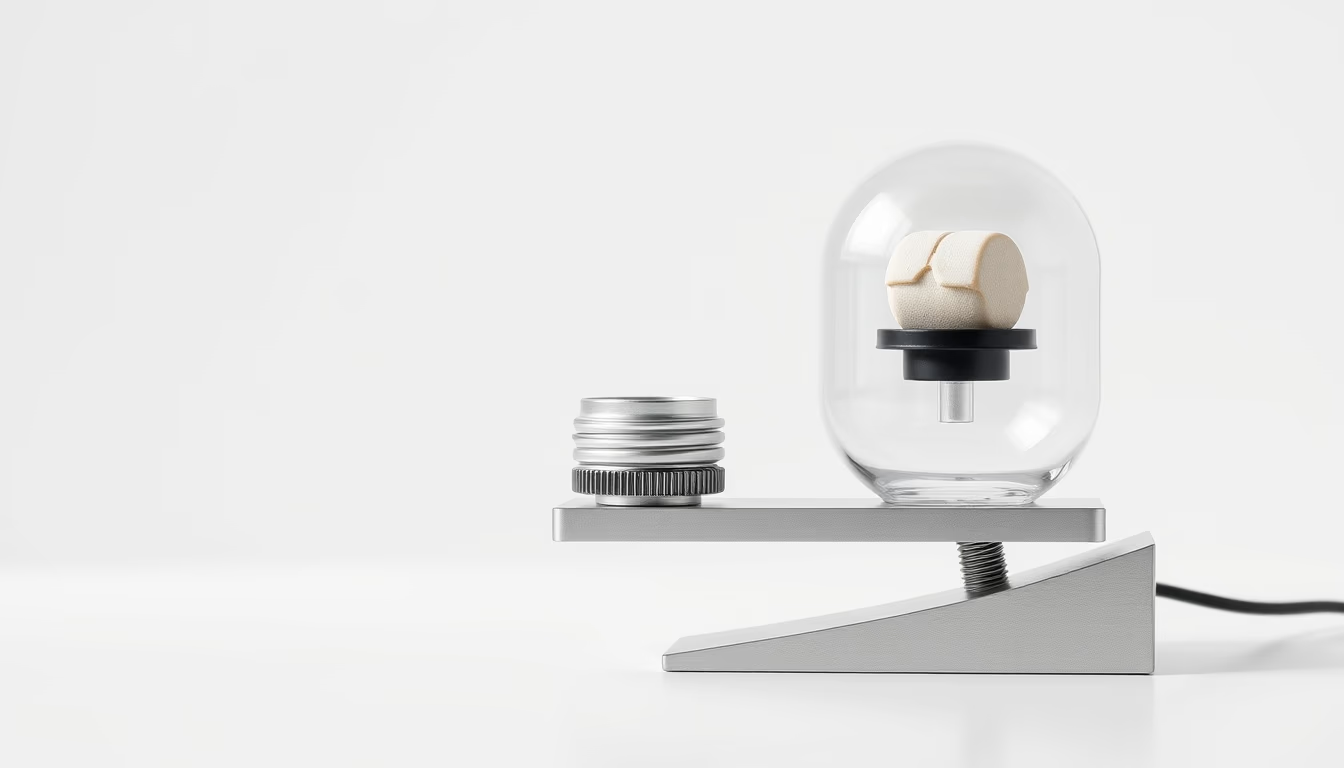
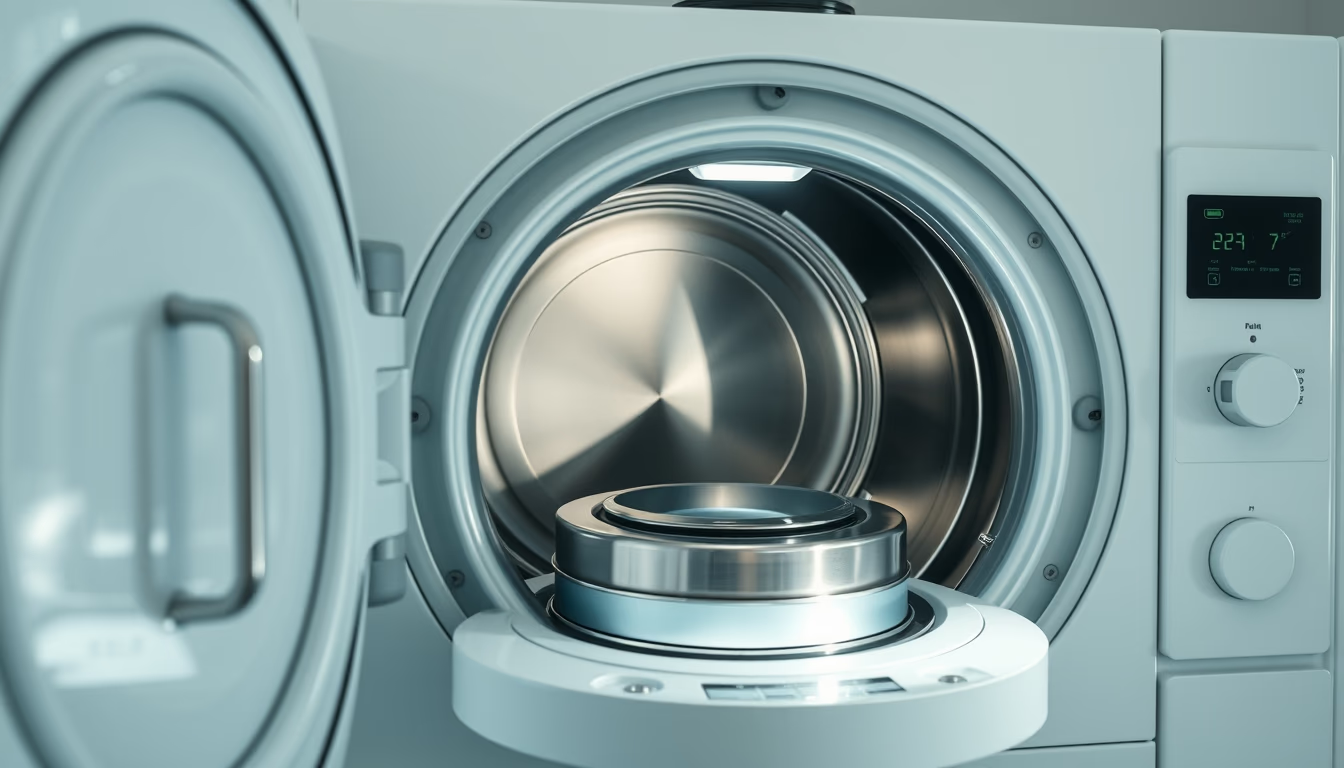
Close-up of an analytical balance, a precision instrument essential for exact weighings in chemical and pharmaceutical laboratories.
About this subject
The analytical balance is one of the most precise instruments found in laboratories, capable of measuring mass with a resolution of up to 0.0001 gram (0.1 mg). Its operating principle relies on electromagnetic force compensation or load cell mechanisms, ensuring high stability against vibrations and temperature fluctuations. These instruments are critical for quantitative analyses such as preparing standard solutions, quality control assays, and pharmaceutical research, where even a slight weighing error can compromise experimental results.
The working environment demands special conditions: the balance must be placed on an anti-vibration table in a room with controlled temperature and humidity, away from drafts. Before each use, either internal or external calibration with certified standard masses is essential to maintain metrological traceability. Modern models offer features like automatic tare, sensitivity adjustment, and connectivity to laboratory information management systems (LIMS), streamlining workflow.
Interestingly, the first analytical balances date back to the 18th century, but it was the development of the load cell in the 1940s that pushed precision from 1 mg to 0.1 mg. Today, analytical balances are mandatory in laboratories accredited under ISO/IEC 17025, ensuring that weighing results have international validity. Periodic maintenance, including cleaning and recalibration, is vital to extend the equipment's lifespan.
Frequently Asked Questions
What is the typical precision of an analytical balance?
The typical precision is 0.0001 gram (0.1 mg), allowing readings to the fourth decimal place. Advanced models can reach 0.01 mg.
Why is calibration important for analytical balances?
Calibration ensures that measurements are traceable to national or international standards, essential for the validity of results in accredited laboratories and to avoid errors in critical analyses.
What precautions should be taken when using an analytical balance?
Use a draft shield, level the balance, avoid vibrations, control temperature and humidity, and always calibrate before use.
Direct URL
https://pub-c7d6a6ea828543ac903a74a341ccb2e1.r2.dev/imagens/analytical-balance-closeup-magazine-editorial-fresh17.avifHow to credit
Include a visible link back to UtilizAí. Copy one of the snippets below:
<a href="https://xn--utiliza-eza.com/en/midia/imagens/analytical-balance-closeup-magazine-editorial-fresh17">Analytical balance closeup</a> by <a href="https://xn--utiliza-eza.com">UtilizAí</a>, licensed under <a href="https://creativecommons.org/licenses/by/4.0/">CC BY 4.0</a>.
[Analytical balance closeup](https://xn--utiliza-eza.com/en/midia/imagens/analytical-balance-closeup-magazine-editorial-fresh17) by [UtilizAí](https://xn--utiliza-eza.com), CC BY 4.0
License: CC-BY-4.0