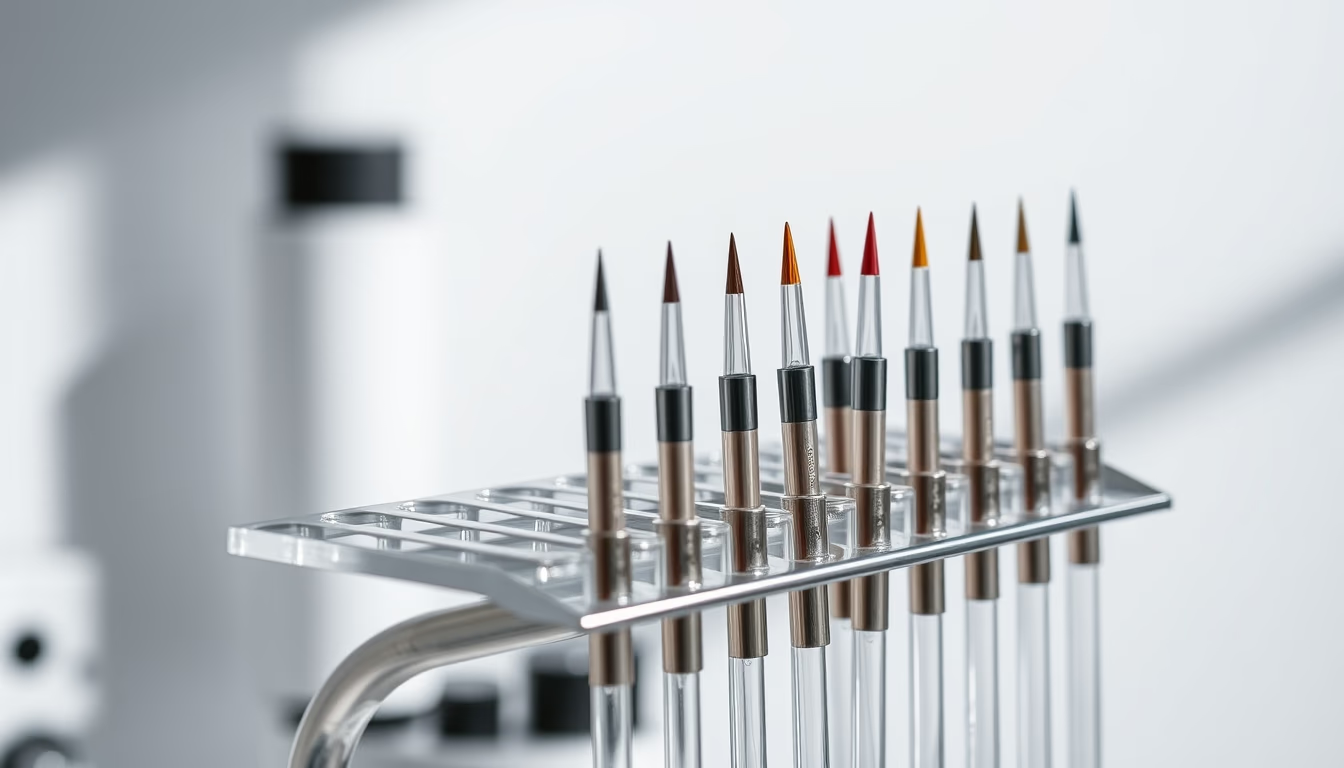
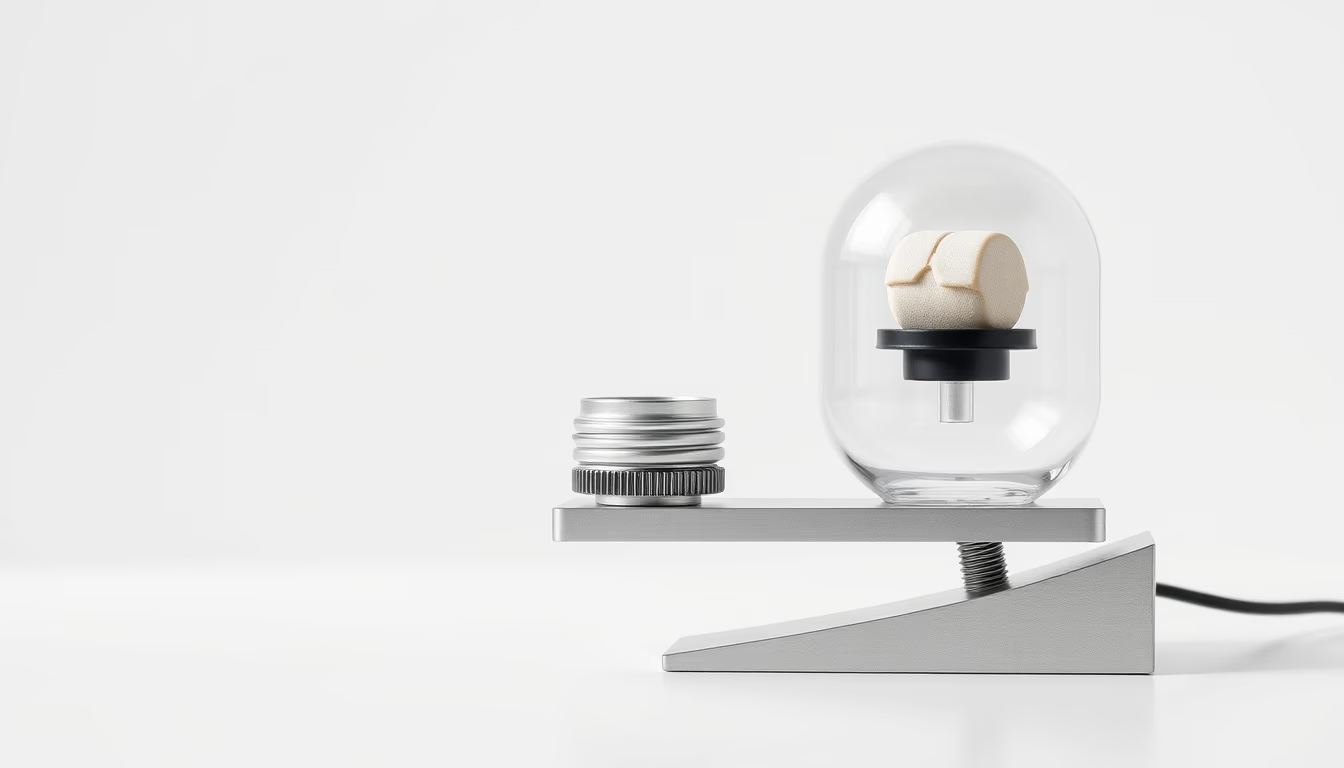
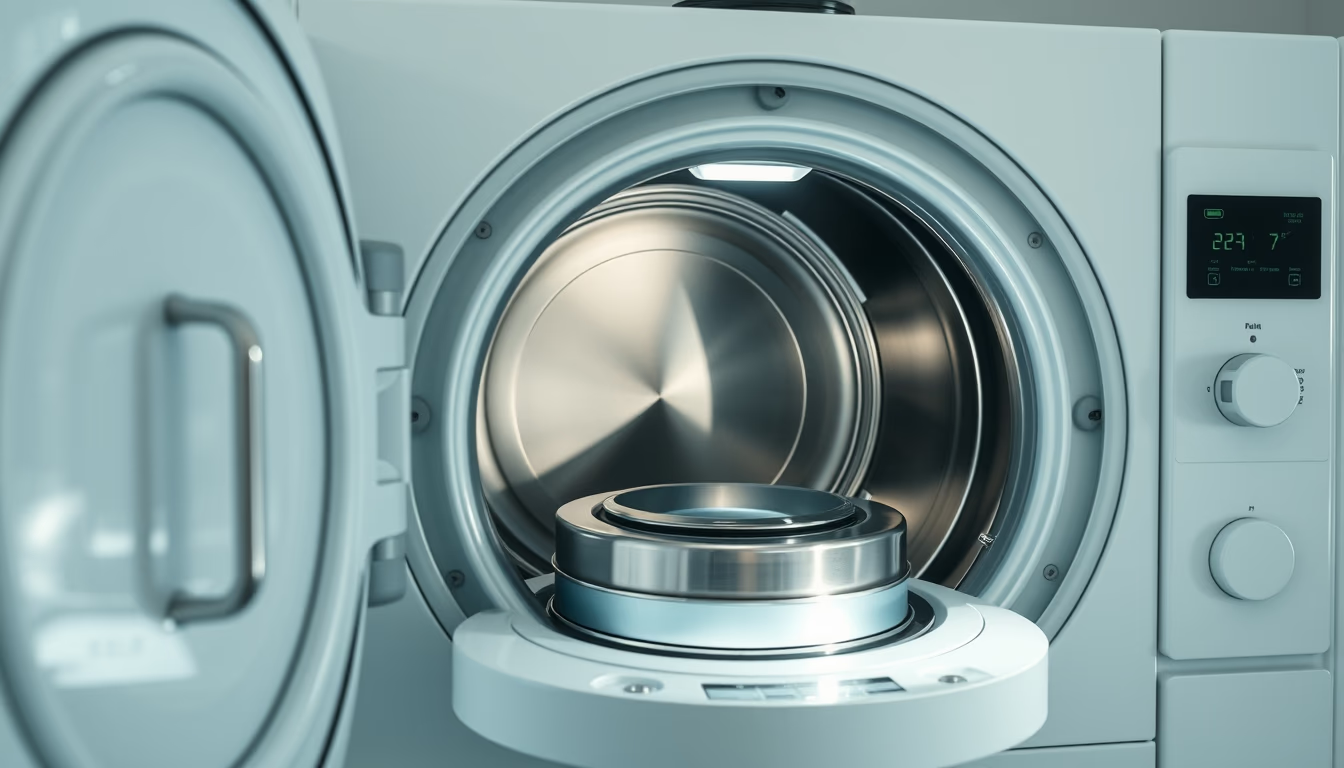
Analytical balance closeup
1344×768 · AVIF · CC BY 4.0

An analytical balance is a high-precision laboratory instrument capable of measuring mass with a resolution of up to 0.0001 gram, essential for quantitative analysis.
About this subject
An analytical balance is a vital instrument in chemical, pharmaceutical, and materials laboratories, designed to measure mass with an accuracy of 0.1 mg (0.0001 g). It operates on the principle of electromagnetic force compensation or strain gauge load cells, ensuring stable readings even for small samples. To prevent external disturbances, the balance is equipped with a draft shield that isolates the weighing pan from air currents and temperature fluctuations.
Calibration is critical for measurement reliability. Modern analytical balances feature automatic internal calibration, adjusting the sensor using built-in reference weights. Simpler models require external calibration with certified standard masses. Factors such as temperature, humidity, and vibrations can affect precision, so the instrument should be placed on anti-vibration tables in a temperature-controlled environment.
For accurate results, users must handle samples with clean tweezers or spatulas, avoiding direct finger contact. Substances should be at room temperature to prevent convection currents. Additionally, the maximum capacity (typically 100, 300 grams) must not be exceeded to avoid sensor damage.
Historically, analytical balances evolved from mechanical two-pan models requiring manual counterweight adjustments to modern digital electronic versions. This shift increased measurement speed and enabled computer connectivity for automatic data logging. Today, they are indispensable for preparing standard solutions, purity tests, and density determinations.
Frequently Asked Questions
What is the difference between an analytical balance and a precision balance?
An analytical balance has higher sensitivity, measuring up to 0.0001 g, while a precision balance typically measures to 0.001 g or 0.01 g. Analytical balances also feature a draft shield to block air currents.
How do you calibrate an analytical balance?
Calibration can be internal (automatic) or external using certified standard weights. Many modern balances perform automatic calibration on startup or periodically.
Why does an analytical balance need a draft shield?
The draft shield protects against air currents that could affect readings due to the instrument's high sensitivity, ensuring measurement stability.
Direct URL
https://pub-c7d6a6ea828543ac903a74a341ccb2e1.r2.dev/imagens/analytical-balance-closeup-lo-fi-disposable-camera-fresh3.avifHow to credit
Include a visible link back to UtilizAí. Copy one of the snippets below:
<a href="https://xn--utiliza-eza.com/en/midia/imagens/analytical-balance-closeup-lo-fi-disposable-camera-fresh3">Analytical balance closeup</a> by <a href="https://xn--utiliza-eza.com">UtilizAí</a>, licensed under <a href="https://creativecommons.org/licenses/by/4.0/">CC BY 4.0</a>.
[Analytical balance closeup](https://xn--utiliza-eza.com/en/midia/imagens/analytical-balance-closeup-lo-fi-disposable-camera-fresh3) by [UtilizAí](https://xn--utiliza-eza.com), CC BY 4.0
License: CC-BY-4.0