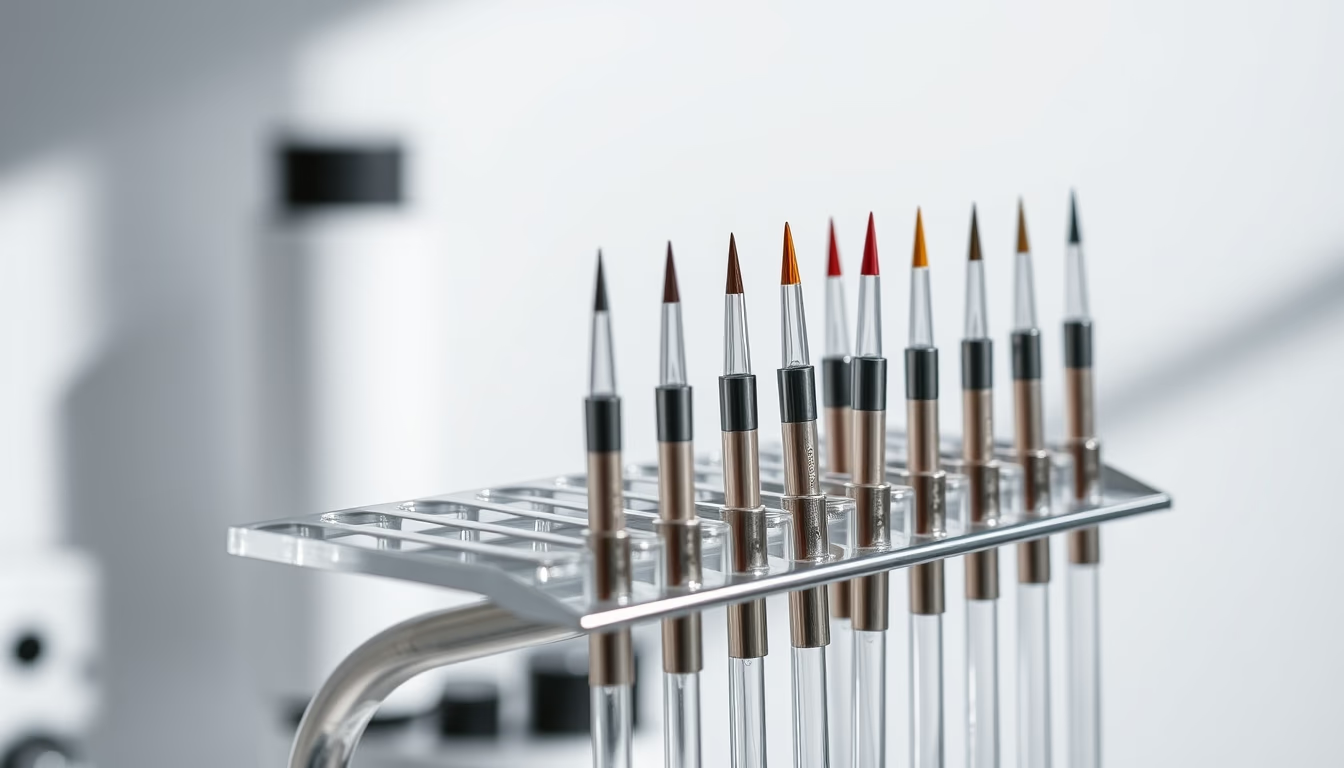
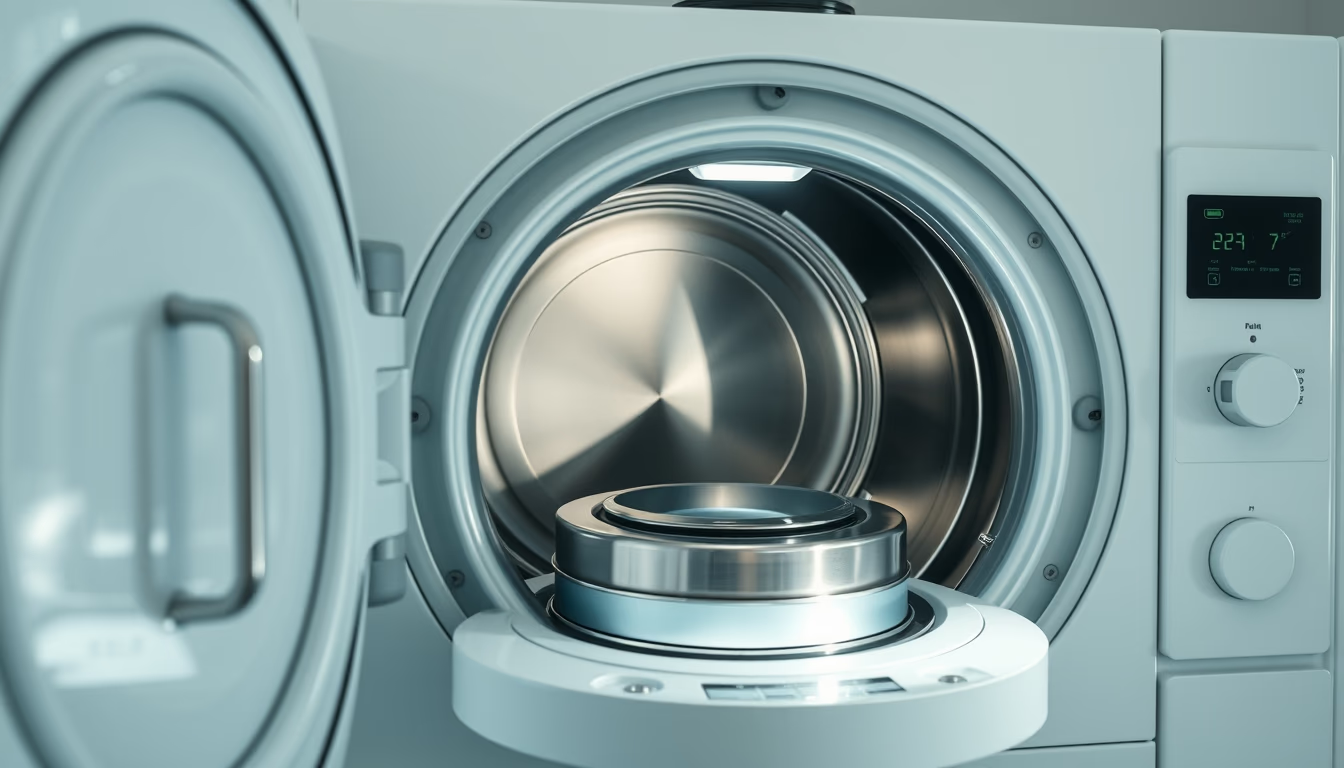
Analytical balance closeup
1344×768 · AVIF · CC BY 4.0
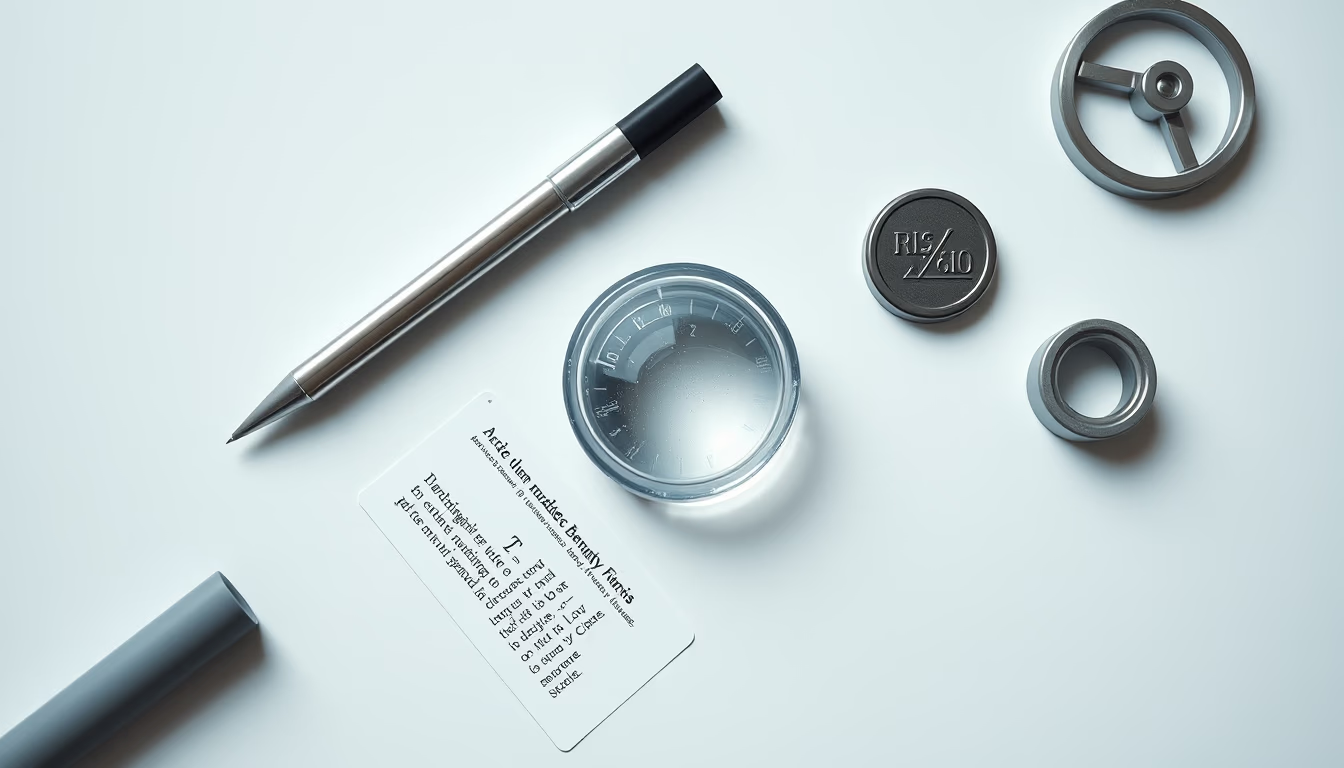
Balança analítica de precisão utilizada em laboratórios para medição de massas com alta exatidão, essencial em análises químicas e farmacêuticas.
Sobre o tema
As balanças analíticas são instrumentos fundamentais em laboratórios de química, farmácia e pesquisa. Capazes de medir massas com precisão de até 0,0001 gramas (0,1 mg), elas operam com princípios de compensação eletromagnética ou células de carga de alta sensibilidade. Diferentemente de balanças comuns, as analíticas exigem condições controladas: ambiente sem correntes de ar, mesa antivibração e calibração frequente com pesos padrão.
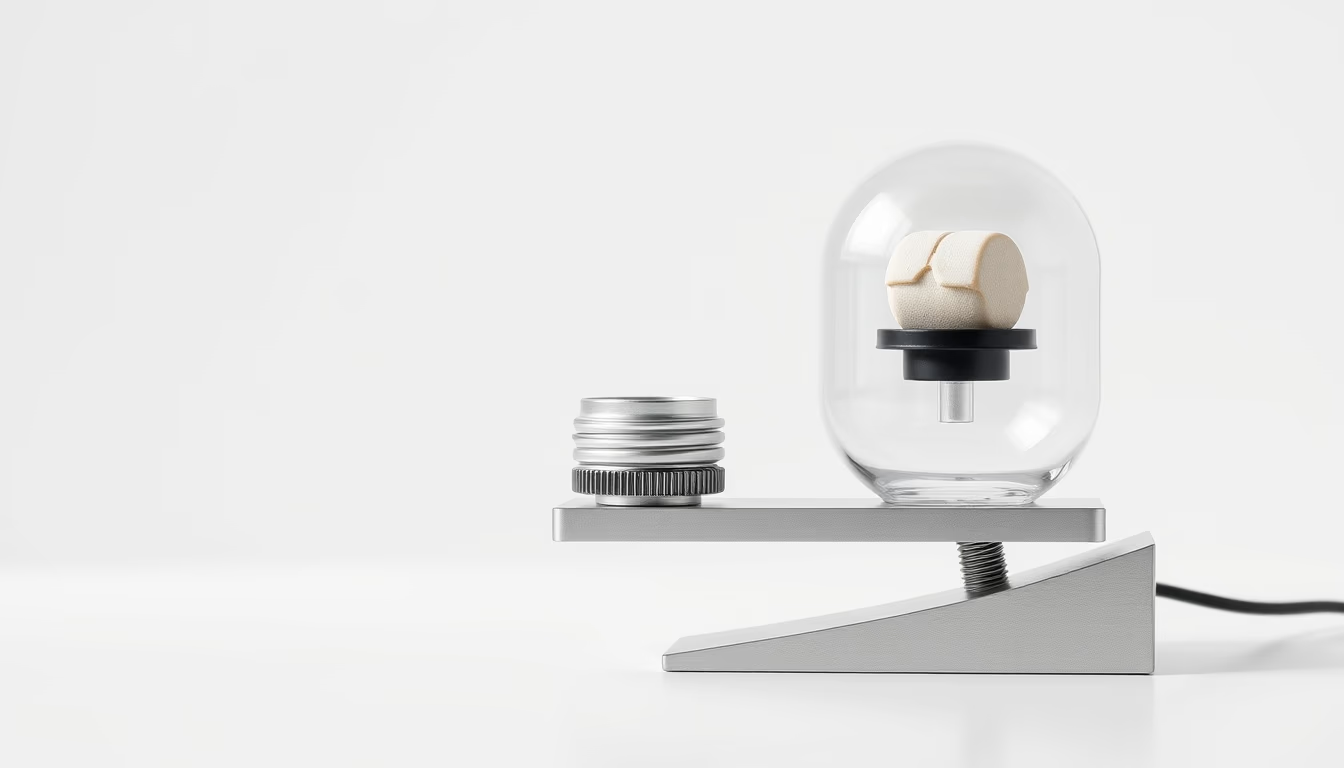
O modelo típico possui uma câmara de vidro para proteger a amostra de interferências externas. A calibração pode ser interna, com pesos automatizados, ou externa, feita pelo usuário. Na indústria farmacêutica, são usadas para pesar ingredientes ativos com dosagem crítica. Em laboratórios de análise ambiental, garantem a exatidão em medições de poluentes. A norma ISO 9001 e boas práticas de laboratório exigem rastreabilidade das medições.
A história das balanças analíticas remonta ao século XVIII com as balanças de braços iguais. Hoje, versões digitais oferecem conectividade com computadores, registros automáticos e funções de estatística. A manutenção inclui limpeza regular e verificação com massas certificadas. A escolha da balança depende da faixa de pesagem e da precisão necessária; para trabalhos de rotina, utiliza-se a balança semi-analítica (0,01 g), enquanto a analítica (0,0001 g) é reservada a aplicações mais rigorosas.
Perguntas frequentes
Qual a diferença entre balança analítica e semi-analítica?
A balança analítica tem precisão de 0,0001 g (0,1 mg), enquanto a semi-analítica tem precisão de 0,001 g (1 mg). A analítica exige mais cuidados ambientais.
Como calibrar uma balança analítica?
A calibração pode ser interna (automática com pesos internos) ou externa (usando pesos padrão certificados). Deve ser feita diariamente ou antes de cada uso crítico.
Por que a balança analítica precisa de uma câmara de vidro?
Para minimizar os efeitos de correntes de ar, variações de temperatura e umidade, que podem interferir na precisão da medição.
URL direta
https://pub-c7d6a6ea828543ac903a74a341ccb2e1.r2.dev/imagens/analytical-balance-closeup-isometric-flat-lay-fresh6.avifComo creditar
Inclua um link visível de volta pro UtilizAí. Copie um dos snippets abaixo:
<a href="https://xn--utiliza-eza.com/midia/imagens/analytical-balance-closeup-isometric-flat-lay-fresh6">Analytical balance closeup</a> by <a href="https://xn--utiliza-eza.com">UtilizAí</a>, licensed under <a href="https://creativecommons.org/licenses/by/4.0/">CC BY 4.0</a>.
[Analytical balance closeup](https://xn--utiliza-eza.com/midia/imagens/analytical-balance-closeup-isometric-flat-lay-fresh6) by [UtilizAí](https://xn--utiliza-eza.com), CC BY 4.0
Licença: CC-BY-4.0