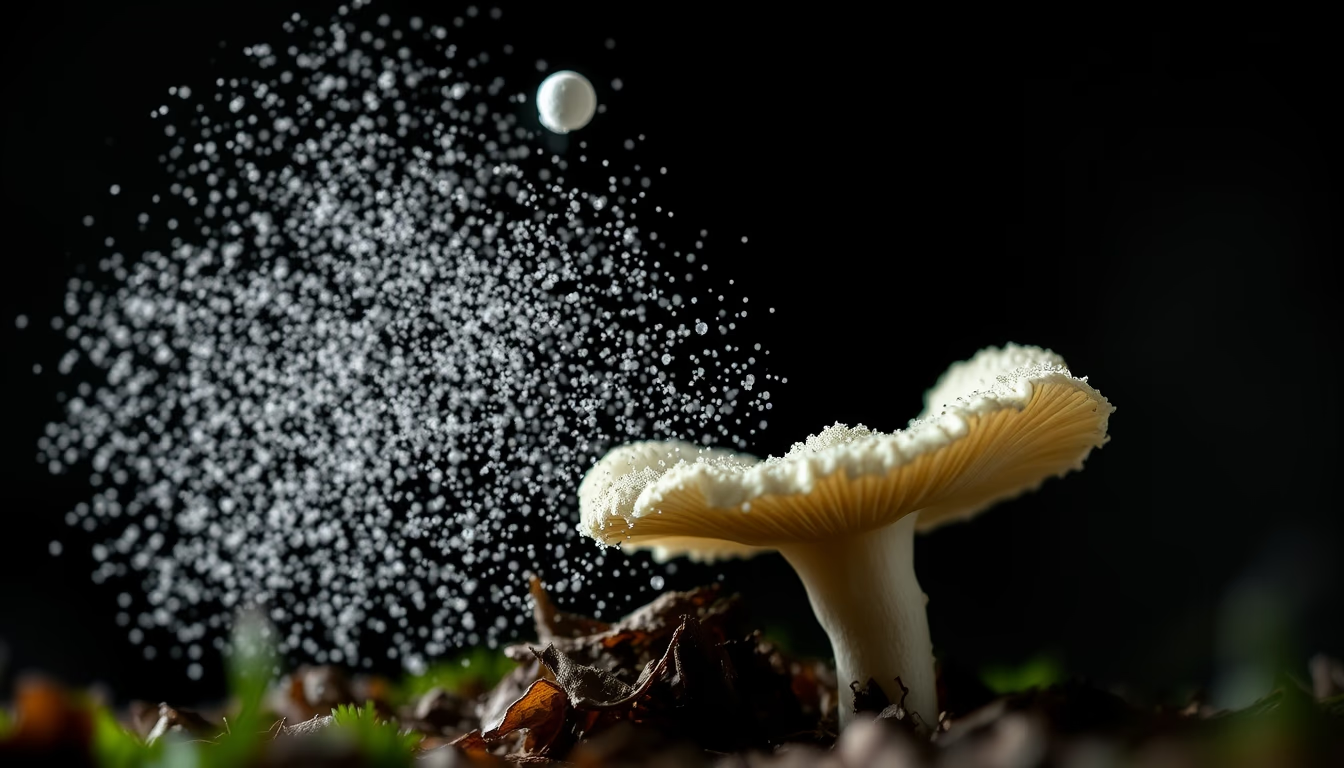
Amanita muscaria red
1344×768 · AVIF · CC BY 4.0

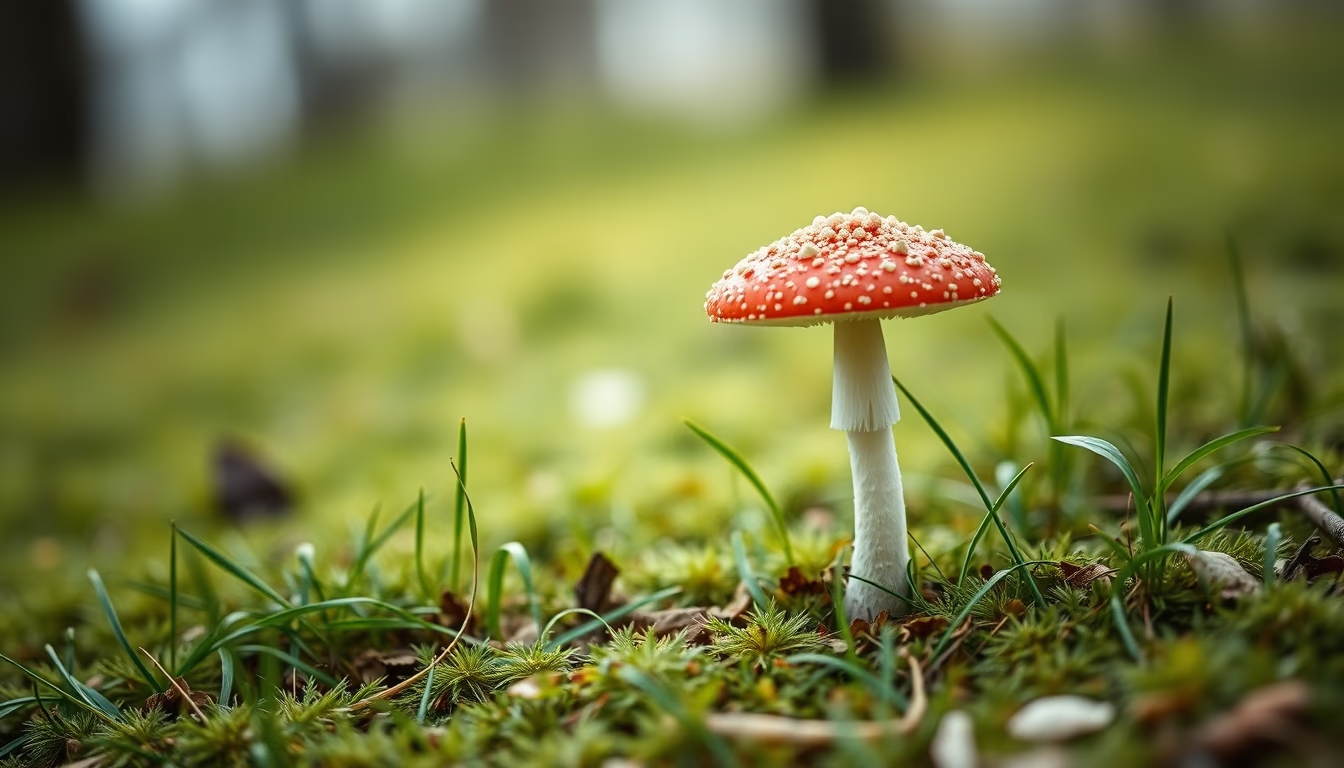
A Amanita muscaria é um cogumelo icônico de chapéu vermelho com pintas brancas, conhecido por seu uso histórico em rituais e seu papel na cultura pop.
Sobre o tema
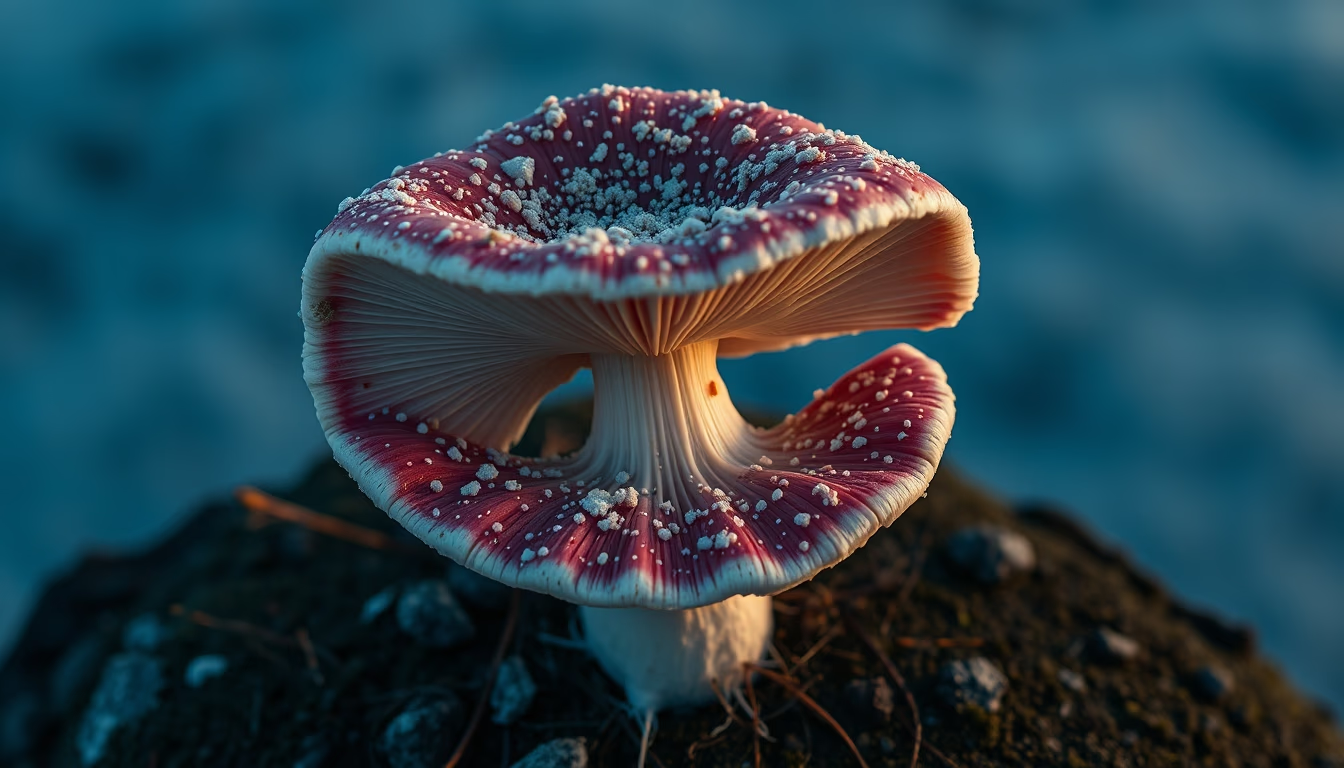
A Amanita muscaria, também chamada de agárico-das-moscas, é um fungo basidiomiceto amplamente distribuído no Hemisfério Norte. Seu corpo de frutificação apresenta um píleo (chapéu) vermelho vivo coberto por verrugas brancas, que podem ser removidas pela chuva. Atinge entre 8 e 20 cm de diâmetro e possui lamelas brancas e um estipe (tronco) com anel e volva. Embora associada a florestas de bétulas e pinheiros, forma micorrizas com várias árvores.
Historicamente, a Amanita muscaria foi usada por povos siberianos, como os chukchis e os koryaks, em rituais xamânicos. A ingestão do cogumelo induz um estado alterado de consciência devido aos compostos psicoativos ácido ibotênico e muscimol. No folclore, está ligada ao Papai Noel e a outras tradições de inverno, possivelmente por sua cor e por crescer sob árvores de Natal.
Muscarina, um alcaloide presente em pequenas quantidades, causa efeitos colinérgicos, mas as intoxicações são raramente fatais. Na Europa, é comum em contos de fadas e videogames, como no universo Super Mario. A espécie também é conhecida por sua capacidade de acumular metais pesados, o que a torna um bioindicador de poluição.
Atualmente, a Amanita muscaria é estudada por seu potencial terapêutico em distúrbios neurológicos, embora seu uso recreativo seja ilegal ou regulamentado em muitos países. Sua morfologia distinta a torna um dos cogumelos mais fotografados e reconhecíveis do mundo.
Perguntas frequentes
A Amanita muscaria é venenosa?
Sim, a Amanita muscaria é tóxica. Contém ácido ibotênico e muscimol, que podem causar sintomas como náuseas, alucinações e confusão. Embora raramente fatal, seu consumo não é seguro e requer atenção médica.
Qual é a origem do nome 'agárico-das-moscas'?
O nome deriva do uso histórico do cogumelo como inseticida. Pedaços do cogumelo eram colocados em leite para atrair e matar moscas, devido aos compostos neurotóxicos que afetam insetos.
Onde posso encontrar Amanita muscaria no Brasil?
A Amanita muscaria é rara no Brasil, pois prefere climas temperados. Pode ser encontrada em regiões de altitude do Sul e Sudeste, onde foi introduzida associada a árvores exóticas como pinheiros.
URL direta
https://pub-c7d6a6ea828543ac903a74a341ccb2e1.r2.dev/imagens/amanita-muscaria-red-high-fashion-editorial-p5.avifComo creditar
Inclua um link visível de volta pro UtilizAí. Copie um dos snippets abaixo:
<a href="https://xn--utiliza-eza.com/midia/imagens/amanita-muscaria-red-high-fashion-editorial-p5">Amanita muscaria red</a> by <a href="https://xn--utiliza-eza.com">UtilizAí</a>, licensed under <a href="https://creativecommons.org/licenses/by/4.0/">CC BY 4.0</a>.
[Amanita muscaria red](https://xn--utiliza-eza.com/midia/imagens/amanita-muscaria-red-high-fashion-editorial-p5) by [UtilizAí](https://xn--utiliza-eza.com), CC BY 4.0
Licença: CC-BY-4.0