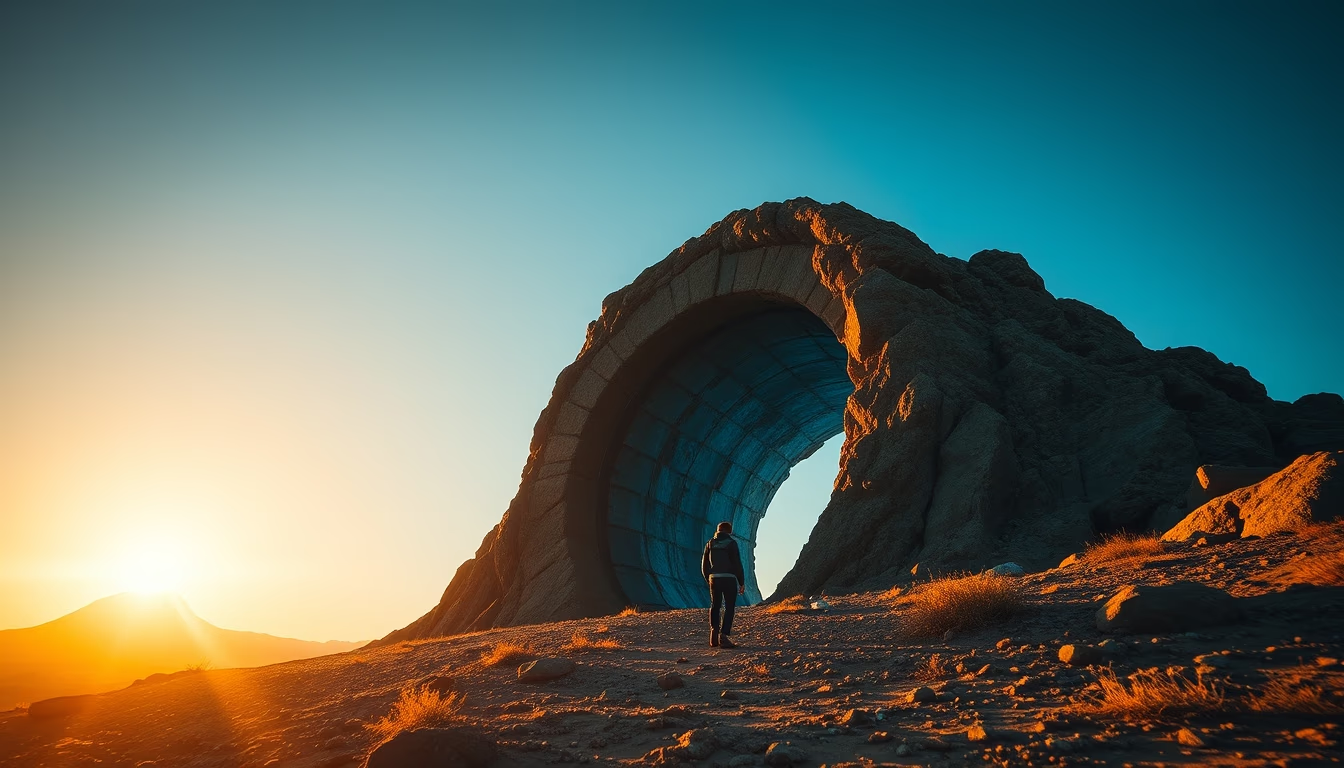
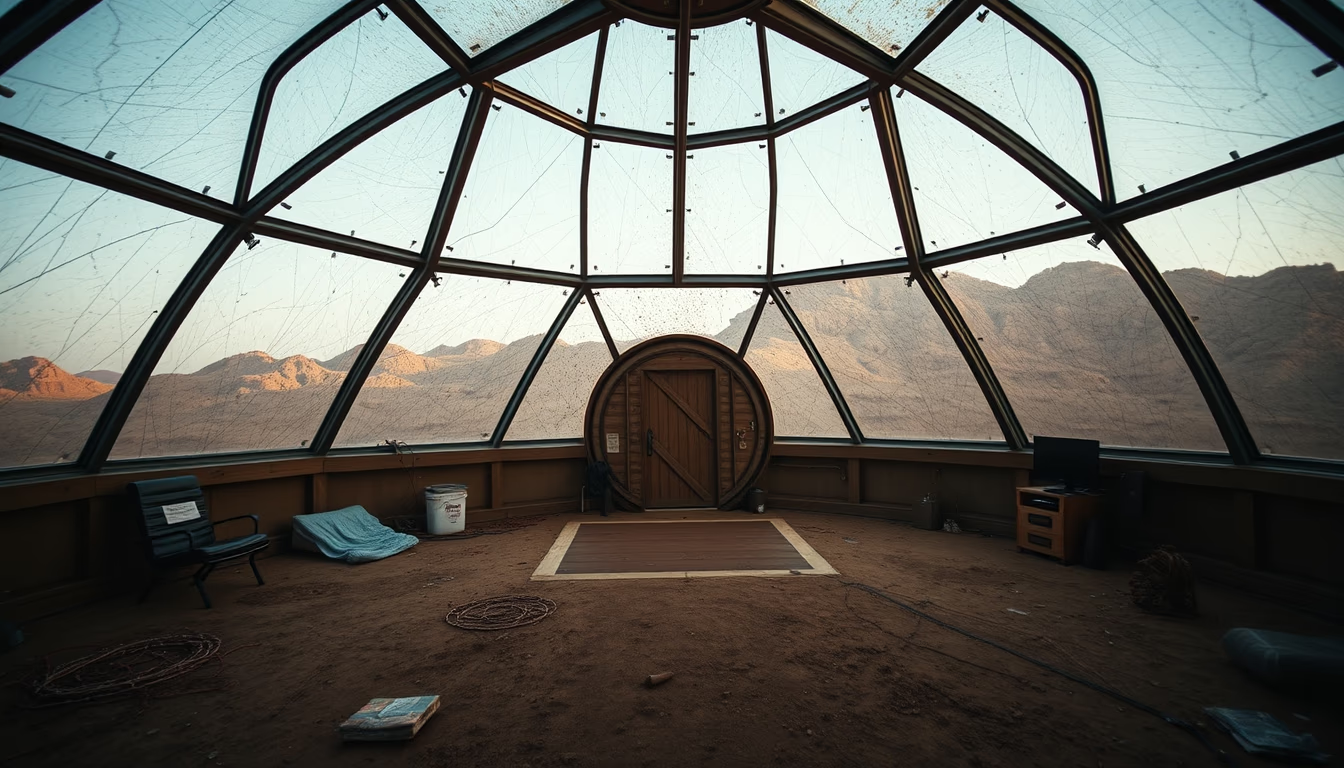
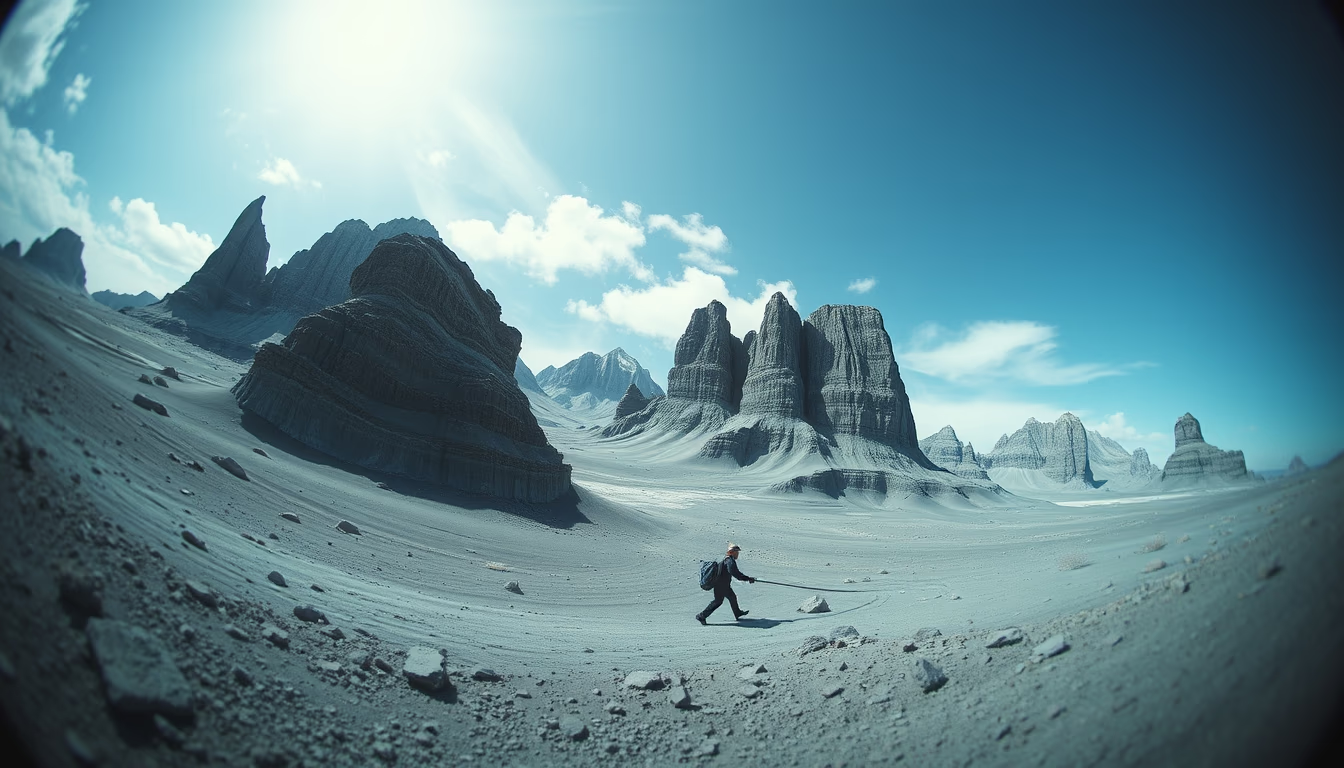
Alien landscape concept
1344×768 · AVIF · CC BY 4.0
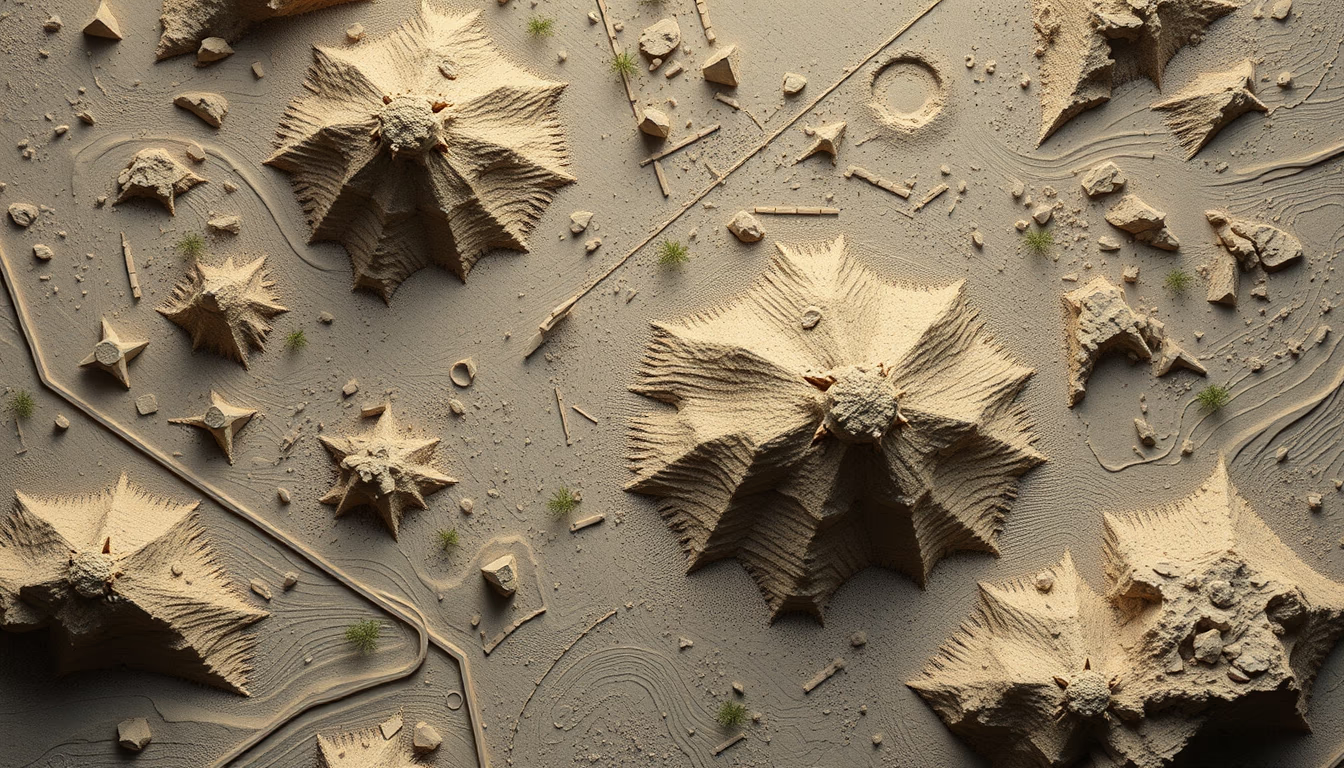
Alien landscapes are artistic depictions of extraterrestrial worlds, blending fictional geology with exotic atmospheres to spark scientific and cultural imagination.
About this subject
The concept of an alien landscape is a cornerstone of visual science fiction, exploring how worlds beyond Earth might be shaped by different gravities, chemical compositions, and life forms. From Chesley Bonestell's early illustrations in the 1940s to modern digital environments, artists use terrestrial geological principles as a foundation to create surreal terrains: crystal mountains, methane oceans, skies with multiple suns. The isometric or flat lay approach, common in concept design, simplifies these landscapes into two-dimensional or isometric views, favoring spatial comprehension and minimalist aesthetics.
Globally, alien landscapes have influenced astrobiology: erosion patterns on Titan or Venus are studied as analogues to possible extraterrestrial scenarios. In film, movies like 'Avatar' (2009) and 'Interstellar' (2014) popularized palettes that evoke different atmospheric compositions, for instance, an orange sky suggests high methane or sulfur content, while blue soil may indicate minerals like azurite. The isometric style is widely used in games and art books to convey scale and topography without perspective distortion. Flat lay techniques, usually applied to object photography, are adapted for alien scenes by arranging rocks, fictional vegetation, and structures at right angles, implying a non-natural geometric order.
Educational contexts also employ alien landscapes: planetariums and science museums use projections based on real exoplanet data to simulate how their horizons might appear. Procedurally generated terrains in games like 'No Man's Sky' (2016) rely on isometric mapping to allow players to explore vast, randomized alien worlds. The blending of art and science continues to inspire new generations to imagine the unexplored, making alien landscapes a powerful tool for both entertainment and scientific outreach.
Color choices in these landscapes, purples, acid greens, intense oranges, reflect attempts to evoke atmospheres with different chemical makeups. The flat lay perspective, by presenting elements in a shallow depth of field, emphasizes texture and pattern over realism, often used in editorial illustrations to depict abstract concepts like exoplanet colonization or terraforming. This stylistic evolution ensures that alien landscapes remain a vibrant and evolving genre in visual culture.
Frequently Asked Questions
How do artists create realistic alien landscapes?
Artists rely on terrestrial geological principles and exoplanet data to construct plausible terrains. They consider factors such as gravity, atmospheric composition, and star types to determine colors, relief, and lighting.
Why is color important in an alien landscape?
Unnatural colors like purple or orange indicate different atmospheric compositions from Earth. For example, an orange sky may suggest high methane content, while blue soils could contain unusual minerals.
Where can I see examples of isometric alien landscapes?
Games like 'No Man's Sky' and 'Stellaris' use isometric views to depict alien terrains. Concept art books from films like 'Avatar' also feature isometric designs in their sketches.
Direct URL
https://pub-c7d6a6ea828543ac903a74a341ccb2e1.r2.dev/imagens/alien-landscape-concept-isometric-flat-lay-fresh17.avifHow to credit
Include a visible link back to UtilizAí. Copy one of the snippets below:
<a href="https://xn--utiliza-eza.com/en/midia/imagens/alien-landscape-concept-isometric-flat-lay-fresh17">Alien landscape concept</a> by <a href="https://xn--utiliza-eza.com">UtilizAí</a>, licensed under <a href="https://creativecommons.org/licenses/by/4.0/">CC BY 4.0</a>.
[Alien landscape concept](https://xn--utiliza-eza.com/en/midia/imagens/alien-landscape-concept-isometric-flat-lay-fresh17) by [UtilizAí](https://xn--utiliza-eza.com), CC BY 4.0
License: CC-BY-4.0