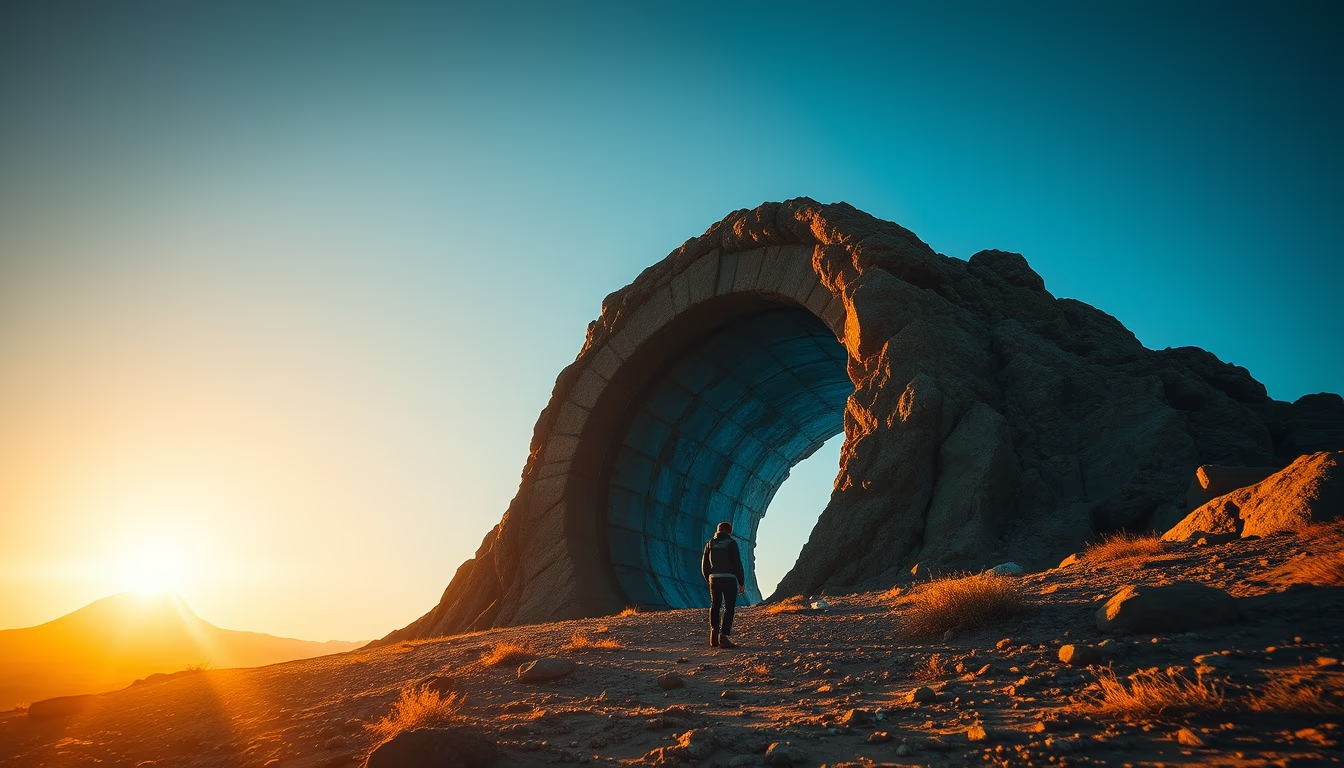
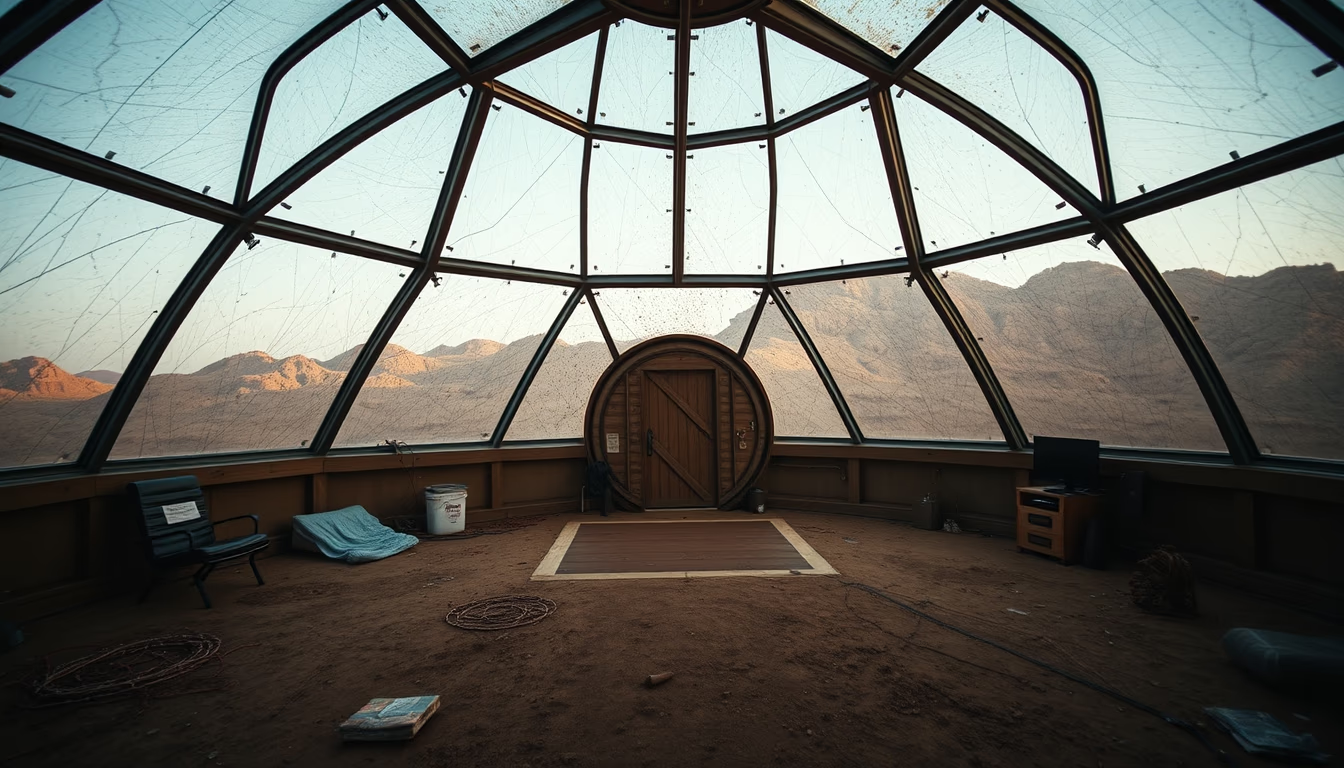
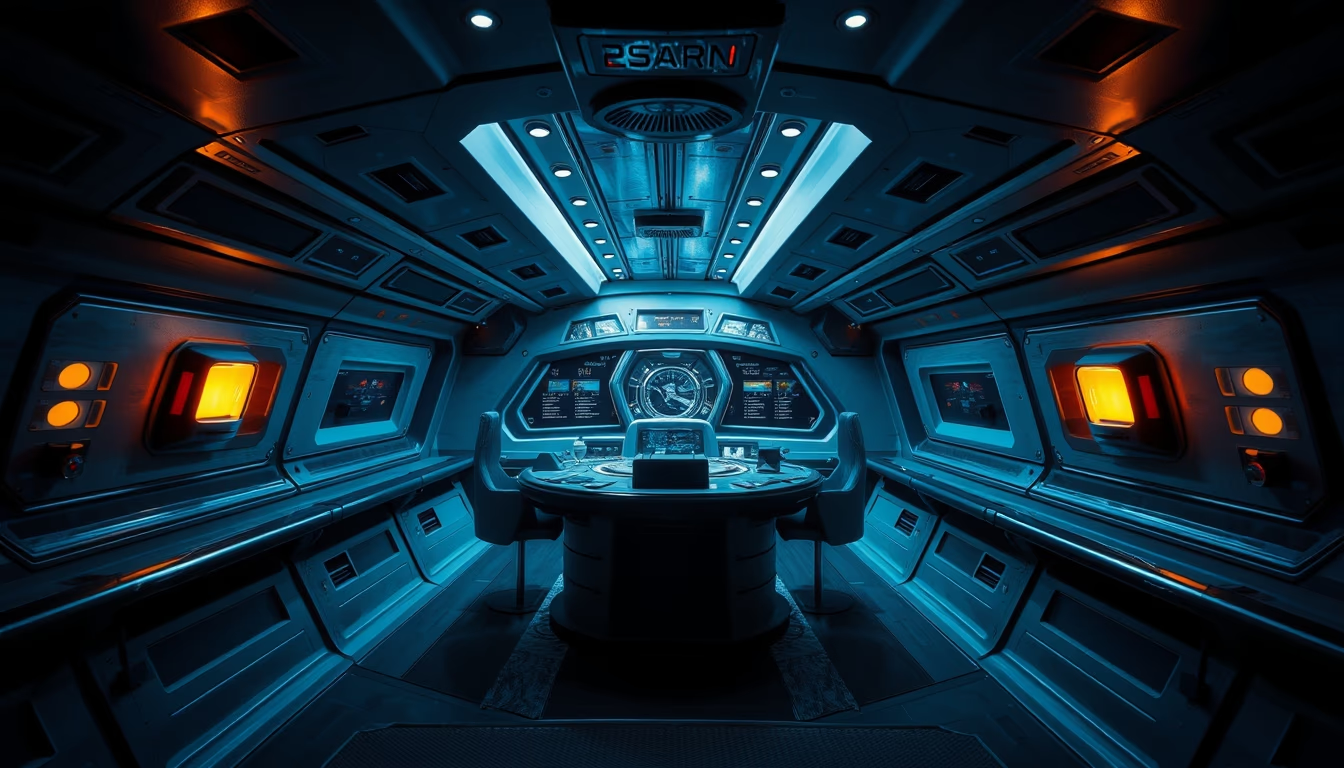
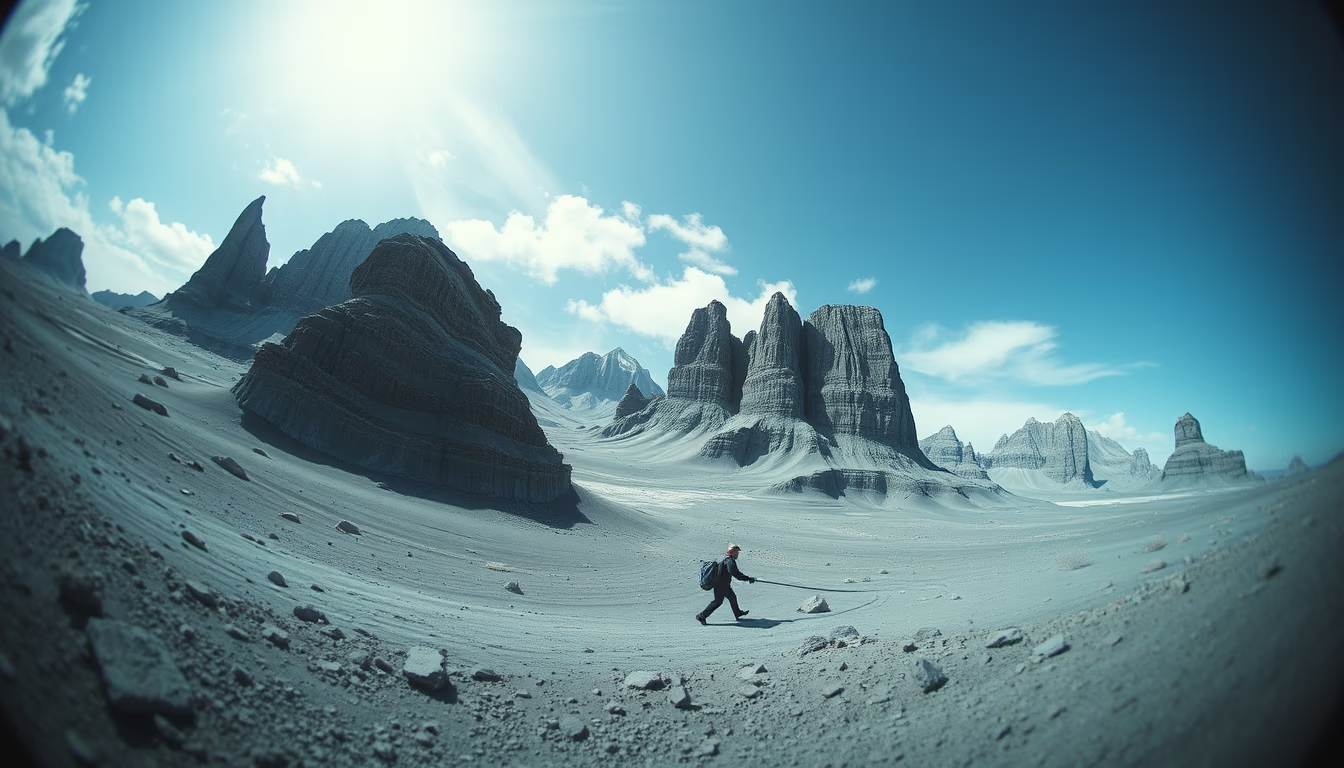
Alien landscape concept
1344×768 · AVIF · CC BY 4.0
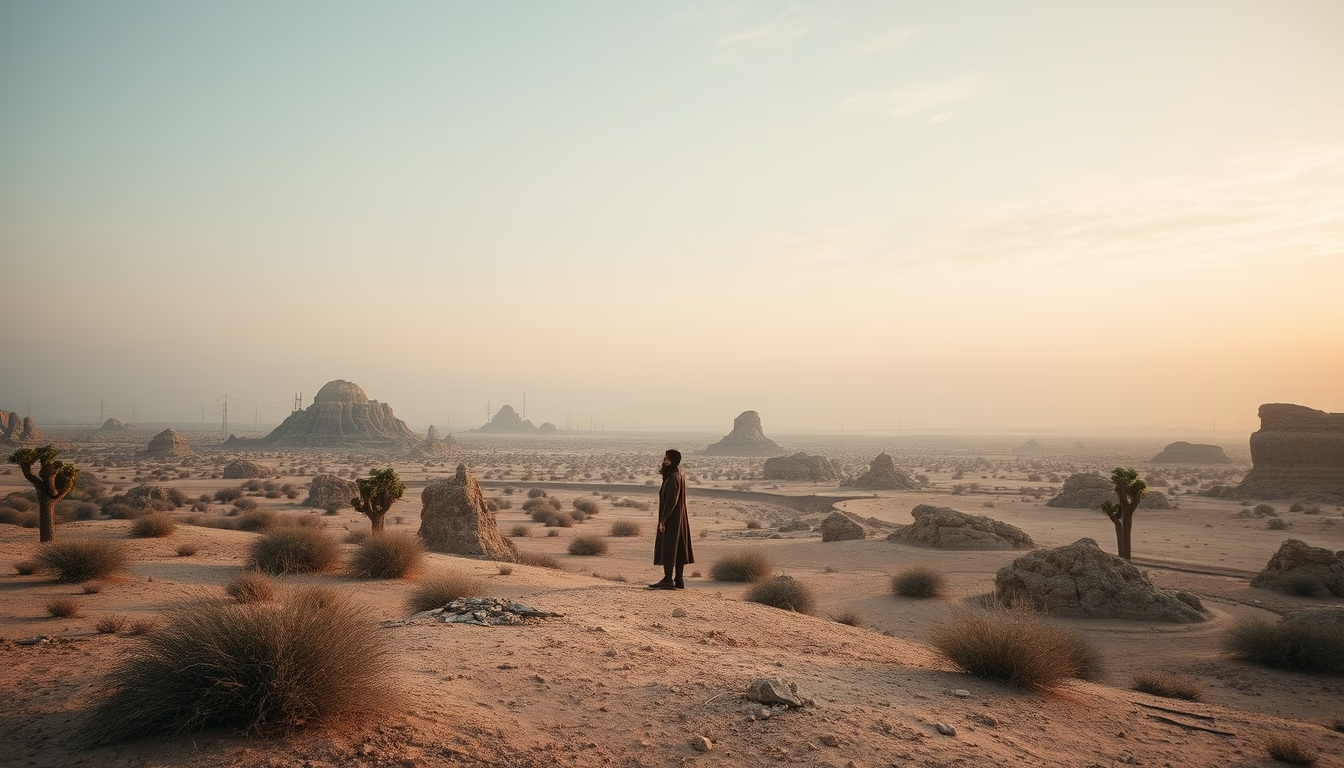
Alien landscapes are visual representations of extraterrestrial worlds, blending science and imagination to explore possible cosmic scenarios.
About this subject
The concept of an alien landscape extends beyond science fiction: it draws on real data from astrobiology and exoplanet discoveries. Since the first image of a planet orbiting another star, artists have used information about atmosphere, composition, and orbit to render distant worlds. These landscapes are not mere fantasy but simulations based on scientific models, such as the TRAPPIST-1 system or super-Earths with magma oceans.
Culturally, alien landscapes play a central role in films, books, and games. Works like "Dune" and "Avatar" created extraterrestrial biomes that directly influence the narrative, with sand deserts and bioluminescent forests. These environments are designed to be both alien and familiar, evoking the sublime and the unknown. In the gaming industry, titles like "No Man's Sky" procedurally generate landscapes, inspiring endless exploration.
From a technical standpoint, creating an alien landscape involves speculative geology: mountains formed by different tectonic processes, skies with multiple moons or planetary rings, vegetation with non-earthly colors. Artists study extremophiles on Earth to imagine life in hostile environments, such as methane lakes on Titan or geysers on Enceladus. The sky color, for instance, depends on atmospheric composition and the parent star, ranging from red to deep blue.
Interestingly, NASA and other space agencies use these representations to communicate discoveries to the public. Illustrations of exoplanets like Kepler-22b or Proxima Centauri b are created by artists in collaboration with scientists, ensuring plausibility. These images help visualize worlds that telescopes will never capture in detail, making the cosmos more accessible to human imagination.
Frequently Asked Questions
How do artists create realistic alien landscapes?
They combine scientific data from exoplanets with principles of speculative geology and biology. They study extreme environments on Earth and apply concepts like atmospheric composition, gravity, and stellar radiation to generate plausible scenarios.
What typical elements appear in these landscapes?
Skies with unusual colors, multiple moons or rings, exotic rock formations, oceans of non-aqueous liquids (methane, ethane), and vegetation adapted to different light spectra.
Does science really influence these representations?
Yes. Agencies like NASA hire artists to illustrate exoplanets based on physical models. These images are used for science communication and help the public visualize real worlds detected by telescopes.
Direct URL
https://pub-c7d6a6ea828543ac903a74a341ccb2e1.r2.dev/imagens/alien-landscape-concept-documentary-photography-fresh1.avifHow to credit
Include a visible link back to UtilizAí. Copy one of the snippets below:
<a href="https://xn--utiliza-eza.com/en/midia/imagens/alien-landscape-concept-documentary-photography-fresh1">Alien landscape concept</a> by <a href="https://xn--utiliza-eza.com">UtilizAí</a>, licensed under <a href="https://creativecommons.org/licenses/by/4.0/">CC BY 4.0</a>.
[Alien landscape concept](https://xn--utiliza-eza.com/en/midia/imagens/alien-landscape-concept-documentary-photography-fresh1) by [UtilizAí](https://xn--utiliza-eza.com), CC BY 4.0
License: CC-BY-4.0