Aircraft carrier deck
1344×768 · AVIF · CC BY 4.0
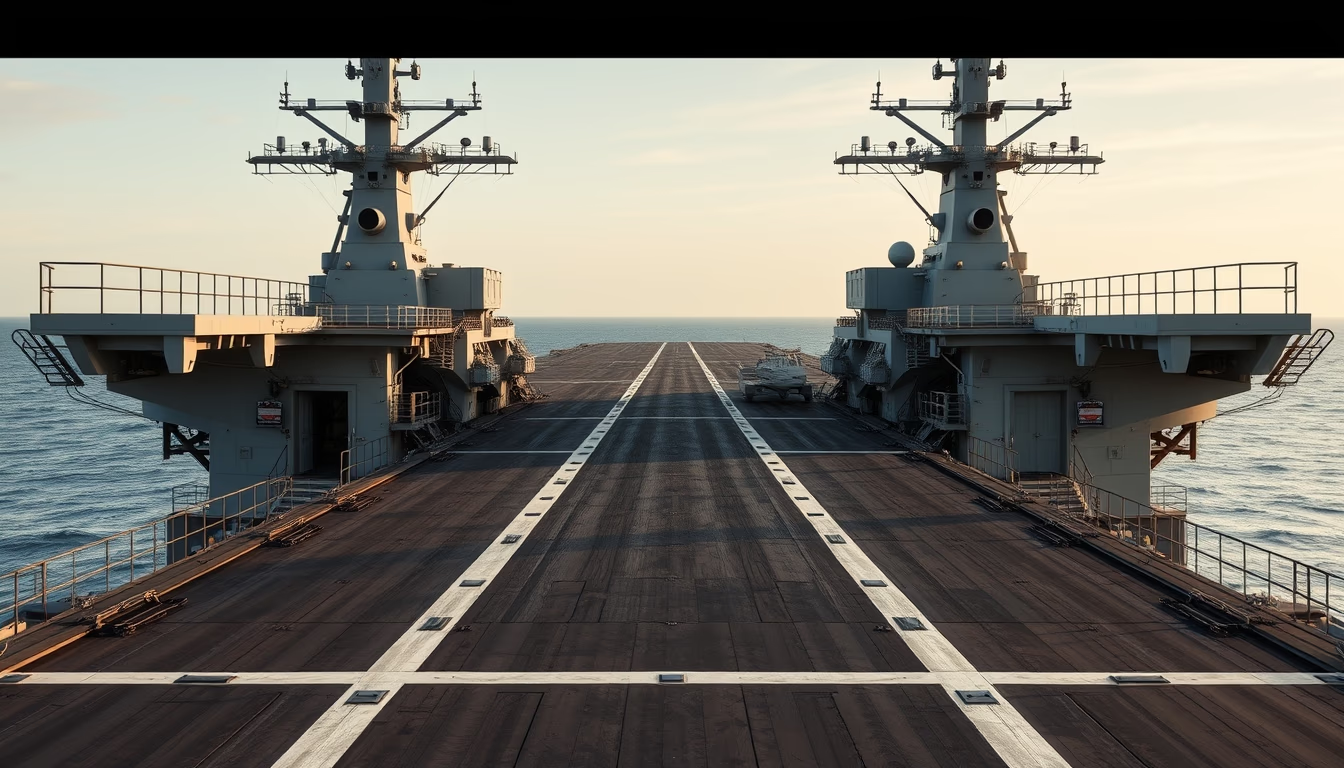
The deck of an aircraft carrier is a mobile runway designed for launching and recovering aircraft at sea.
About this subject
The flight deck of an aircraft carrier is one of the most complex and strategically vital areas of a modern navy. Unlike conventional runways, it must be short enough to fit on the ship yet capable of supporting fixed-wing aircraft operations. This is achieved using steam or electromagnetic catapults (such as the EMALS on the new US Ford-class carriers) that accelerate jets from 0 to 270 km/h in under 3 seconds. Landing is assisted by arresting cables that stop the aircraft in about 100 meters.
The history of the modern aircraft carrier deck dates back to World War II, when the Japanese and Americans converted merchant ships into aviation platforms. After the war, the introduction of the angled deck by the British Royal Navy in the 1950s revolutionized safety: it allows aircraft that miss the arresting cable to go around without colliding with parked planes. Today, most large carriers, such as the US Nimitz class or the French Charles de Gaulle, use this design.
Culturally, an aircraft carrier deck is a symbol of naval power and force projection. Each operation involves dozens of professionals: deck officers, signalers, catapult and cable operators, plus pilots. Efficiency and synchronization are vital, a US carrier can launch and recover up to 140 sorties per day. In contrast, ships like Brazil's NAe São Paulo (ex-French Foch) had a more modest history, operating A-4 Skyhawk fighters until its deactivation in 2017.
Technical curiosity: the runway is not straight, it has colored markings that guide different aircraft types. The island (superstructure) located on starboard houses the bridge and air traffic control. In bad weather, the deck can become extremely dangerous due to ship motion and sea spray. Hence, stabilization and drainage systems are critical to maintaining safe operations.
Frequently Asked Questions
What is the purpose of an angled deck on an aircraft carrier?
The angled deck allows aircraft that miss the arresting cable to go around safely without colliding with parked aircraft on the bow. It was introduced by the British Royal Navy in the 1950s and is now standard on large aircraft carriers.
How does an aircraft carrier catapult work?
The catapult uses high-pressure steam (or, in newer models, electromagnetism) to accelerate the aircraft in a few seconds. The pilot engages the nose of the plane with the catapult shuttle, which then launches it along the deck. The new Ford-class carriers use EMALS, which provides smoother acceleration and less maintenance.
How many people work on the deck during flight operations?
On a US aircraft carrier, about 150 to 200 people work directly on the deck during launches and recoveries. This includes signalers, catapult operators, arrester cable crews, deck officers, and firefighters, all coordinated by air traffic control.
Direct URL
https://pub-c7d6a6ea828543ac903a74a341ccb2e1.r2.dev/imagens/aircraft-carrier-deck-architectural-photography-p5.avifHow to credit
Include a visible link back to UtilizAí. Copy one of the snippets below:
<a href="https://xn--utiliza-eza.com/en/midia/imagens/aircraft-carrier-deck-architectural-photography-p5">Aircraft carrier deck</a> by <a href="https://xn--utiliza-eza.com">UtilizAí</a>, licensed under <a href="https://creativecommons.org/licenses/by/4.0/">CC BY 4.0</a>.
[Aircraft carrier deck](https://xn--utiliza-eza.com/en/midia/imagens/aircraft-carrier-deck-architectural-photography-p5) by [UtilizAí](https://xn--utiliza-eza.com), CC BY 4.0
License: CC-BY-4.0