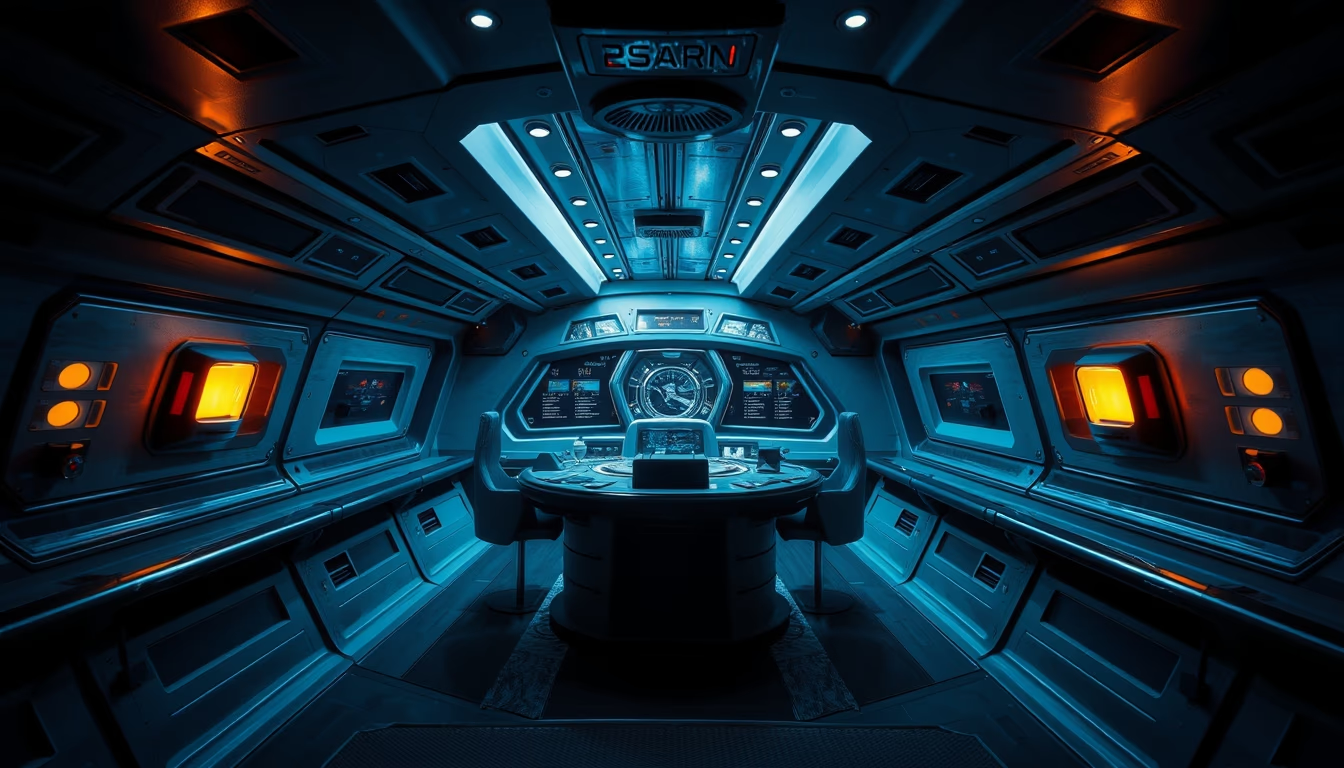
Ai core data center
1344×768 · AVIF · CC BY 4.0
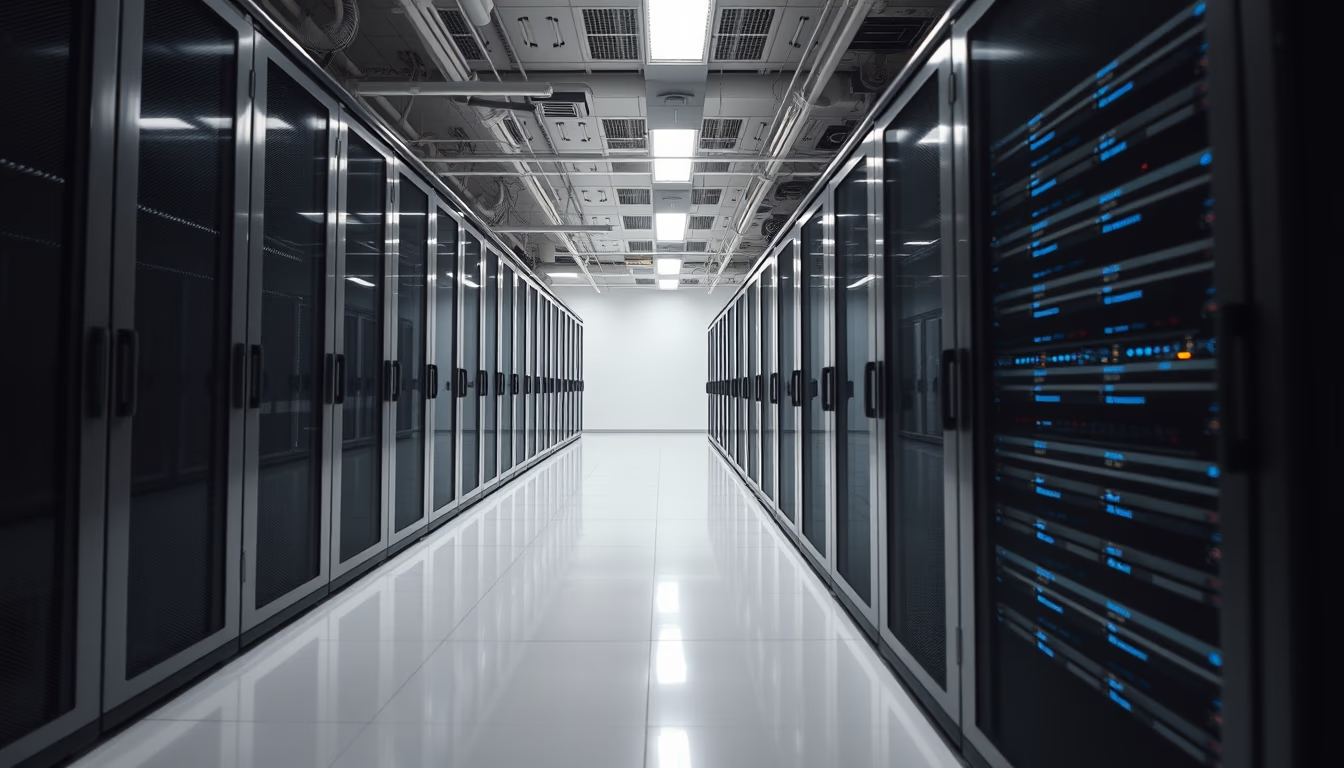
The core of an AI data center houses high-performance servers and advanced cooling systems, processing petabytes of data to train complex models.
About this subject
An AI data center is far from a standard facility. It is engineered for machine learning and deep learning workloads, requiring power densities much higher than traditional servers. These centers house thousands of GPUs or TPUs linked by high-speed networks, forming clusters capable of trillions of operations per second. The internal layout prioritizes thermal efficiency: racks are arranged in hot and cold aisles, and direct-to-chip liquid cooling is increasingly common to dissipate the intense heat generated by the accelerators.
At the logical core lies the orchestration system, which schedules tasks, allocates resources, and balances loads across accelerators. Software like Kubernetes and distributed training frameworks (TensorFlow, PyTorch) coordinate data flow from NVMe storage to GPU memory. Latency must be minimal, so short-range optical connections replace copper cables in many segments. Backup and redundancy systems ensure that a training job lasting weeks is not lost due to hardware failure.
Physical and logical security is paramount. Biometric access, camera surveillance, and motion sensors protect the perimeter, while next-generation firewalls and network segmentation isolate AI clusters from the rest of the corporate infrastructure. Many AI data centers also adopt renewable energy sources and sustainable cooling to mitigate high electricity consumption, which can reach tens of megawatts. These facilities are critical for advancing artificial intelligence, from voice assistants to automated medical diagnostics.
Frequently Asked Questions
What is the difference between a standard data center and an AI one?
Standard data centers focus on storage and web services with moderate power density. AI data centers are optimized for massive parallel processing, using GPUs/TPUs, advanced cooling, and high-speed networks to train machine learning models.
How does cooling work in an AI data center?
In addition to traditional air conditioning, many use direct-to-chip liquid cooling where a coolant circulates through cold plates in contact with processors. This is necessary because GPUs can draw up to 700W each, far above a typical CPU's 100W.
Why do AI data centers consume so much energy?
Training large models like GPT-4 requires weeks of continuous operation of thousands of accelerators, each consuming hundreds of watts. Including servers, cooling, and infrastructure, a single cluster can draw tens of megawatts, equivalent to a small town.
Direct URL
https://pub-c7d6a6ea828543ac903a74a341ccb2e1.r2.dev/imagens/ai-core-data-center-studio-still-life-fresh10.avifHow to credit
Include a visible link back to UtilizAí. Copy one of the snippets below:
<a href="https://xn--utiliza-eza.com/en/midia/imagens/ai-core-data-center-studio-still-life-fresh10">Ai core data center</a> by <a href="https://xn--utiliza-eza.com">UtilizAí</a>, licensed under <a href="https://creativecommons.org/licenses/by/4.0/">CC BY 4.0</a>.
[Ai core data center](https://xn--utiliza-eza.com/en/midia/imagens/ai-core-data-center-studio-still-life-fresh10) by [UtilizAí](https://xn--utiliza-eza.com), CC BY 4.0
License: CC-BY-4.0