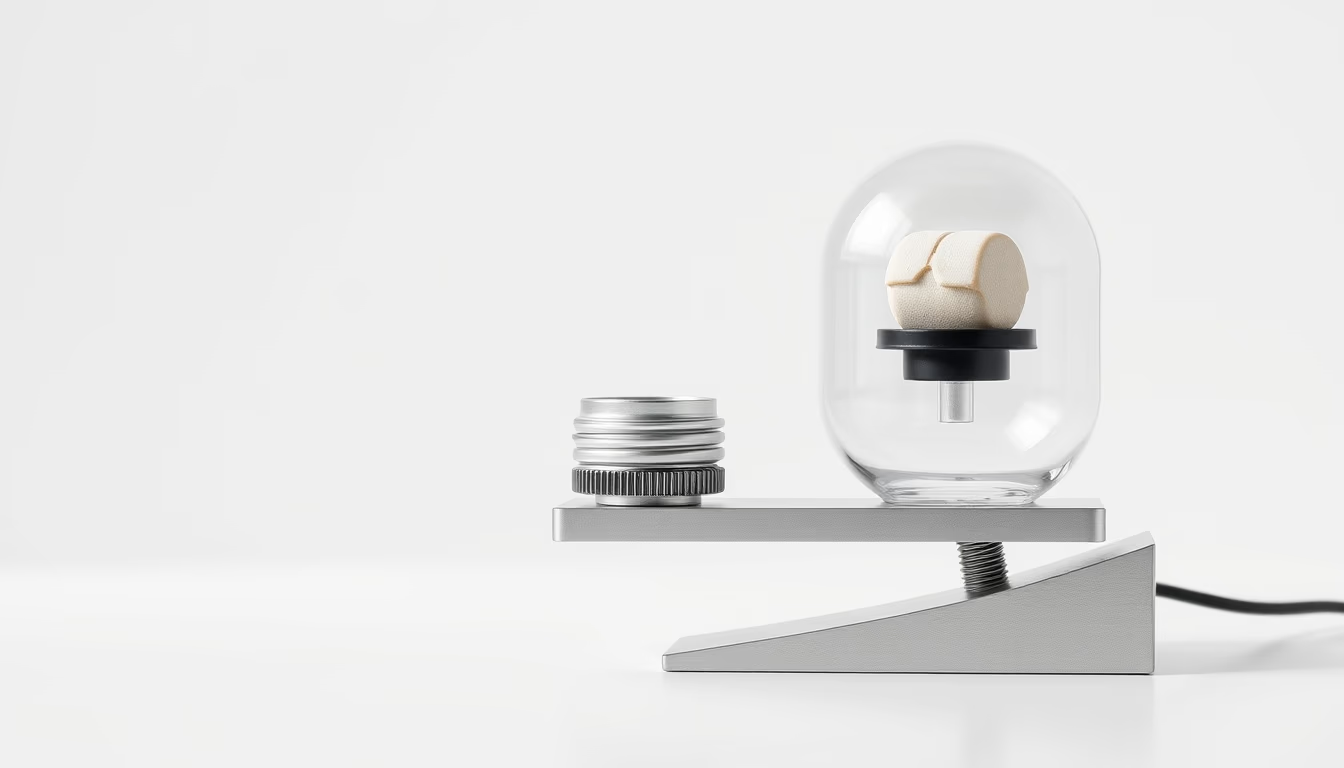
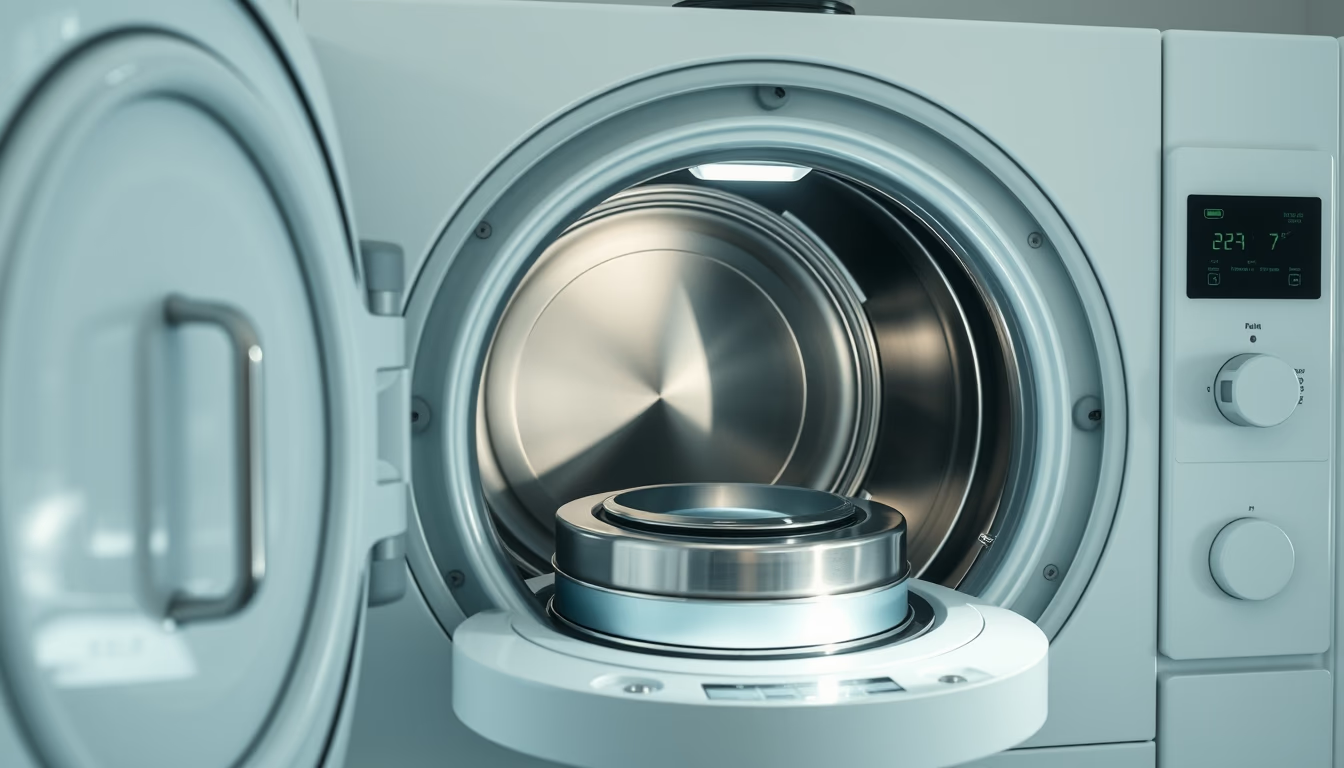
Incubator lab petri
1344×768 · AVIF · CC BY 4.0

Petri dish in a laboratory incubator: controlled environment for microbial growth in microbiological analyses.
About this subject
The Petri dish is one of the most iconic tools in microbiology, invented by German bacteriologist Julius Richard Petri in 1887. It is a shallow, cylindrical container, usually made of glass or transparent plastic, with a lid that fits loosely to allow gas exchange. Inside the incubator, dishes are kept at controlled temperature and humidity, ideal for cultivating bacteria, fungi, and other microorganisms. The incubator itself is equipment that maintains stable environmental conditions, typically between 30°C and 37°C for mesophilic microbes, and can also control atmosphere (CO2) and humidity.
The combined use of Petri dishes and incubators is essential in clinical diagnostics, pharmaceutical industry, food analysis, and basic research. Dishes are filled with culture media such as nutrient agar or blood agar, which provide essential nutrients. After sample inoculation, dishes are incubated upside down to prevent condensation on the lid. Colony growth can be observed macroscopically, and colony-forming unit (CFU) counting is a standard technique for microbial quantification.
A notable fact: agar as a culture medium was introduced by Fanny Hesse, wife of microbiologist Walther Hesse, who suggested its use because it was not degraded by bacteria. Today, there are varieties like MacConkey agar (selective for gram-negatives) or Sabouraud agar for fungi. Incubation can last from 24 hours to several days, depending on the microorganism. Modern laboratories use incubators with precise temperature control and alarm systems to ensure culture integrity.
Frequently Asked Questions
Why are Petri dishes incubated upside down?
To prevent condensation droplets on the lid from falling onto the culture medium surface, which could interfere with colony growth or cause contamination.
What is the typical incubation temperature for bacteria?
Most clinically important bacteria (mesophiles) are incubated at 35-37°C. Fungi usually require lower temperatures, such as 25-30°C.
What does CFU stand for?
CFU stands for Colony-Forming Unit, used to estimate the number of viable microorganisms in a sample, based on counting colonies that grow on a plate.
Direct URL
https://pub-c7d6a6ea828543ac903a74a341ccb2e1.r2.dev/imagens/incubator-lab-petri-macro-closeup-fresh18.avifHow to credit
Include a visible link back to UtilizAí. Copy one of the snippets below:
<a href="https://xn--utiliza-eza.com/en/midia/imagens/incubator-lab-petri-macro-closeup-fresh18">Incubator lab petri</a> by <a href="https://xn--utiliza-eza.com">UtilizAí</a>, licensed under <a href="https://creativecommons.org/licenses/by/4.0/">CC BY 4.0</a>.
[Incubator lab petri](https://xn--utiliza-eza.com/en/midia/imagens/incubator-lab-petri-macro-closeup-fresh18) by [UtilizAí](https://xn--utiliza-eza.com), CC BY 4.0
License: CC-BY-4.0