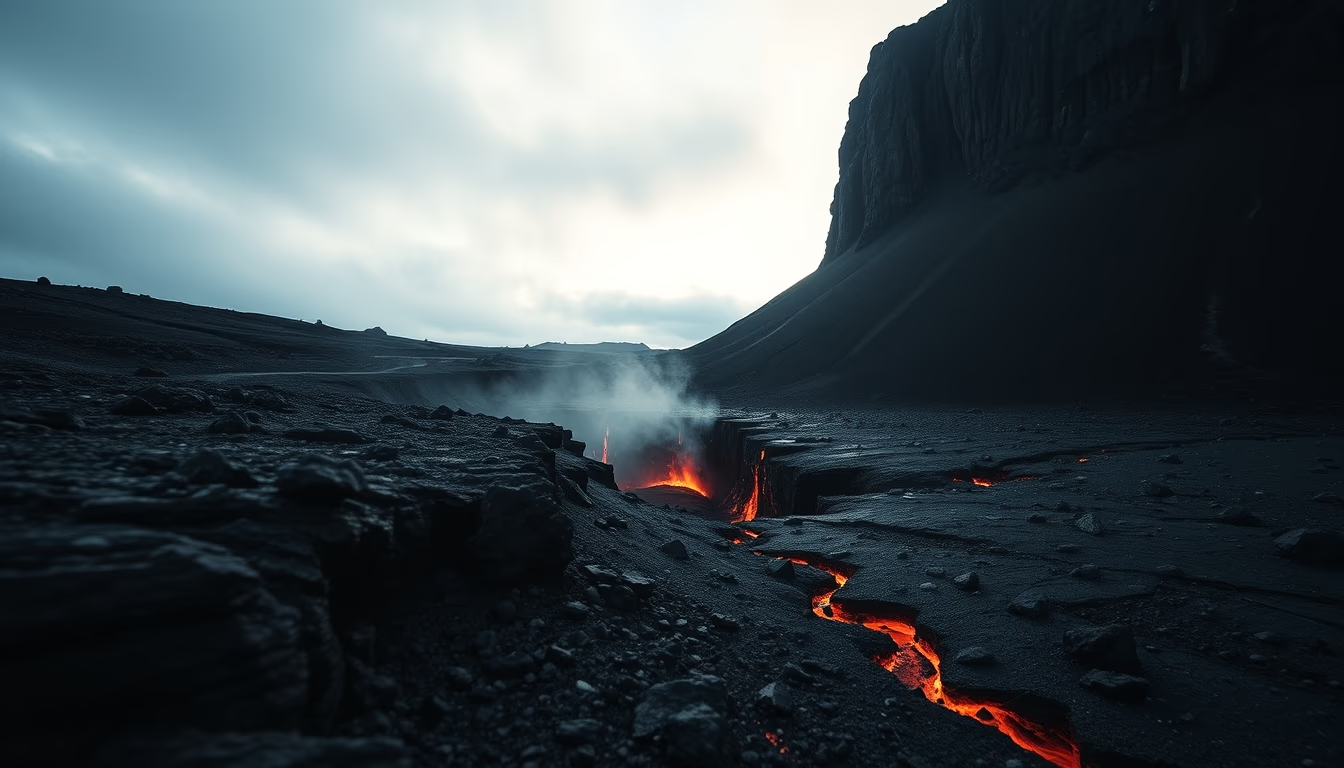
Iceland fissure eruption
1344×768 · AVIF · CC BY 4.0
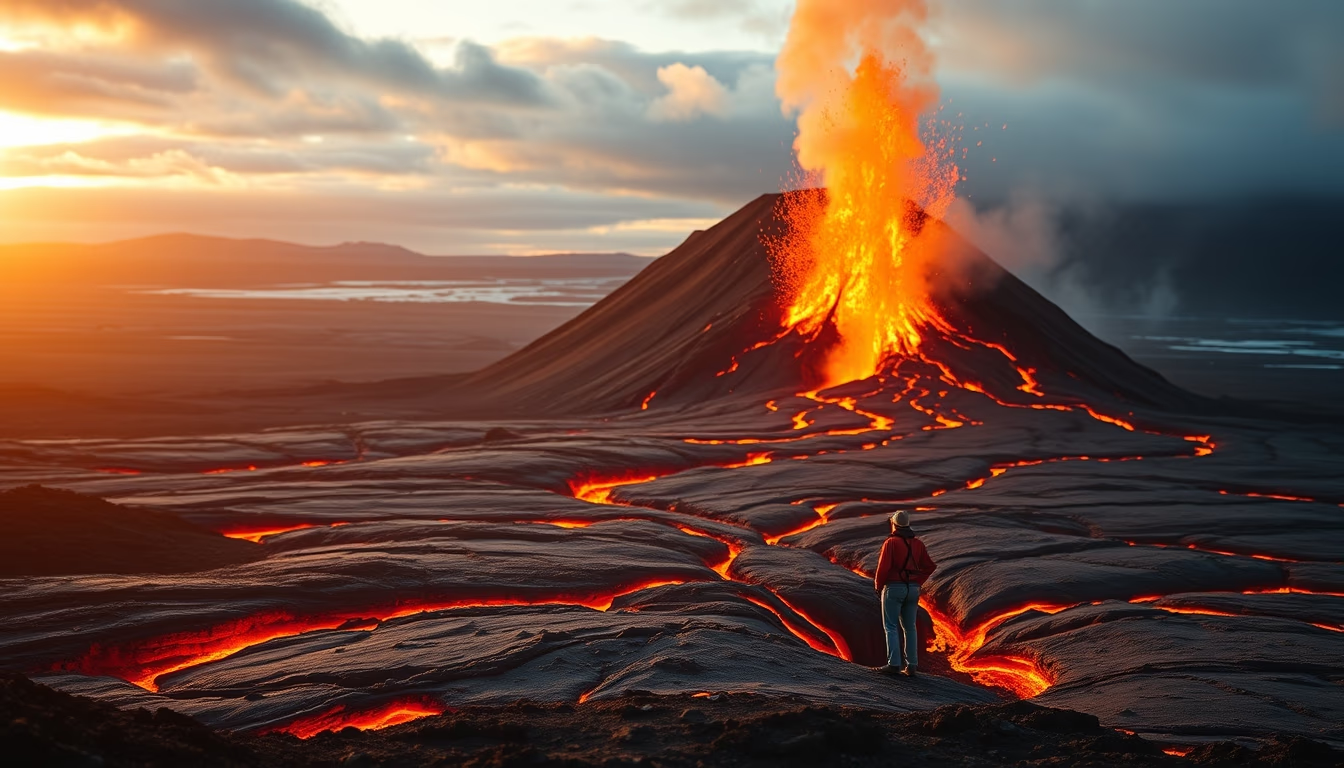
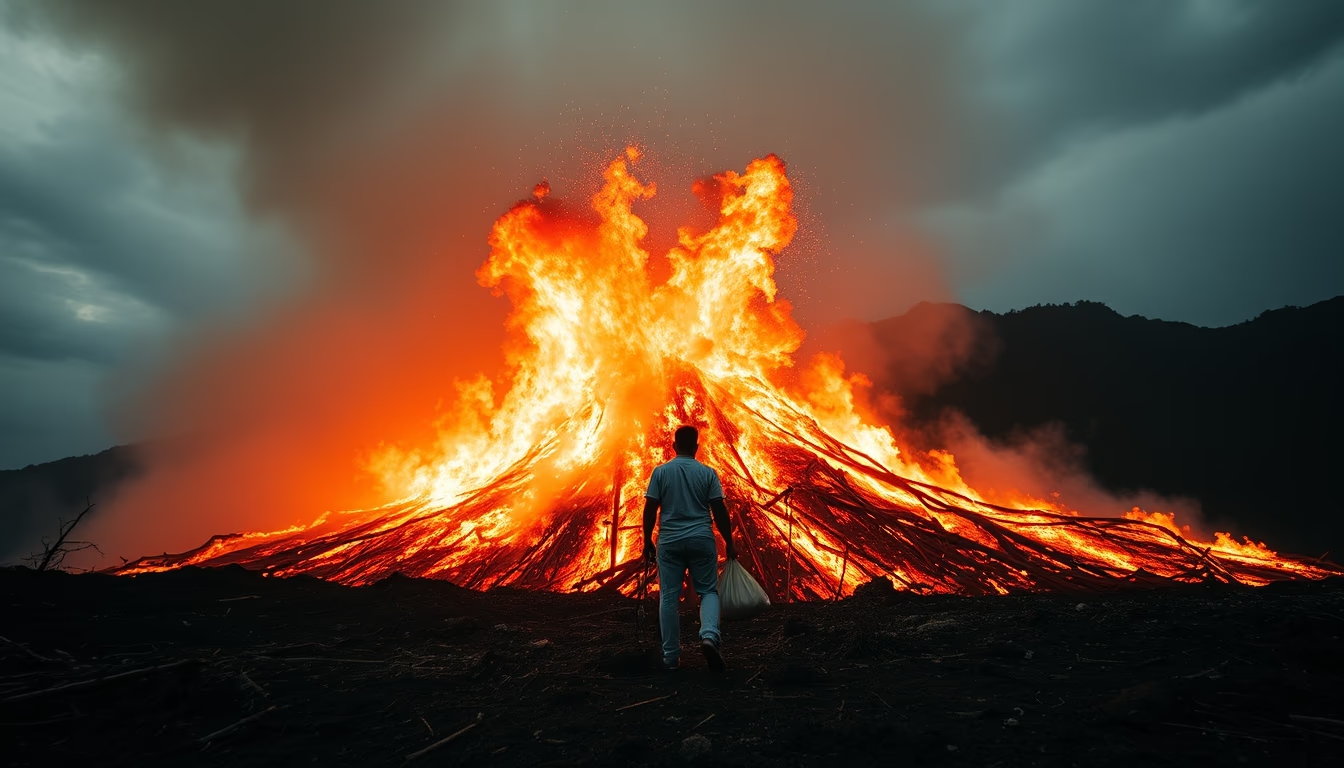
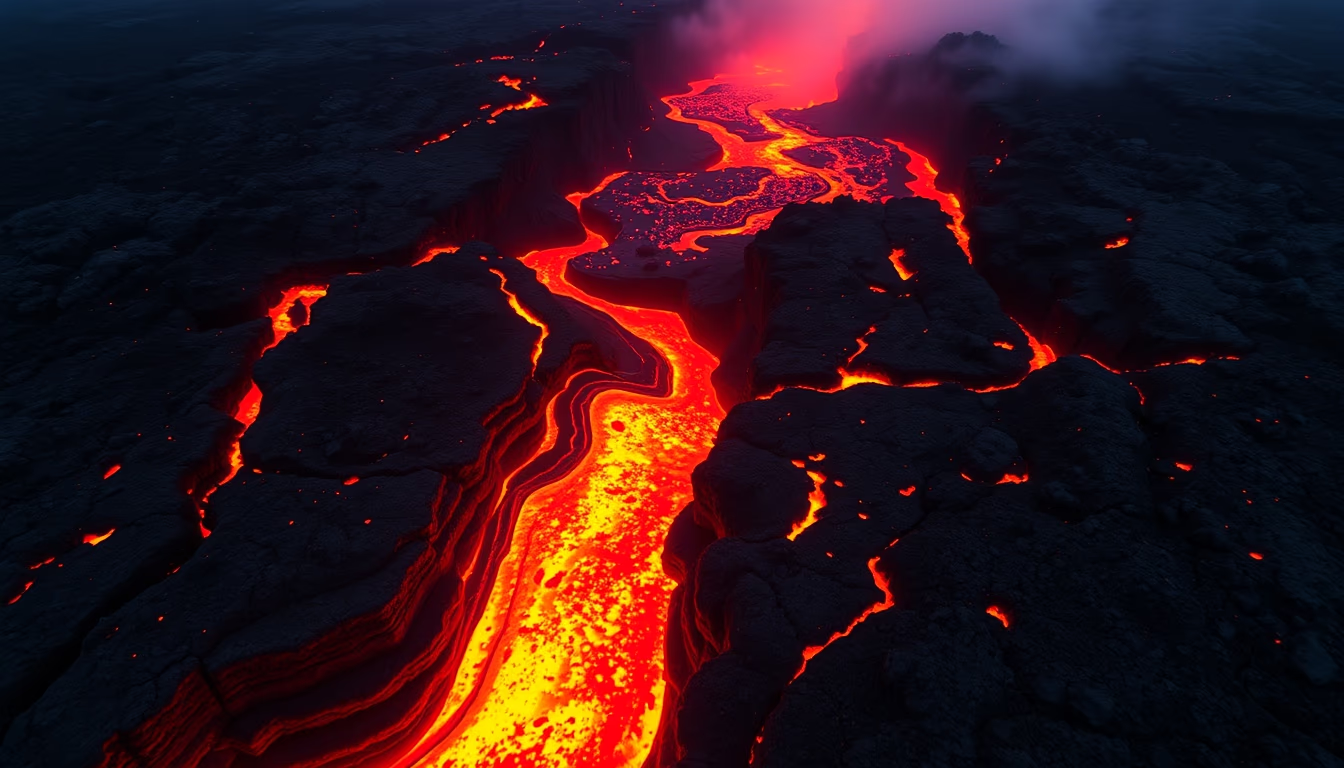
A fissure eruption in Iceland is a volcanic phenomenon where lava emerges from long cracks in the ground, commonly linked to rift zone volcanoes.
About this subject
Fissure eruptions are one of the most distinctive types of volcanic activity in Iceland, occurring along cracks that can stretch for kilometers. Unlike central vent eruptions typical of volcanic cones, these fissures produce extensive basalt lava flows, usually effusive with little explosive activity. They are fed by dykes rising from the mantle through the crust, taking advantage of tectonic tension from the separation of the North American and Eurasian plates at the Mid-Atlantic Ridge.
Iceland hosts some of the largest historical fissure eruptions. The Laki (Lakagígar) eruption in 1783-1784 produced about 14 km³ of lava and released toxic gases that caused widespread famine and altered global climate, with reports of sulfuric haze across Europe and North America. Another notable event was the Eldgjá eruption around 934 AD, the largest known fissure eruption, which generated over 18 km³ of lava and impacted climate during the Middle Ages.
More recently, the Reykjanes Peninsula in southwestern Iceland entered a new eruptive cycle in 2021, with fissure eruptions at the Fagradalsfjall and later Sundhnúkur volcanic systems (2023-2024). These events attracted thousands of visitors and scientists, enabling detailed studies of eruption dynamics. The lava from these fissures is typically picrite or basalt, with low viscosity, forming vast lava fields like that of Holuhraun in 2014.
Geologically, fissure eruptions are key to understanding oceanic crust formation and the evolution of the Icelandic rift. They also pose significant hazards due to gas emissions like sulfur dioxide and hydrogen fluoride, which can affect human health and agriculture. Constant monitoring through seismographs and GPS helps predict these events, but precise forecasting of a fissure eruption remains challenging.
Frequently Asked Questions
What is the difference between a fissure eruption and a central vent eruption?
In fissure eruptions, lava emerges from long cracks in the ground, creating fire curtains, while central vent eruptions occur from a single point, usually a volcanic cone. Fissures produce extensive low-viscosity basalt lava flows.
Where do fissure eruptions occur in Iceland?
They are common in rift zones, such as the Reykjanes Peninsula, and in volcanic systems like Krafla, Askja, Laki, and Eldgjá. Their location is directly linked to the Mid-Atlantic Ridge, where tectonic plates diverge.
What were the impacts of the 1783 Laki eruption?
The Laki eruption released huge amounts of sulfur and fluorine gases, causing air pollution, acid rain, livestock deaths, and a famine that killed about 25% of Iceland's population. Globally, volcanic aerosols lowered temperatures and caused climate anomalies in Europe and North America.
Direct URL
https://pub-c7d6a6ea828543ac903a74a341ccb2e1.r2.dev/imagens/iceland-fissure-eruption-cinematic-wide-shot-fresh13.avifHow to credit
Include a visible link back to UtilizAí. Copy one of the snippets below:
<a href="https://xn--utiliza-eza.com/en/midia/imagens/iceland-fissure-eruption-cinematic-wide-shot-fresh13">Iceland fissure eruption</a> by <a href="https://xn--utiliza-eza.com">UtilizAí</a>, licensed under <a href="https://creativecommons.org/licenses/by/4.0/">CC BY 4.0</a>.
[Iceland fissure eruption](https://xn--utiliza-eza.com/en/midia/imagens/iceland-fissure-eruption-cinematic-wide-shot-fresh13) by [UtilizAí](https://xn--utiliza-eza.com), CC BY 4.0
License: CC-BY-4.0