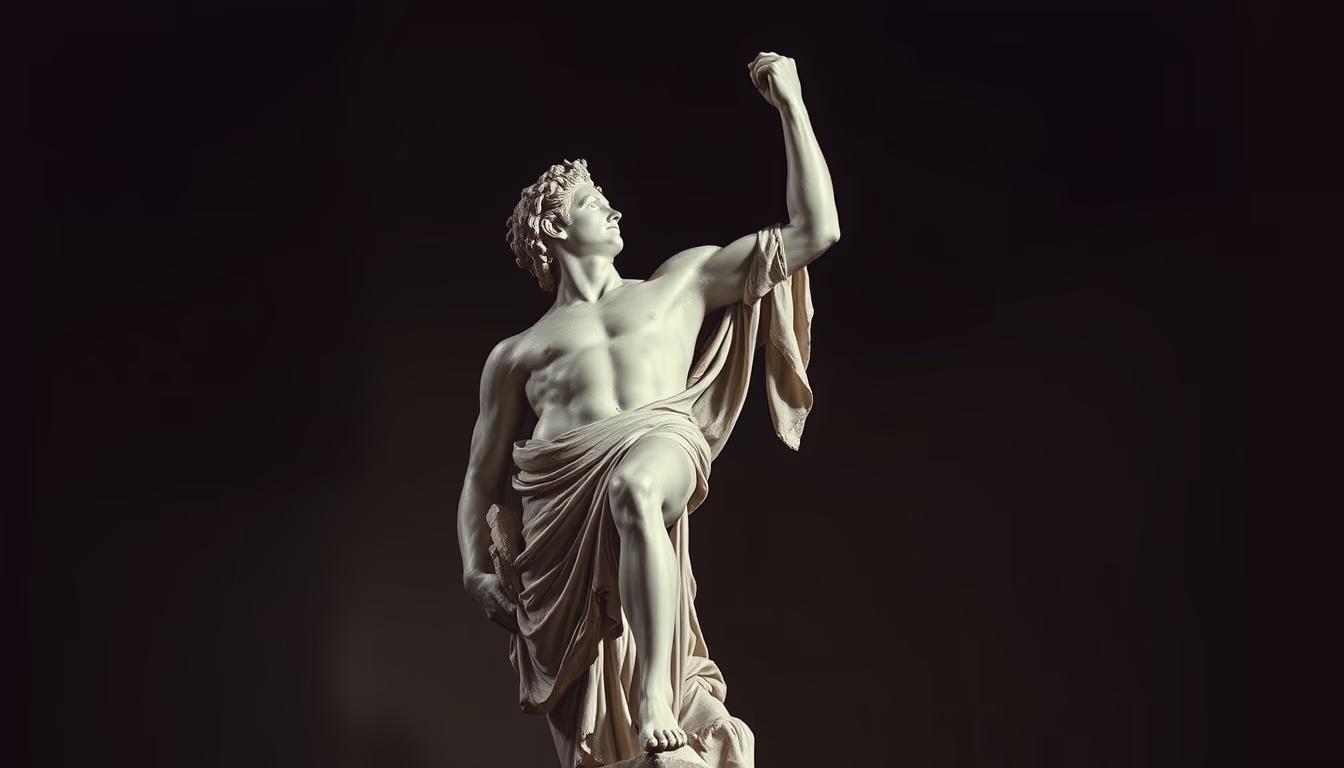
Auguste rodin sculptures
1344×768 · AVIF · CC BY 4.0
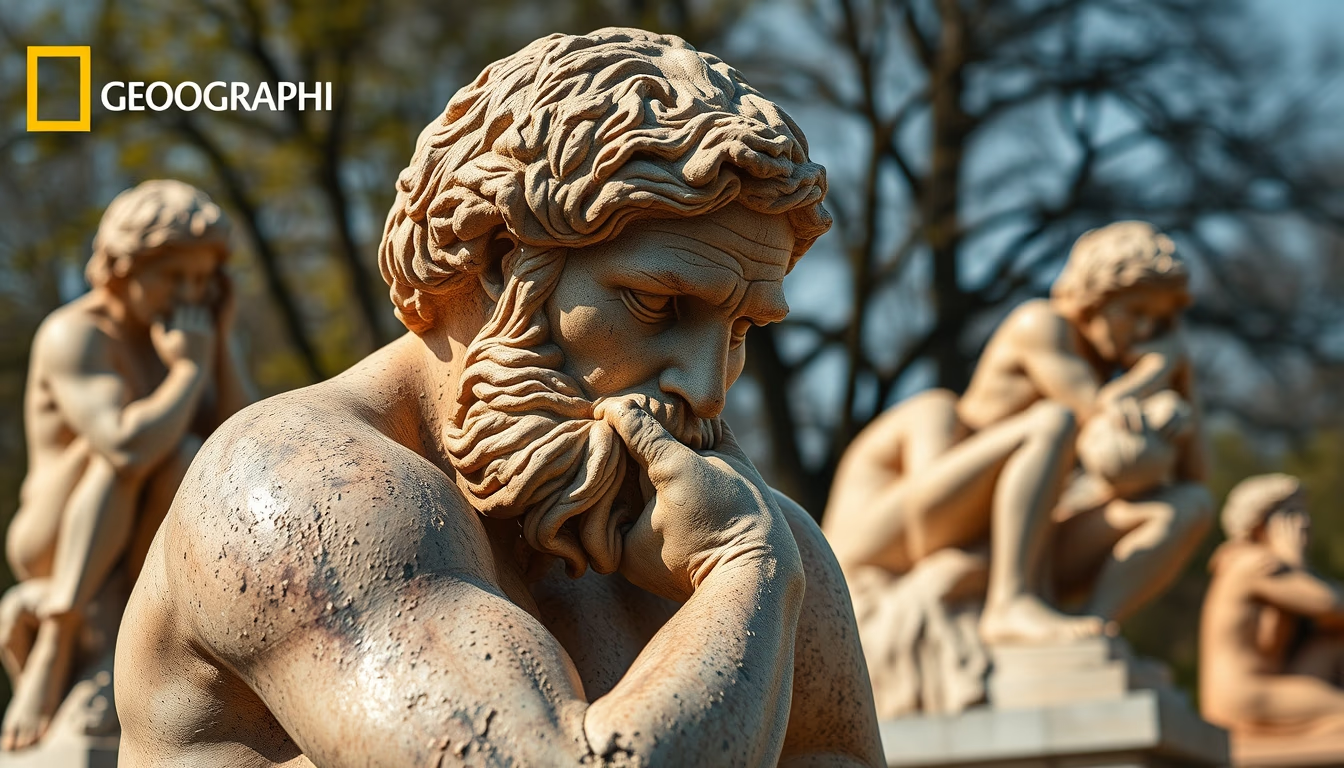
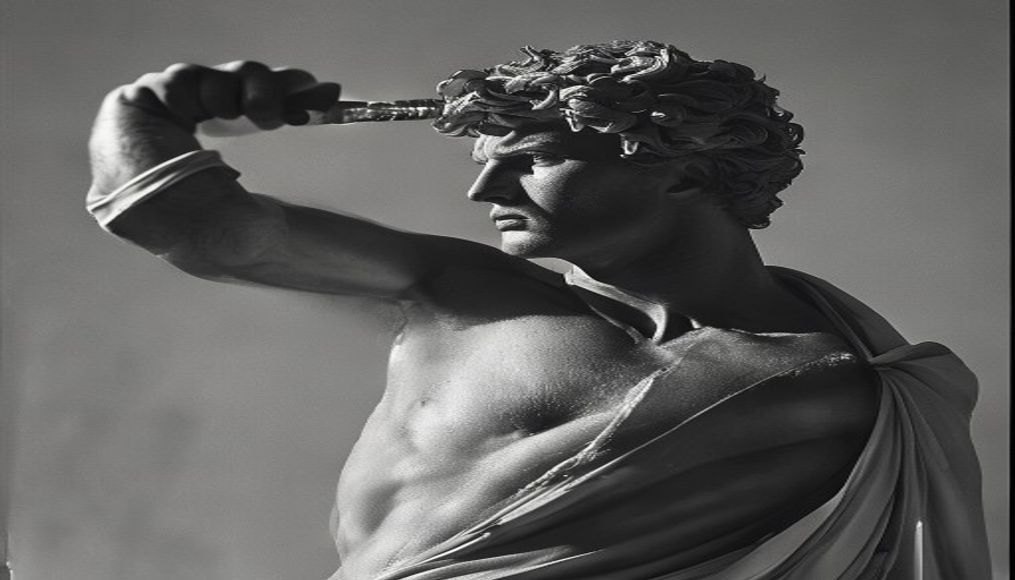
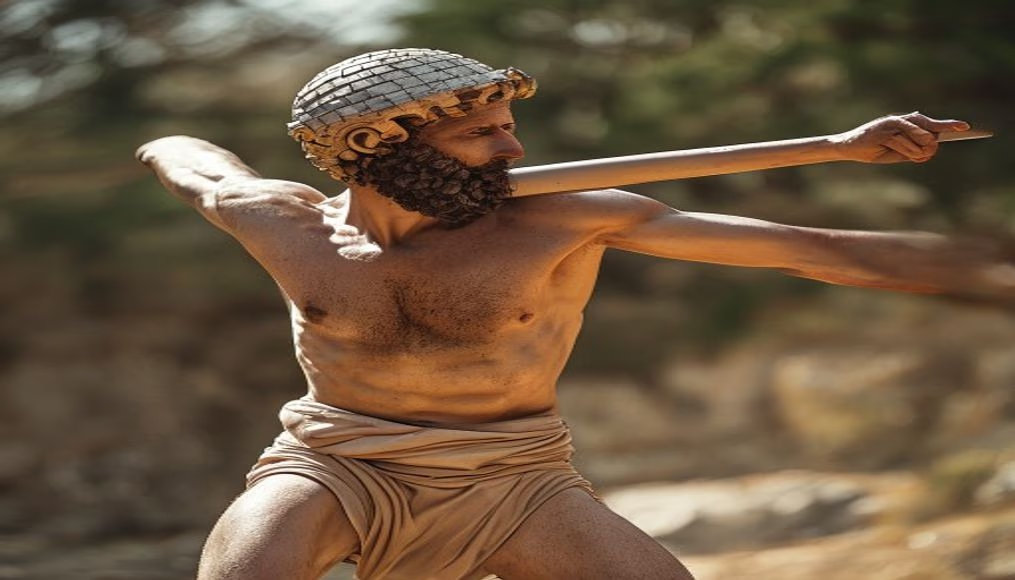
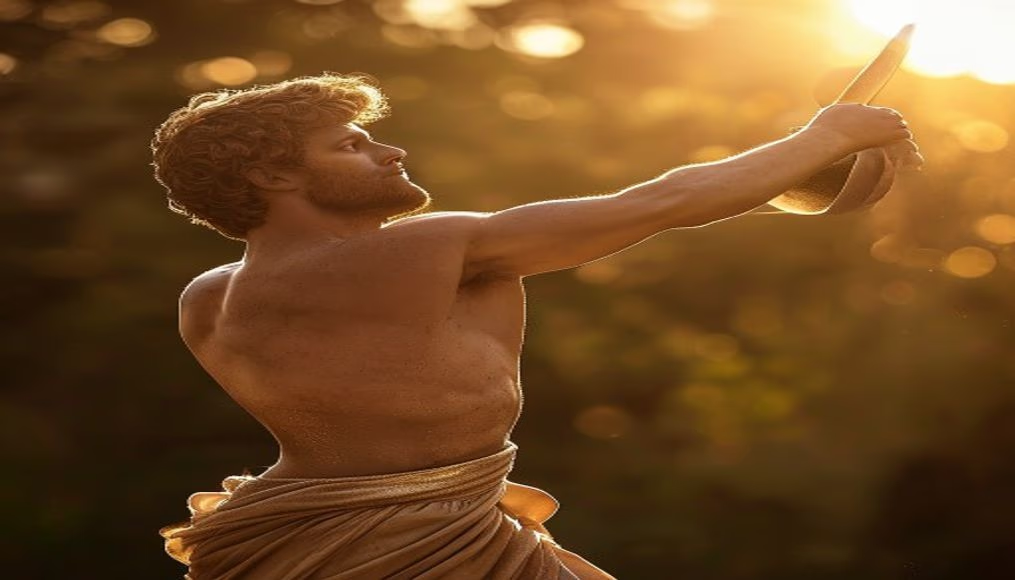
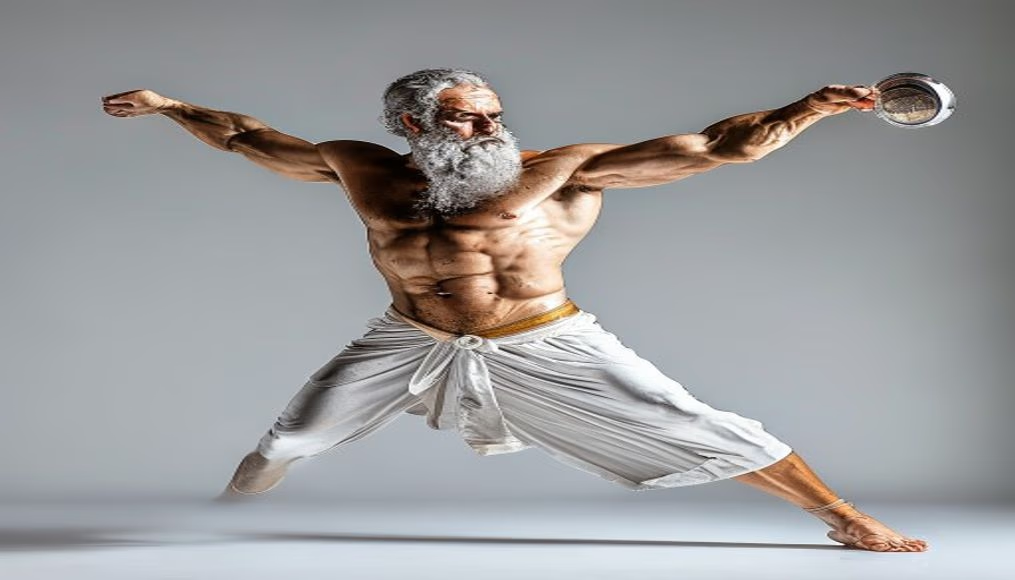
Auguste Rodin's sculptures revolutionized 19th-century art, blending emotional realism with innovative techniques that challenged academic standards.
About this subject
Auguste Rodin (1840-1917) is considered the father of modern sculpture. His approach broke with prevailing neoclassicism, prioritizing the expression of human emotion and the capture of movement through textured surfaces. Works such as "The Thinker" and "The Kiss" have become cultural icons, but his impact extends beyond individual pieces. Rodin developed a method of assembling body parts, creating fragmented figures that suggested continuity. "The Gates of Hell," his monumental project inspired by Dante's "Divine Comedy," was never completed in his lifetime but spawned many of his most famous sculptures.
The artistic context of the late 19th century was dominated by academies that exalted classical perfection. Rodin, in contrast, left tool marks visible and embraced anatomical distortion to convey tension and psychology. Early critics accused him of having made a cast directly from a live model for his sculpture "The Age of Bronze," so realistic was the piece. This controversy, however, solidified his reputation as an innovator. His influence extended to sculptors like Camille Claudel, his student and collaborator, whose work also gained posthumous recognition.
Today, Rodin's works are displayed in museums worldwide, with the Musée Rodin in Paris, housed in the Hôtel Biron where the artist lived, holding the largest collection. The museum includes plasters, marbles, and bronzes. His public sculptures, such as "The Thinker" in the museum's garden, attract millions of visitors annually. Rodin also influenced photography and dance: his sculptures were photographed by Edward Steichen and served as inspiration for Martha Graham's choreography.
Frequently Asked Questions
What is Auguste Rodin's most famous sculpture?
Rodin's most famous sculpture is "The Thinker" (Le Penseur), originally part of "The Gates of Hell." It symbolizes philosophy and human introspection.
Where can I see Rodin's major works?
The Musée Rodin in Paris holds the largest collection, including "The Kiss," "The Thinker," and many preparatory studies. Other works are at the Metropolitan Museum of Art (New York) and the Soumaya Museum (Mexico City).
How did Rodin influence modern sculpture?
Rodin broke from academic tradition by valuing texture, the unfinished, and psychological expression. His assemblage technique influenced Cubism and Expressionism, and his emphasis on process inspired artists like Alberto Giacometti.
Direct URL
https://pub-c7d6a6ea828543ac903a74a341ccb2e1.r2.dev/imagens/auguste-rodin-sculptures-national-geographic-style-p8.avifHow to credit
Include a visible link back to UtilizAí. Copy one of the snippets below:
<a href="https://xn--utiliza-eza.com/en/midia/imagens/auguste-rodin-sculptures-national-geographic-style-p8">Auguste rodin sculptures</a> by <a href="https://xn--utiliza-eza.com">UtilizAí</a>, licensed under <a href="https://creativecommons.org/licenses/by/4.0/">CC BY 4.0</a>.
[Auguste rodin sculptures](https://xn--utiliza-eza.com/en/midia/imagens/auguste-rodin-sculptures-national-geographic-style-p8) by [UtilizAí](https://xn--utiliza-eza.com), CC BY 4.0
License: CC-BY-4.0