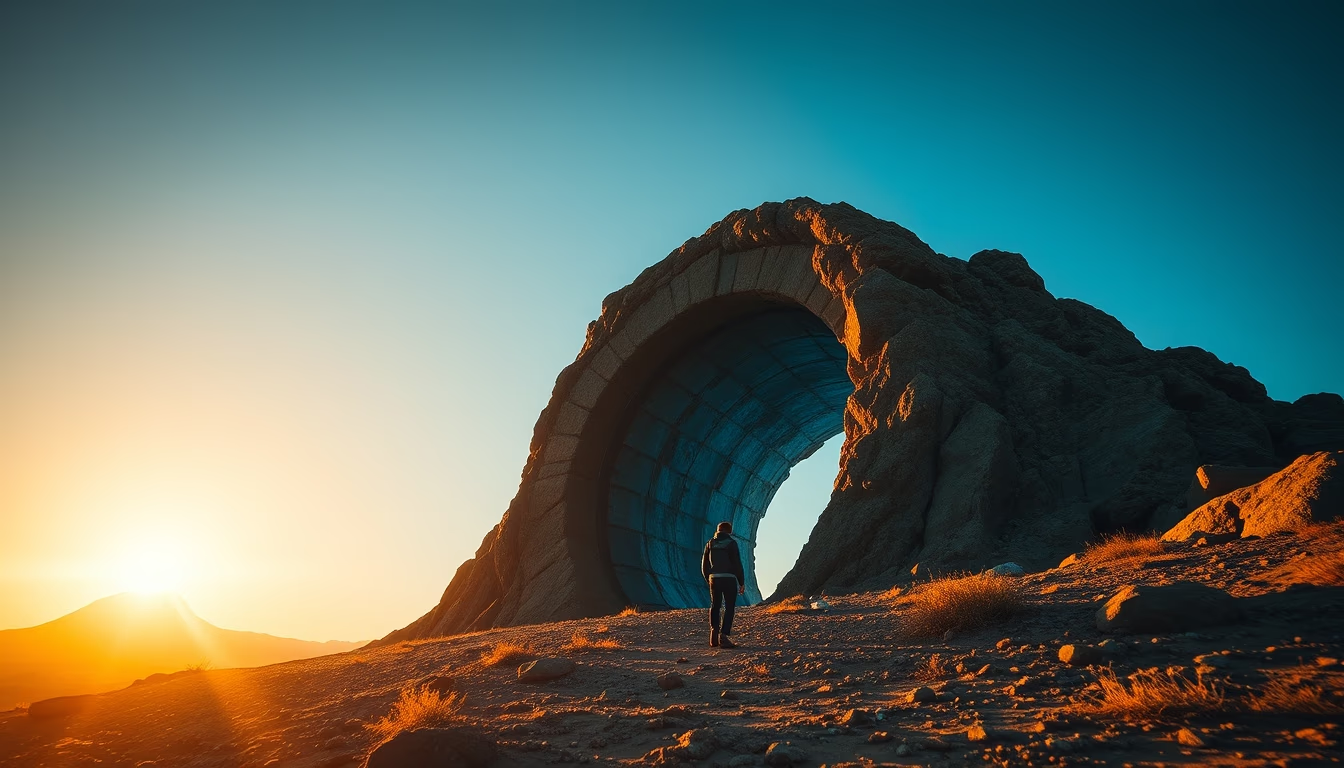
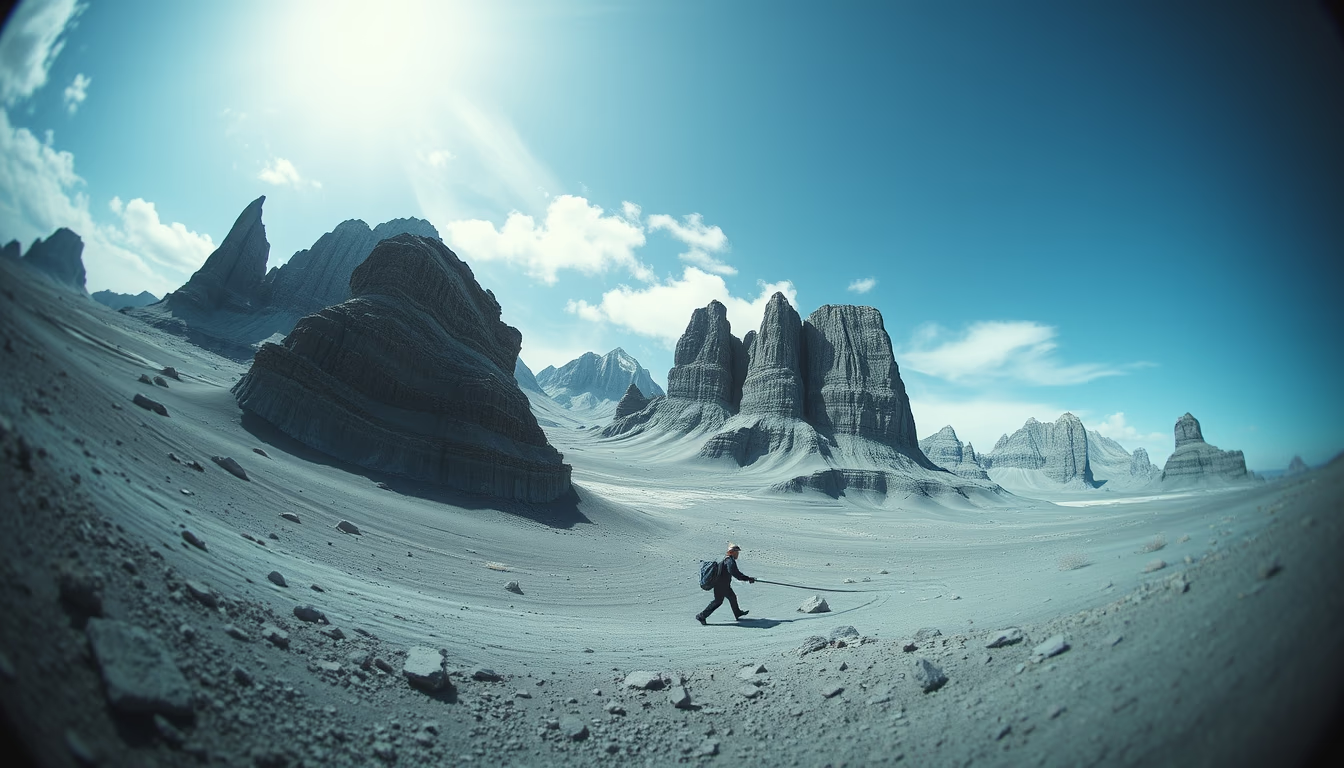
Wormhole portal blue
1344×768 · AVIF · CC BY 4.0
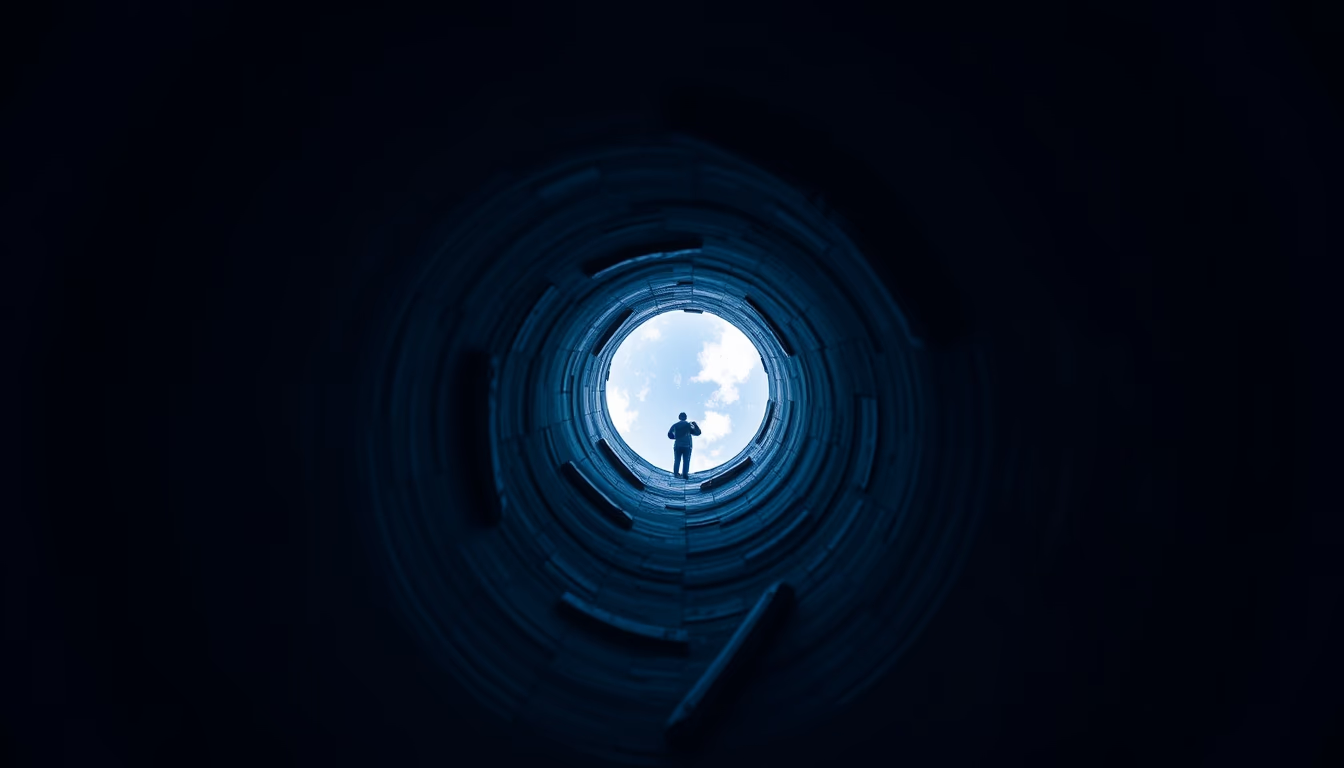
Wormholes are theoretical physics concepts that allow instantaneous travel between distant points in spacetime.
About this subject
Wormholes, also known as Einstein-Rosen bridges, emerge from the equations of general relativity as solutions that connect two distinct regions of the universe. The concept was originally proposed by Albert Einstein and Nathan Rosen in 1935, but the term "wormhole" was popularized by physicist John Wheeler in the 1950s. In theory, a wormhole has a mouth, a throat, and an exit, functioning as a cosmic shortcut. However, practical feasibility faces enormous challenges: the need for exotic matter with negative energy to keep the throat open and prevent collapse, as well as inherent instability that would cause the tunnel to close instantaneously.
In science fiction, wormholes are one of the most popular devices for interstellar travel and time travel. Works like Christopher Nolan's film "Interstellar" (2014) present a visually stunning and partially faithful representation of theoretical physics, with the collaboration of physicist Kip Thorne. Games like the "Mass Effect" series use mass relays as a type of artificial wormhole. The idea of a glowing blue portal has become iconic in pop culture, often associated with distorted visuals and lens effects like fisheye, which emphasize the curvature of spacetime.
Although there is no direct observational evidence of natural wormholes, some astronomical phenomena, such as certain types of black holes or gravitational lensing, could be mistaken for them. Theoretical studies continue, especially regarding the possibility of traversable wormholes, which would require exotic particles not yet discovered. The discussion about wormholes also raises philosophical questions about causality and time paradoxes, such as the famous grandfather paradox.
Frequently Asked Questions
What is a wormhole?
A wormhole is a theoretical solution of general relativity that connects two distant points in spacetime, acting as a shortcut. It requires exotic matter to be traversable.
Are wormholes real?
So far, there is no observational evidence of natural wormholes. They remain theoretical concepts, though they are mathematically valid solutions of Einstein's equations.
How are wormholes depicted in science fiction?
In science fiction, they are often portrayed as glowing blue or white portals with visual distortion. Examples include the film 'Interstellar' and the 'Stargate' series.
Direct URL
https://pub-c7d6a6ea828543ac903a74a341ccb2e1.r2.dev/imagens/wormhole-portal-blue-fish-eye-wide-angle-fresh14.avifHow to credit
Include a visible link back to UtilizAí. Copy one of the snippets below:
<a href="https://xn--utiliza-eza.com/en/midia/imagens/wormhole-portal-blue-fish-eye-wide-angle-fresh14">Wormhole portal blue</a> by <a href="https://xn--utiliza-eza.com">UtilizAí</a>, licensed under <a href="https://creativecommons.org/licenses/by/4.0/">CC BY 4.0</a>.
[Wormhole portal blue](https://xn--utiliza-eza.com/en/midia/imagens/wormhole-portal-blue-fish-eye-wide-angle-fresh14) by [UtilizAí](https://xn--utiliza-eza.com), CC BY 4.0
License: CC-BY-4.0