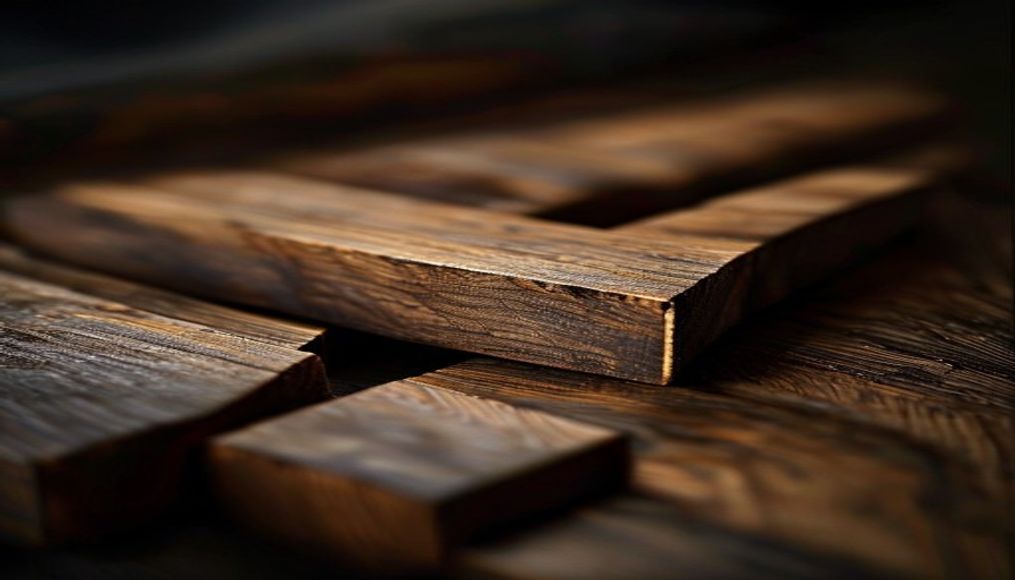
Wood router cutting
1344×768 · AVIF · CC BY 4.0
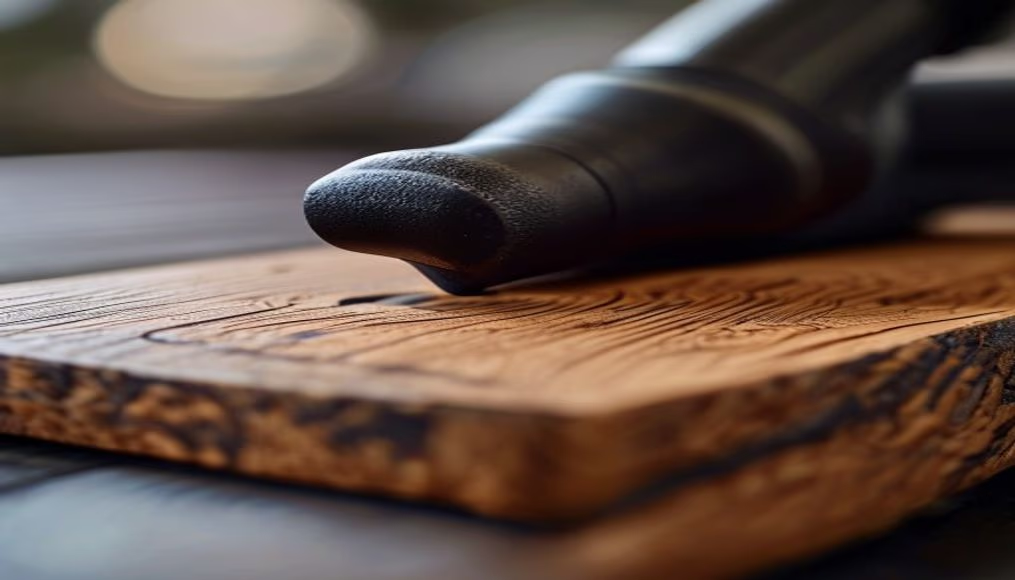
Macro closeup of a wood router bit cutting, highlighting the cutting details and chips produced in woodworking.
About this subject
The wood router is an essential power tool in joinery and carpentry, used for hollowing, profiling, and carving wood. It operates with a router bit spinning at high speed, removing material precisely. There are two main types: the router table, where the tool is fixed and the workpiece is moved, and the handheld router, guided over the surface. Both allow a wide range of applications, from creating joints and moldings to ornamental and marquetry work.
The macro closeup of the cut reveals details such as the bit's geometry, which can be straight for grooves, profile for moldings, or round-nose for rounded carvings. The rotational speed, typically between 8,000 and 25,000 RPM, directly affects the finish quality. Fine chips indicate efficient cutting, while larger splinters may signal too fast a feed rate or a dull bit. Using personal protective equipment, such as safety glasses and a dust mask, is essential due to particle projection.
Historically, the modern electric router was patented by Elmer H. Miller in 1915, but it gained popularity in the 1950s with the advancement of compact electric motors. Today, it is one of the most versatile tools in a workshop, used for both industrial serial production and handcrafted pieces. Selecting the correct bit for each wood type (soft or hard) and properly adjusting the cutting depth are crucial to avoid burning the workpiece and extend the tool's life.
Frequently Asked Questions
What is the difference between a router table and a handheld router?
In a router table, the tool is mounted upside down and fixed, and the workpiece is moved over it, ideal for straight and repetitive cuts. The handheld router is carried and guided by the operator over the workpiece, offering more mobility for curved and detailed work.
How to avoid burning the wood when using a router?
To avoid burns, use a sharp bit, adjust the cutting depth in multiple passes (no more than 3 mm per pass), and maintain a constant feed rate, neither too slow nor too fast.
What safety precautions are important with a router?
Always wear safety glasses, a dust mask, and hearing protection. Keep your hands away from the bit, use fences and safety devices, and never operate the router without the proper blade guard.
Direct URL
https://pub-c7d6a6ea828543ac903a74a341ccb2e1.r2.dev/imagens/wood-router-cutting-macro-closeup-p0.avifHow to credit
Include a visible link back to UtilizAí. Copy one of the snippets below:
<a href="https://xn--utiliza-eza.com/en/midia/imagens/wood-router-cutting-macro-closeup-p0">Wood router cutting</a> by <a href="https://xn--utiliza-eza.com">UtilizAí</a>, licensed under <a href="https://creativecommons.org/licenses/by/4.0/">CC BY 4.0</a>.
[Wood router cutting](https://xn--utiliza-eza.com/en/midia/imagens/wood-router-cutting-macro-closeup-p0) by [UtilizAí](https://xn--utiliza-eza.com), CC BY 4.0
License: CC-BY-4.0