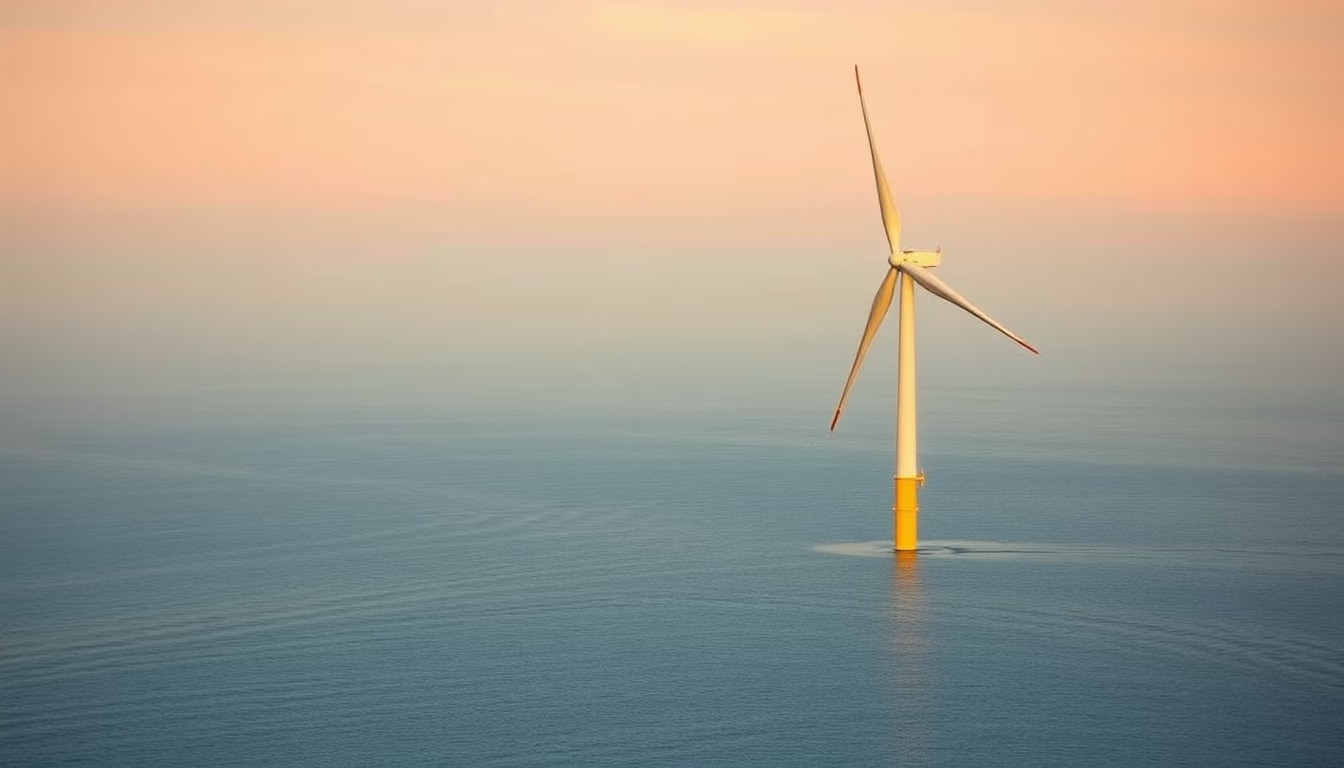
Wind turbine offshore
1344×768 · AVIF · CC BY 4.0
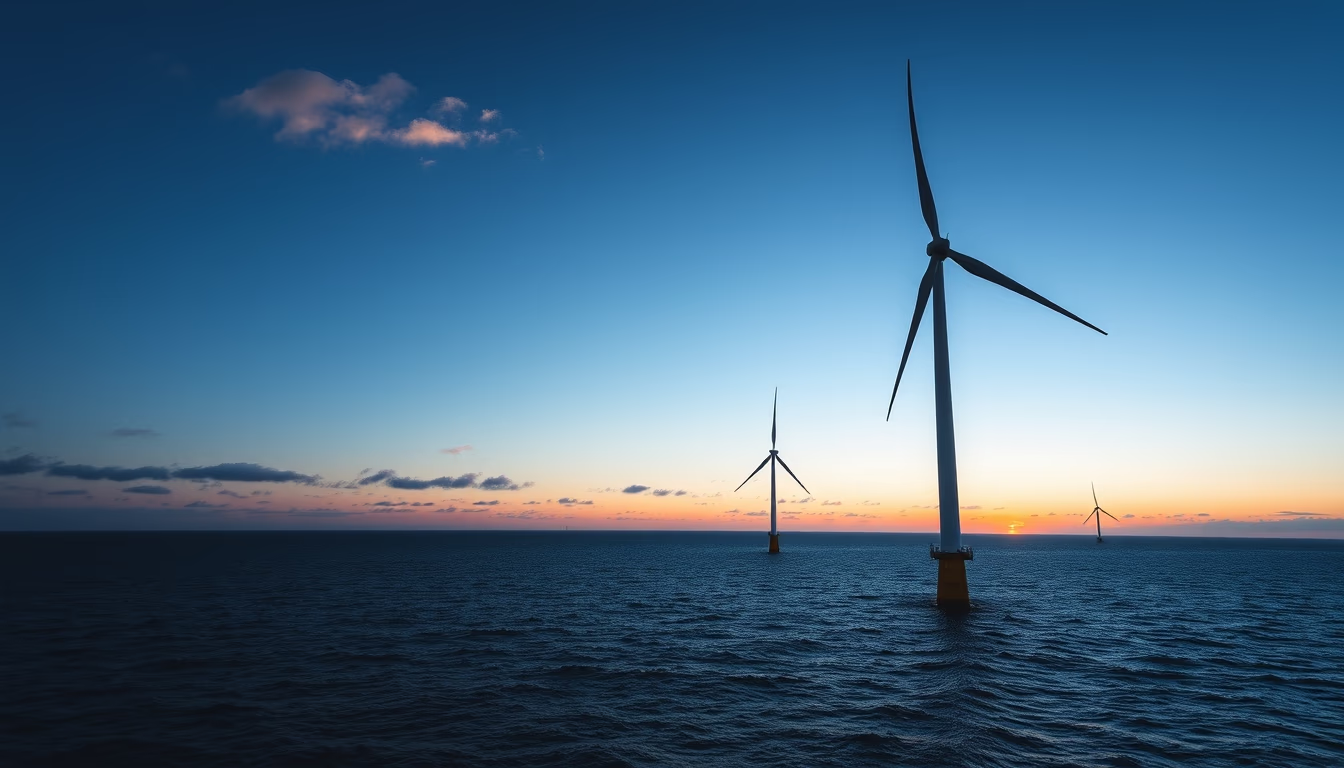
Offshore wind turbines harness sea winds to generate clean electricity, with higher capacity and less visual impact than onshore farms.
About this subject
Offshore wind energy is one of the most promising renewable sources for the next decade. Unlike onshore turbines, those installed at sea capture stronger and more consistent winds, resulting in capacity factors often exceeding 50% compared to around 30% on land. The largest turbines today exceed 15 MW with rotor diameters over 230 meters, comparable to the height of the Christ the Redeemer statue. Countries such as the United Kingdom (Hornsea, Dogger Bank), China, and Germany lead in installations, with projects totaling hundreds of gigawatts. Brazil has enormous offshore potential: its coast boasts exceptional winds, especially in the Northeast and South, and the government is studying auctions for 2025-2026, with technical capacity projections of up to 900 GW. However, challenges include anchorage and transmission costs, as well as impacts on marine fauna, mitigated by environmental studies and foundation technologies like monopiles and jackets.
Technological evolution is moving toward floating turbines, which enable installation in deep waters (over 60 meters), opening up currently unexplored areas. Projects like Hywind (Norway) and WindFloat (Portugal) have already proven feasibility. By 2026, 20 MW turbines are expected to enter commercial operation. Offshore generation tends to complement solar and onshore wind in the global electricity mix, helping countries achieve net-zero targets. For Brazil, integration with the naval and port industry can generate jobs and regional development, especially in states such as Rio Grande do Norte and Rio Grande do Sul.
Interestingly, wind speeds at sea are typically 90% higher than on land, and turbines can operate 95% of the time with scheduled maintenance. Each installed megawatt of offshore wind avoids about 2,000 tons of CO2 annually. Offshore wind energy is a central piece in global energy transition strategies.
Frequently Asked Questions
What are offshore wind turbines?
They are electricity generators installed at sea, converting ocean wind kinetic energy into electrical power. They are larger and more efficient than onshore turbines.
Which countries lead in offshore wind?
UK, China, Germany, Denmark, and Netherlands lead. The UK has the world's largest wind farm, Hornsea.
Does Brazil have offshore wind potential?
Yes, Brazil's coast has strong, steady winds, with technical potential estimated at up to 900 GW. Projects are already undergoing environmental licensing.
Direct URL
https://pub-c7d6a6ea828543ac903a74a341ccb2e1.r2.dev/imagens/wind-turbine-offshore-fine-art-photography-p2.avifHow to credit
Include a visible link back to UtilizAí. Copy one of the snippets below:
<a href="https://xn--utiliza-eza.com/en/midia/imagens/wind-turbine-offshore-fine-art-photography-p2">Wind turbine offshore</a> by <a href="https://xn--utiliza-eza.com">UtilizAí</a>, licensed under <a href="https://creativecommons.org/licenses/by/4.0/">CC BY 4.0</a>.
[Wind turbine offshore](https://xn--utiliza-eza.com/en/midia/imagens/wind-turbine-offshore-fine-art-photography-p2) by [UtilizAí](https://xn--utiliza-eza.com), CC BY 4.0
License: CC-BY-4.0