Viking longship replica
1344×768 · AVIF · CC BY 4.0
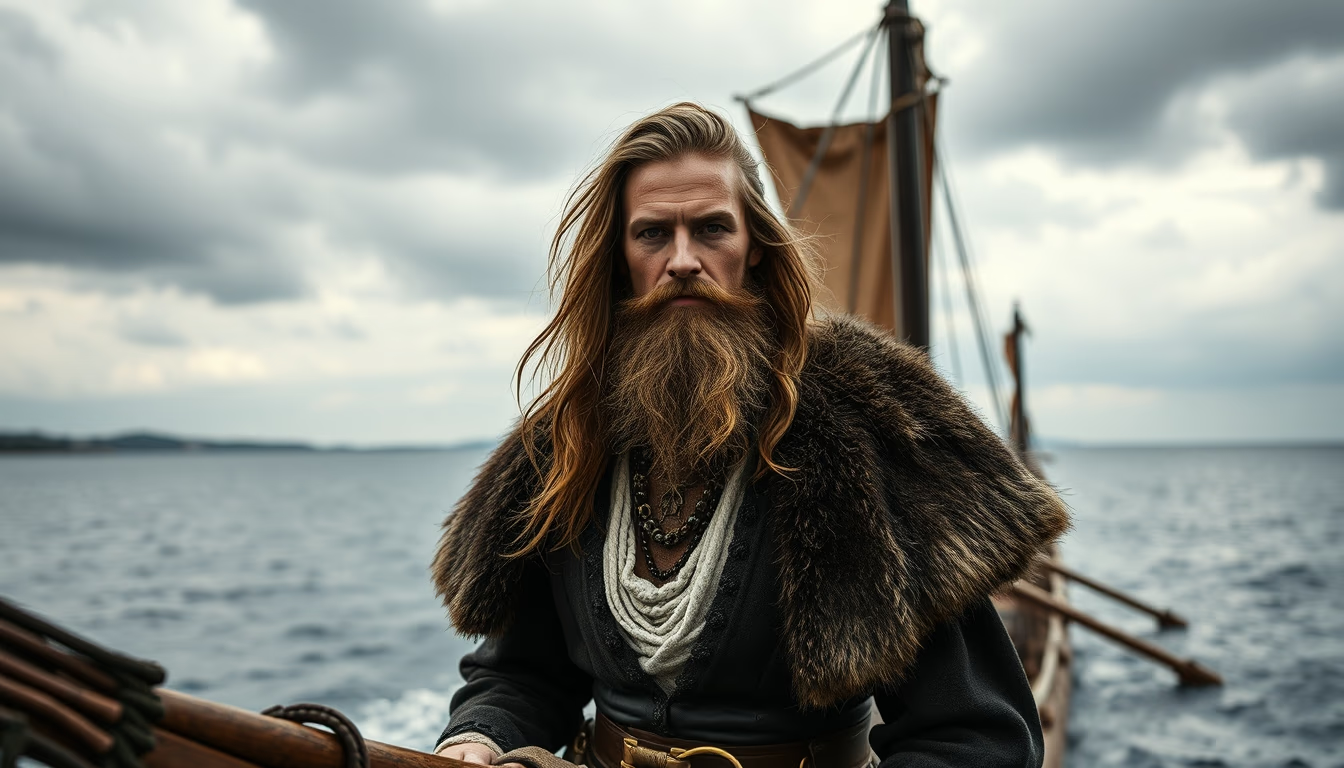
A replica of a Viking longship, symbol of the Viking Age, showcases Nordic naval engineering that enabled raids and trade from the 8th to 11th centuries.
About this subject
The Viking longship, or drakkar, was a long and narrow vessel designed for speed and agility in both open sea and shallow rivers. Built using the clinker technique (overlapping planks fastened with iron rivets), its flexible hull allowed navigation in harsh conditions. The symmetrical hull and shallow keel enabled swift beach landings, crucial for Viking raids. Original ships, like the Gokstad and Oseberg, were excavated from burial mounds in Norway in the 19th century, preserved in blue clay.
Modern replicas, such as the Havhingsten (Sea Stallion) in Denmark and Ireland's Sea Stallion, are constructed using traditional methods with Nordic oak and historic tools. These recreations allow archaeologists and historians to test theories on navigation and ship durability. The Havhingsten, for instance, is a replica of the Skuldelev 2, an 11th-century warship, and has crossed the North Sea under oar and sail. These vessels not only educate the public about Viking culture but are also used in festivals and historical reenactments.
Culturally, the longship symbolizes Norse expansion, reaching from Greenland to the Mediterranean. The term 'drakkar' comes from Old Norse 'dreki' (dragon), referring to the dragon heads carved on the prow, believed to ward off evil spirits. Today, replicas are displayed at museums like the Viking Ship Museum in Oslo and the Roskilde Viking Ship Museum in Denmark. In high-fashion editorials, the dramatic silhouette of the longship contrasts with modernity, embodying an adventurous spirit and Scandinavian heritage.
Frequently Asked Questions
How was a Viking longship built?
It was built using the clinker technique: overlapping oak planks fastened with iron rivets. The hull was assembled around a strong keel, and planks were split with axes, not saws, to preserve wood fibers. The square sail was made of wool or linen, and oars provided propulsion in calm waters.
What is the largest Viking longship ever found?
The largest Viking ship discovered is the Skuldelev 2, excavated in Roskilde Fjord, Denmark. It was about 30 meters long and could carry up to 80 warriors. Its replica, the Havhingsten, was built in 2004.
Where can I see a Viking longship replica today?
Replicas can be seen at the Viking Ship Museum in Oslo (Norway) and the Roskilde Viking Ship Museum (Denmark). Additionally, some replicas sail at Viking festivals, such as the Moesgård Viking Festival in Denmark and the Wolin Viking Festival in Poland.
Direct URL
https://pub-c7d6a6ea828543ac903a74a341ccb2e1.r2.dev/imagens/viking-longship-replica-high-fashion-editorial-p1.avifHow to credit
Include a visible link back to UtilizAí. Copy one of the snippets below:
<a href="https://xn--utiliza-eza.com/en/midia/imagens/viking-longship-replica-high-fashion-editorial-p1">Viking longship replica</a> by <a href="https://xn--utiliza-eza.com">UtilizAí</a>, licensed under <a href="https://creativecommons.org/licenses/by/4.0/">CC BY 4.0</a>.
[Viking longship replica](https://xn--utiliza-eza.com/en/midia/imagens/viking-longship-replica-high-fashion-editorial-p1) by [UtilizAí](https://xn--utiliza-eza.com), CC BY 4.0
License: CC-BY-4.0