Underground tube london
1344×768 · JPG · CC BY 4.0
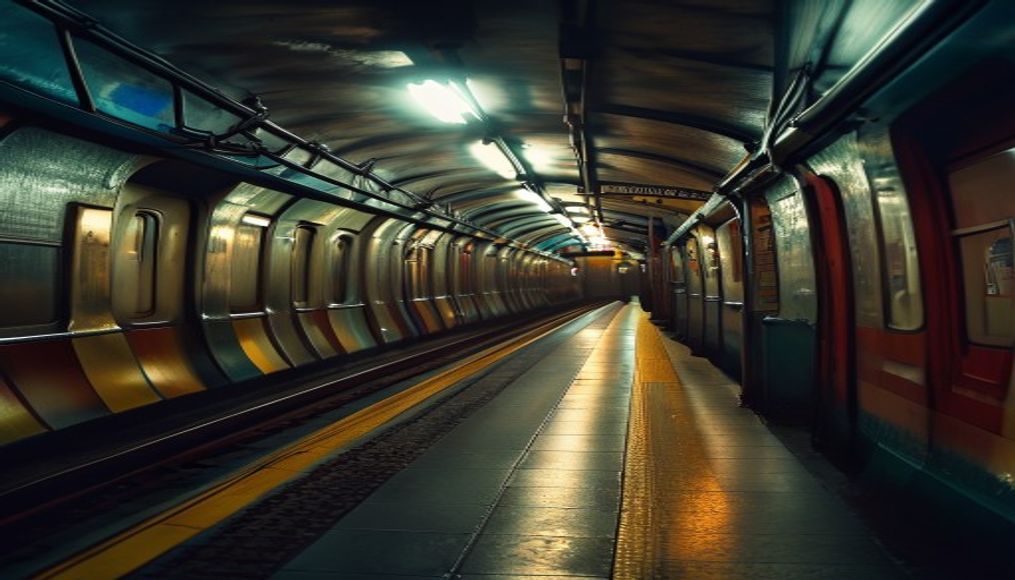
The London Underground, known as the Tube, is the world's oldest underground railway system, opened in 1863.
About this subject
The London Underground traces its origins to the Metropolitan Railway, which began operations on January 10, 1863, connecting Paddington to Farringdon. This 6 km stretch used steam trains and quickly became a success, carrying 26,000 passengers on its first day. Other lines followed, including the District Railway and the Circle Line, forming a network that now spans 402 km, 45% of which is in underground tunnels.
The nickname "Tube" comes from the cylindrical tunnels of the deeper lines, bored through London clay. The first line to use this method was the City and South London Railway in 1890, also the world's first electric underground railway. Today, the network has 11 lines, 272 stations, and carries about 5 million passengers per weekday, making it essential for London's mobility.
The design of the Underground is iconic: Harry Beck's schematic map, created in 1931, revolutionized transit maps using only straight lines and 45-degree angles. The roundel logo is globally recognized. During World War II, stations like Aldwych were used as air-raid shelters, and tunnel sections served as secret factories and storage.
Interestingly, the Waterloo City line, though short, is one of the busiest during peak hours. The system has also inspired cultural works, such as the film "The London Underground" and songs by the band The Jam.
Frequently Asked Questions
What is the oldest line on the London Underground?
The oldest line is the Metropolitan, which opened in 1863 between Paddington and Farringdon. It originally ran steam trains and started the whole system.
How many stations does the London Underground have?
The Tube has 272 stations across 11 lines, serving areas both inside and outside central London.
Why is the London Underground called the Tube?
The name Tube comes from the cylindrical tunnels of the deep-level lines, bored through London clay. The term became popular in the early 20th century and is now synonymous with the system.
Direct URL
https://pub-c7d6a6ea828543ac903a74a341ccb2e1.r2.dev/imagens/underground-tube-london-fine-art-photography-p4.jpgHow to credit
Include a visible link back to UtilizAí. Copy one of the snippets below:
<a href="https://xn--utiliza-eza.com/en/midia/imagens/underground-tube-london-fine-art-photography-p4">Underground tube london</a> by <a href="https://xn--utiliza-eza.com">UtilizAí</a>, licensed under <a href="https://creativecommons.org/licenses/by/4.0/">CC BY 4.0</a>.
[Underground tube london](https://xn--utiliza-eza.com/en/midia/imagens/underground-tube-london-fine-art-photography-p4) by [UtilizAí](https://xn--utiliza-eza.com), CC BY 4.0
License: CC-BY-4.0