Tugboat working harbor
1344×768 · AVIF · CC BY 4.0
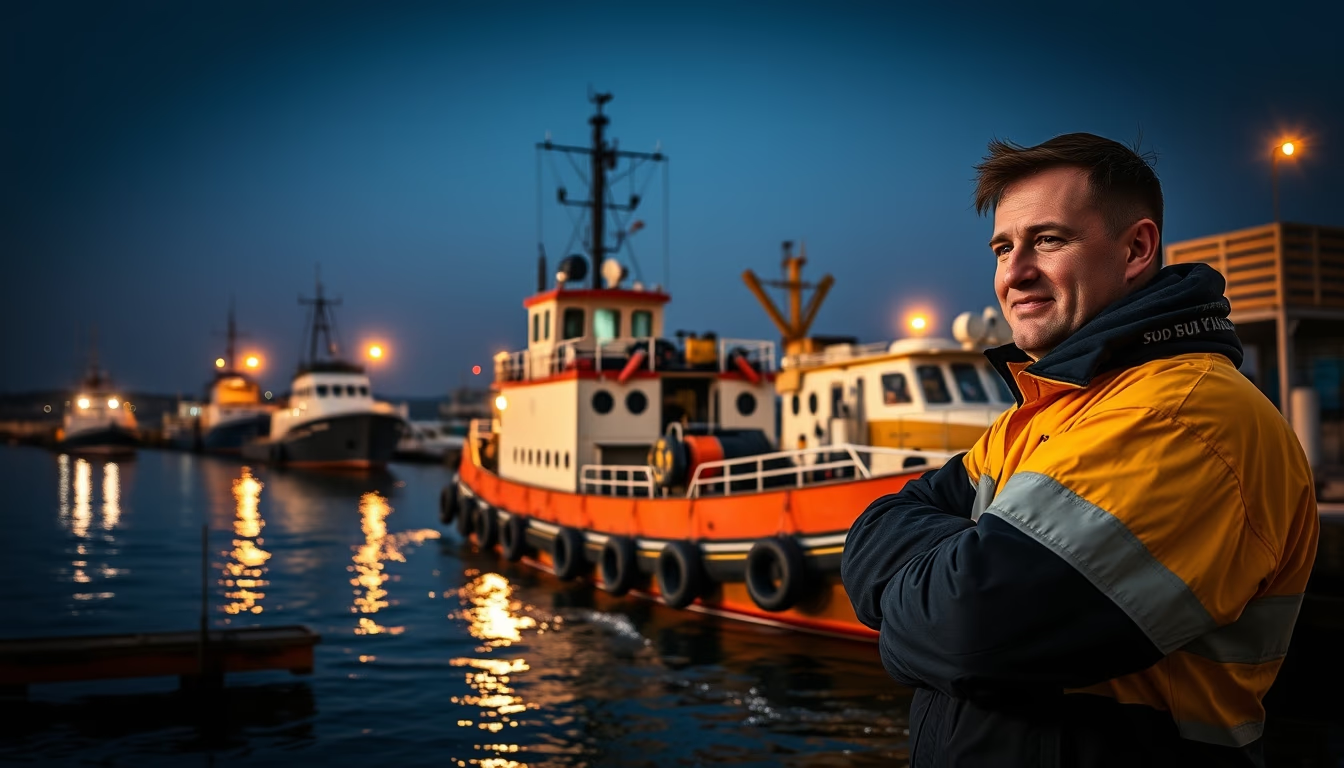
Tugboats are robust vessels essential for maneuvering ships in harbors, ensuring safety and efficiency in maritime operations.
About this subject
Tugboats are small but extremely powerful vessels designed to assist the movement of merchant ships, oil tankers, and large cargo vessels within harbors, canals, and anchorage areas. Their primary function is to provide pulling or pushing force to maneuver vessels that cannot move autonomously in confined spaces. These maneuvers include docking, undocking, towing in adverse weather conditions, and emergency assistance.
In Brazil, tugboat usage is intense at major ports such as Santos, Paranaguá, Rio de Janeiro, and Suape. The Brazilian shipbuilding industry produces modern tugboats, such as the “Brasil” class, which feature azimuth thrusters and high power. Each tugboat is classified by its static towing force (Bollard Pull), measured in tons. The higher this value, the greater the maneuvering capability.
Historically, the first steam-powered tugboats emerged in the 19th century, replacing animal and human traction. Today, many use hybrid or LNG propulsion systems to reduce emissions. A tugboat crew is small, consisting of a captain, engineers, and deckhands, working in shifts to operate 24 hours a day. Communication between the tugboat and the assisted vessel is via radio and visual signals, requiring high coordination.
Tugboats are also used in maritime salvage operations, towing of oil platforms, and support for coastal engineering projects. Globally, ports like Rotterdam and Singapore have fleets of dozens of tugboats to handle intense traffic. Port safety directly depends on the readiness and efficiency of these vessels.
Frequently Asked Questions
What power is needed for a tugboat to maneuver a large vessel?
Power varies with vessel size. A typical tugboat for vessels up to 50,000 tons has about 30 to 50 tons of bollard pull; for larger vessels, tugboats with 70 tons or more may be required.
How do tugboats maneuver in such tight spaces?
They use azimuth thrusters that rotate 360 degrees, allowing lateral movements and quick changes in direction. They also have reinforced hulls to withstand impacts.
What are the main types of tugboats?
Main types include conventional stern drive, tractor tug, ASD (Azimuth Stern Drive), and Voith Schneider, which uses rotating blades for high maneuverability.
Direct URL
https://pub-c7d6a6ea828543ac903a74a341ccb2e1.r2.dev/imagens/tugboat-working-harbor-studio-editorial-portrait-p4.avifHow to credit
Include a visible link back to UtilizAí. Copy one of the snippets below:
<a href="https://xn--utiliza-eza.com/en/midia/imagens/tugboat-working-harbor-studio-editorial-portrait-p4">Tugboat working harbor</a> by <a href="https://xn--utiliza-eza.com">UtilizAí</a>, licensed under <a href="https://creativecommons.org/licenses/by/4.0/">CC BY 4.0</a>.
[Tugboat working harbor](https://xn--utiliza-eza.com/en/midia/imagens/tugboat-working-harbor-studio-editorial-portrait-p4) by [UtilizAí](https://xn--utiliza-eza.com), CC BY 4.0
License: CC-BY-4.0