Tugboat working harbor
1344×768 · AVIF · CC BY 4.0
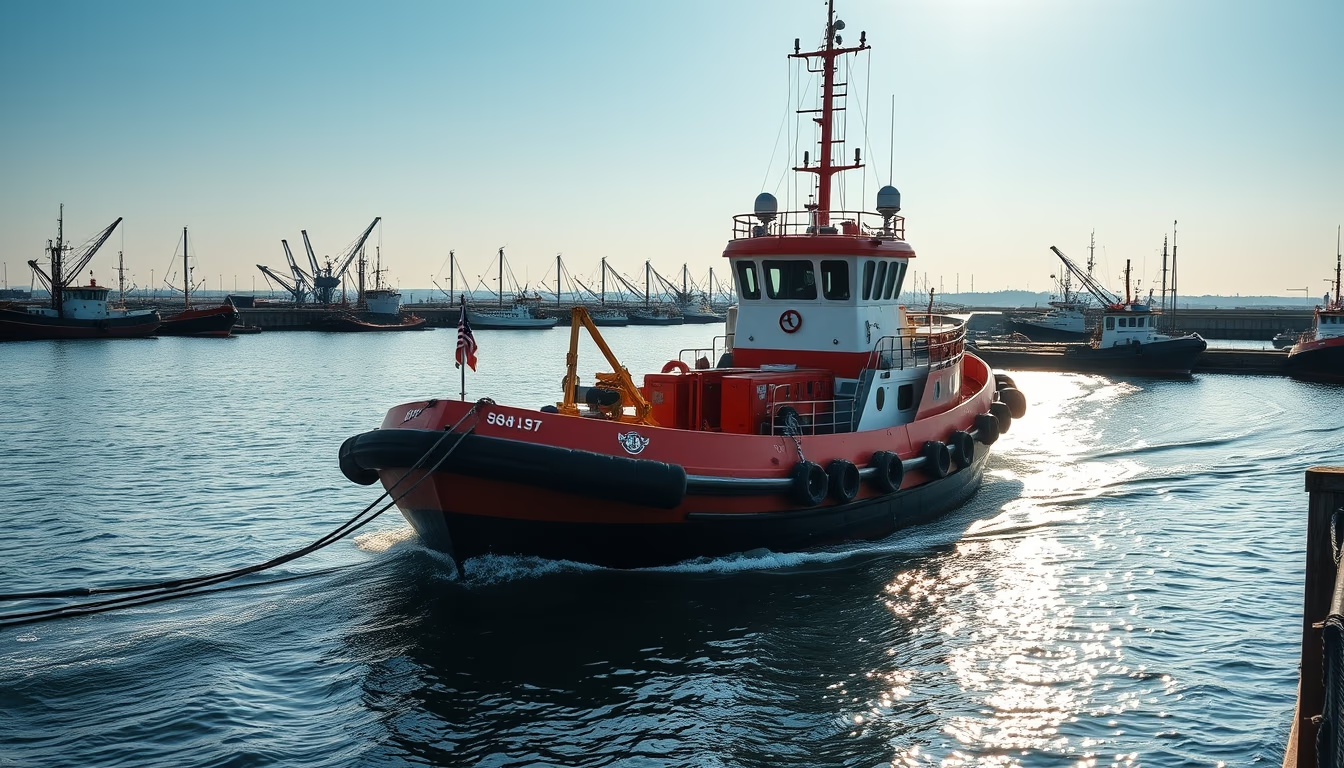
Tugboat assisting vessels in harbor: how these compact workhorses ensure safe and efficient maneuvers in global maritime traffic.
About this subject
Tugboats are modestly sized vessels with disproportionately high power designed to assist larger ships in docking, undocking, and navigating narrow channels. With engines exceeding 10,000 horsepower, they exert bollard pull measured in tons, capable of moving cargo ships and tankers weighing hundreds of thousands of tons. Their versatility comes from advanced propulsion systems such as azimuth thrusters or cycloidal drives, enabling rotation on the spot and sideways movement.
The history of tugboats dates back to the early 19th century with the advent of steam boats. The first known steam tug was the 'Charlotte Dundas' in Scotland in 1802, used for towing barges on the Forth and Clyde Canal. Since then, they have become indispensable in major ports worldwide. In Brazil, ports like Santos, Rio de Janeiro, and Paranaguá operate modern tug fleets, many built by domestic shipyards such as Estaleiro Rio Tietê or Estaleiro Mauá. The Brazilian merchant marine relies on these vessels for foreign trade competitiveness.
Beyond maneuvering, tugboats engage in firefighting (equipped with water cannons), towing offshore platforms, and maritime emergency response. Typical crew size ranges from 4 to 8 people, working 12-hour shifts during missions that may last weeks. Regulations from the Brazilian Navy set strict certification requirements. Recent innovations include hybrid or fully electric tugboats, such as the 'Novais' from Svitzer, reducing emissions in urban ports.
Frequently Asked Questions
What is the typical power of a harbor tugboat?
Tugboat engine power ranges from 1,500 to over 10,000 horsepower, depending on size and role. Common harbor tugs have between 3,000 and 6,000 HP, with bollard pull of 30 to 60 tons.
How many crew members work on a tugboat?
The minimum crew on a tugboat is usually 4 (captain, mate, deckhand, and engineer), up to 8 for complex operations. They work shifts of 12 hours during hitches that last 14 to 21 days.
Can tugboats be used for firefighting?
Yes, many tugboats are equipped with water or foam monitors that can spray at long range, used for harbor and ship fires, supplementing local fire departments.
Direct URL
https://pub-c7d6a6ea828543ac903a74a341ccb2e1.r2.dev/imagens/tugboat-working-harbor-magazine-editorial-p9.avifHow to credit
Include a visible link back to UtilizAí. Copy one of the snippets below:
<a href="https://xn--utiliza-eza.com/en/midia/imagens/tugboat-working-harbor-magazine-editorial-p9">Tugboat working harbor</a> by <a href="https://xn--utiliza-eza.com">UtilizAí</a>, licensed under <a href="https://creativecommons.org/licenses/by/4.0/">CC BY 4.0</a>.
[Tugboat working harbor](https://xn--utiliza-eza.com/en/midia/imagens/tugboat-working-harbor-magazine-editorial-p9) by [UtilizAí](https://xn--utiliza-eza.com), CC BY 4.0
License: CC-BY-4.0