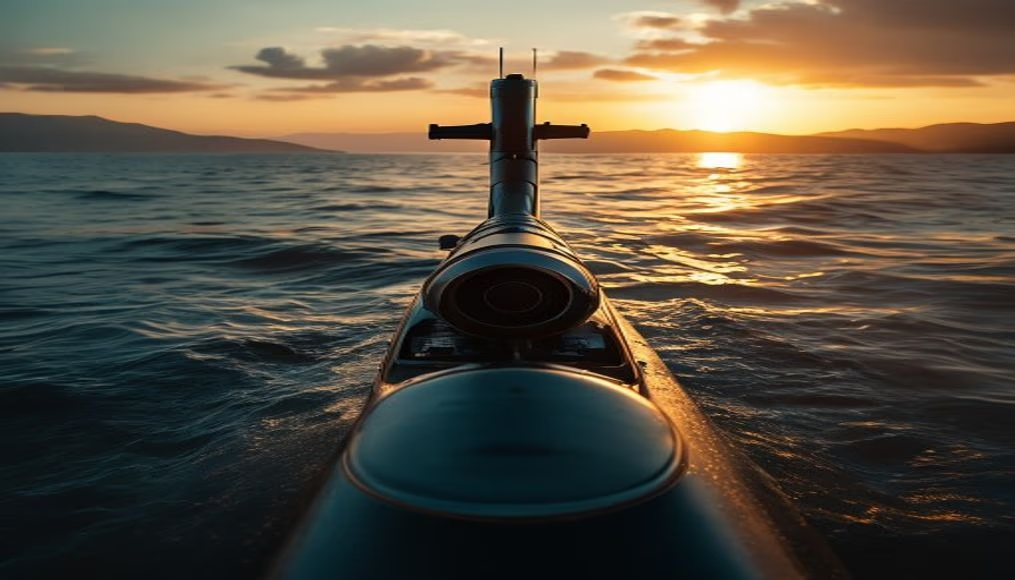
Tugboat working harbor
1344×768 · AVIF · CC BY 4.0
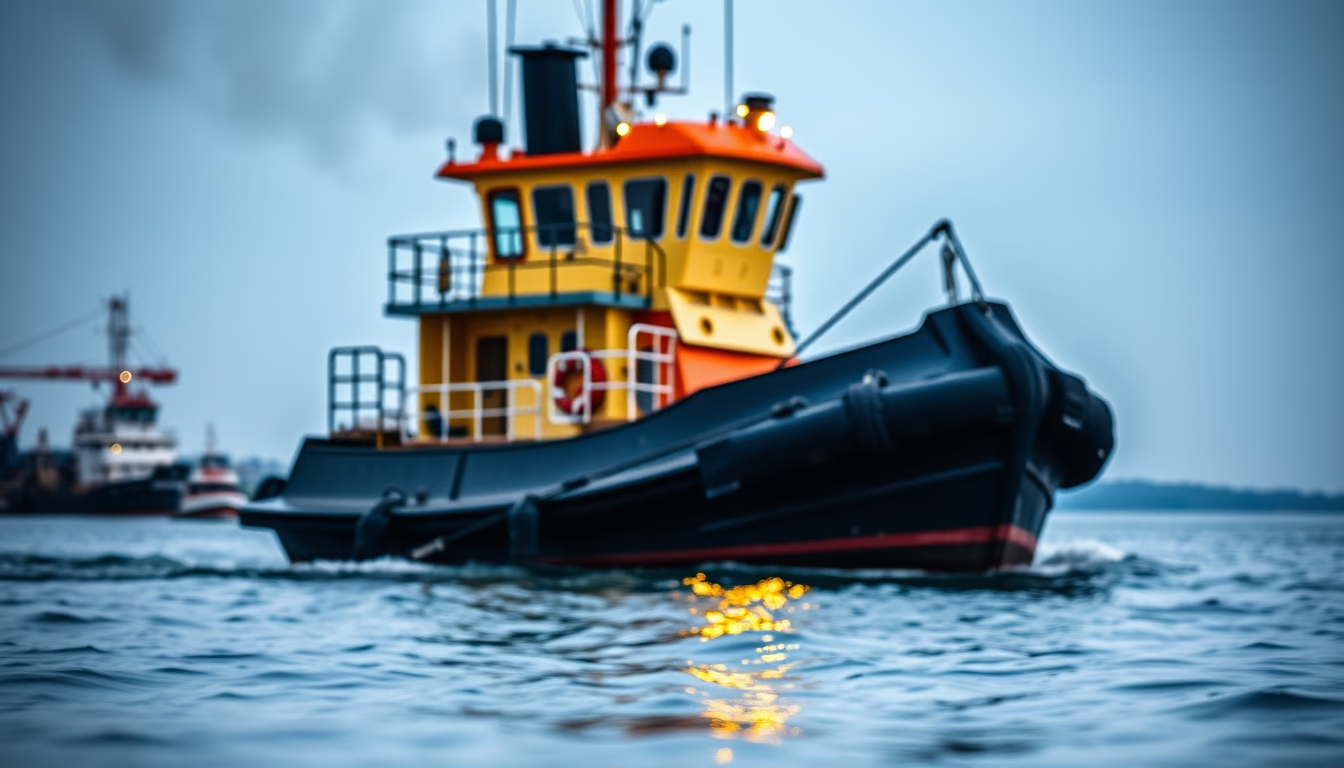
Tugboats are essential vessels for maneuvering ships in harbors, ensuring safety and efficiency in maritime operations.
About this subject
Tugboats are specialized vessels designed to assist in maneuvering ships in harbors, canals, and other confined waterways. They feature powerful engines and reinforced hulls to withstand high towing and pushing forces. The power of a tugboat is measured in bollard pull tons, which can exceed 100 tons in modern models. Tugboats are critical for berthing and unberthing large vessels such as oil tankers and container ships, which cannot maneuver on their own due to size and inertia.
Various types of tugboats exist, including tractor tugs with superior maneuverability and conventional propeller-driven models. Azimuthing tugboats, with rotating thrusters, enable lateral movements and precise turns. Major ports worldwide, like Rotterdam, Singapore, and Santos, rely on tugboat fleets to ensure safe cargo handling. The use of tugboats significantly reduces collision risks and damage to ships and port infrastructure.
Historically, the first steam-powered tugboats appeared in the 19th century, replacing horse or rowing towing. Modern tugs use diesel or natural gas engines, often equipped with dynamic positioning systems to maintain station in adverse weather. Beyond ship handling, tugboats perform rescue operations, firefighting, and equipment transport. The tugboat industry adheres to strict safety regulations and international classification society standards.
Frequently Asked Questions
How can a tugboat pull a ship much larger than itself?
Tugboats use powerful engines and hull designs that generate high thrust. Their force is measured in bollard pull, which can exceed 100 tons. Additionally, close positioning and optimal cable angles maximize efficiency.
What is the difference between tractor tugs and conventional tugs?
Tractor tugs have propellers at the front, offering superior maneuverability and quick turns. Conventional tugs have propellers at the rear, providing better stability for long transits. The choice depends on the port's operational needs.
Can tugboats operate in the open ocean?
Yes, ocean-going tugs are designed for long distances and harsh conditions. They tow oil platforms, damaged vessels, or offshore equipment, with autonomy for weeks and the ability to handle high waves.
Direct URL
https://pub-c7d6a6ea828543ac903a74a341ccb2e1.r2.dev/imagens/tugboat-working-harbor-macro-closeup-p6.avifHow to credit
Include a visible link back to UtilizAí. Copy one of the snippets below:
<a href="https://xn--utiliza-eza.com/en/midia/imagens/tugboat-working-harbor-macro-closeup-p6">Tugboat working harbor</a> by <a href="https://xn--utiliza-eza.com">UtilizAí</a>, licensed under <a href="https://creativecommons.org/licenses/by/4.0/">CC BY 4.0</a>.
[Tugboat working harbor](https://xn--utiliza-eza.com/en/midia/imagens/tugboat-working-harbor-macro-closeup-p6) by [UtilizAí](https://xn--utiliza-eza.com), CC BY 4.0
License: CC-BY-4.0