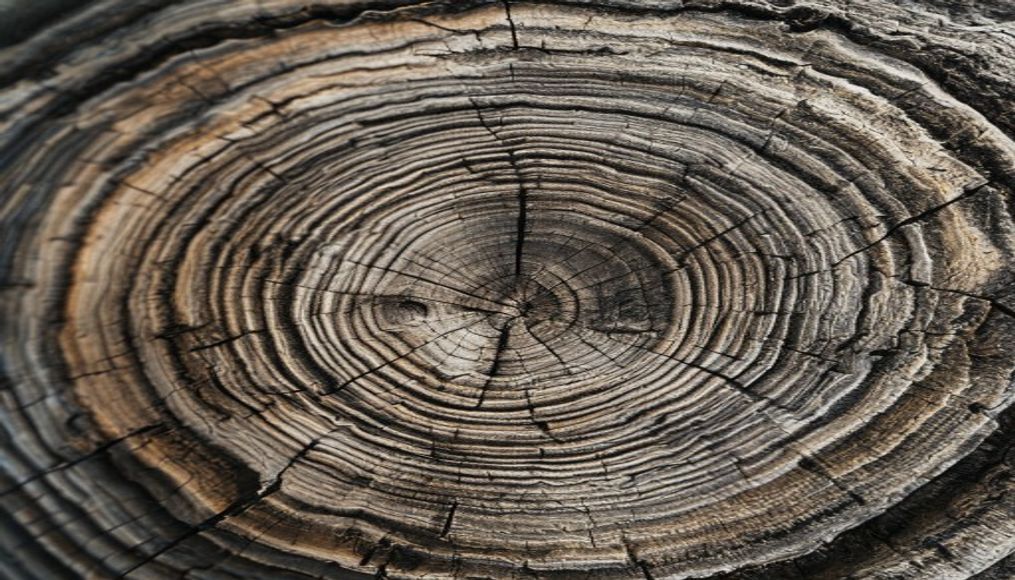
Tree rings cross section
1344×768 · AVIF · CC BY 4.0
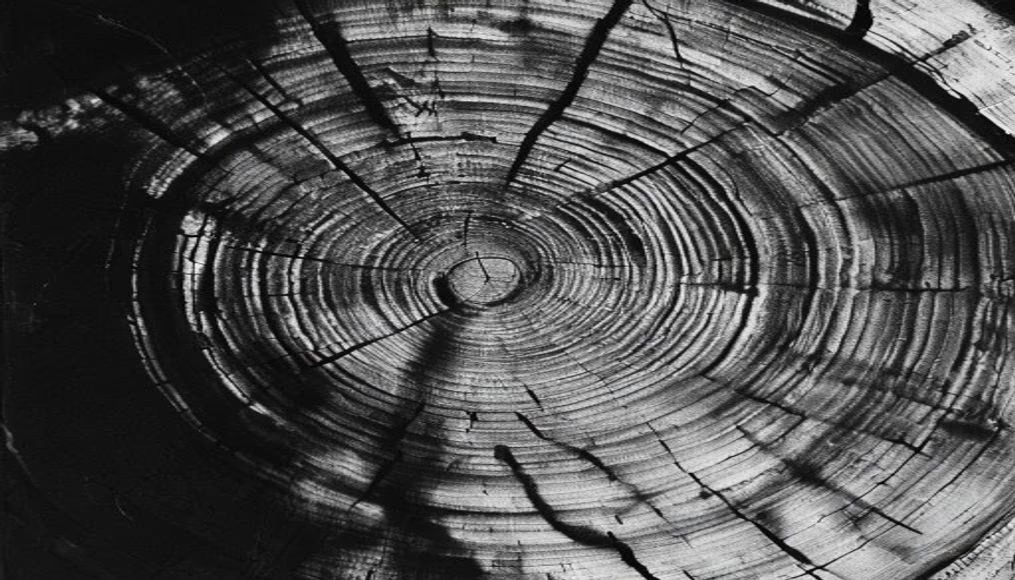
Tree growth rings, also known as annual rings, reveal climatic and historical information accumulated over decades or centuries.
About this subject
Tree growth rings are formed by the vascular cambium, a meristematic tissue that produces new xylem and phloem cells each growing season. In temperate regions, the alternation between wet spring and dry summer, or harsh winter, creates differences in cell size, producing a light ring (earlywood) and a dark ring (latewood) each year. In tropical regions without distinct seasons, rings may be less defined or absent.
Dendrochronology, the science of tree-ring dating, can date wood with annual precision given a continuous sample sequence. Cross-dating, which compares ring patterns among trees and sites, builds chronologies spanning thousands of years, such as those from bristlecone pines in California (up to 4,800 years). These chronologies are used to calibrate radiocarbon dates in archaeology and paleoclimatology.
Beyond dating, ring width and density record past climate conditions: wide rings indicate favorable years (rainfall, mild temperatures), while narrow rings signal drought, cold, or other stresses. Studies of European oak rings have revealed events like the Little Ice Age (16th, 19th centuries) and prolonged droughts in the Mediterranean region.
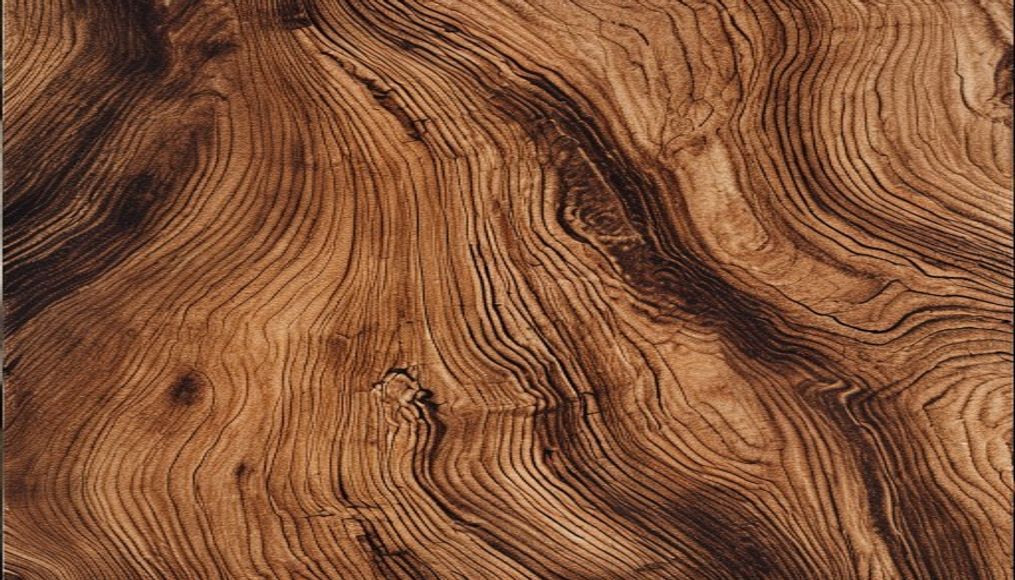
Culturally, tree rings symbolize longevity and resilience, appearing in mythologies and literature as silent witnesses to time. Wood with well-defined rings is valued in woodworking for musical instruments, furniture, and construction, as it indicates uniform growth and desirable acoustic properties. Preserving ancient trees like giant sequoias is crucial to maintaining living archives of our environmental history.
Frequently Asked Questions
How are tree growth rings formed?
Rings are formed by the vascular cambium, which produces xylem cells of different sizes depending on the season. In spring, larger cells (light wood); in summer/autumn, smaller, darker cells (latewood).
Can you determine the exact age of a tree by its rings?
Yes, by counting rings from the pith to the bark. For living trees, an increment borer extracts a core sample without harming the tree. Cross-dating with reference chronologies improves accuracy.
Can tree rings indicate past climate changes?
Yes. Wide rings indicate favorable conditions (more rain, mild temperatures), while narrow rings indicate stress (drought, cold). Density variations also record events like volcanic eruptions that reduce sunlight.
Direct URL
https://pub-c7d6a6ea828543ac903a74a341ccb2e1.r2.dev/imagens/tree-rings-cross-section-magazine-editorial-p1.avifHow to credit
Include a visible link back to UtilizAí. Copy one of the snippets below:
<a href="https://xn--utiliza-eza.com/en/midia/imagens/tree-rings-cross-section-magazine-editorial-p1">Tree rings cross section</a> by <a href="https://xn--utiliza-eza.com">UtilizAí</a>, licensed under <a href="https://creativecommons.org/licenses/by/4.0/">CC BY 4.0</a>.
[Tree rings cross section](https://xn--utiliza-eza.com/en/midia/imagens/tree-rings-cross-section-magazine-editorial-p1) by [UtilizAí](https://xn--utiliza-eza.com), CC BY 4.0
License: CC-BY-4.0