Tidal energy turbine
1344×768 · AVIF · CC BY 4.0
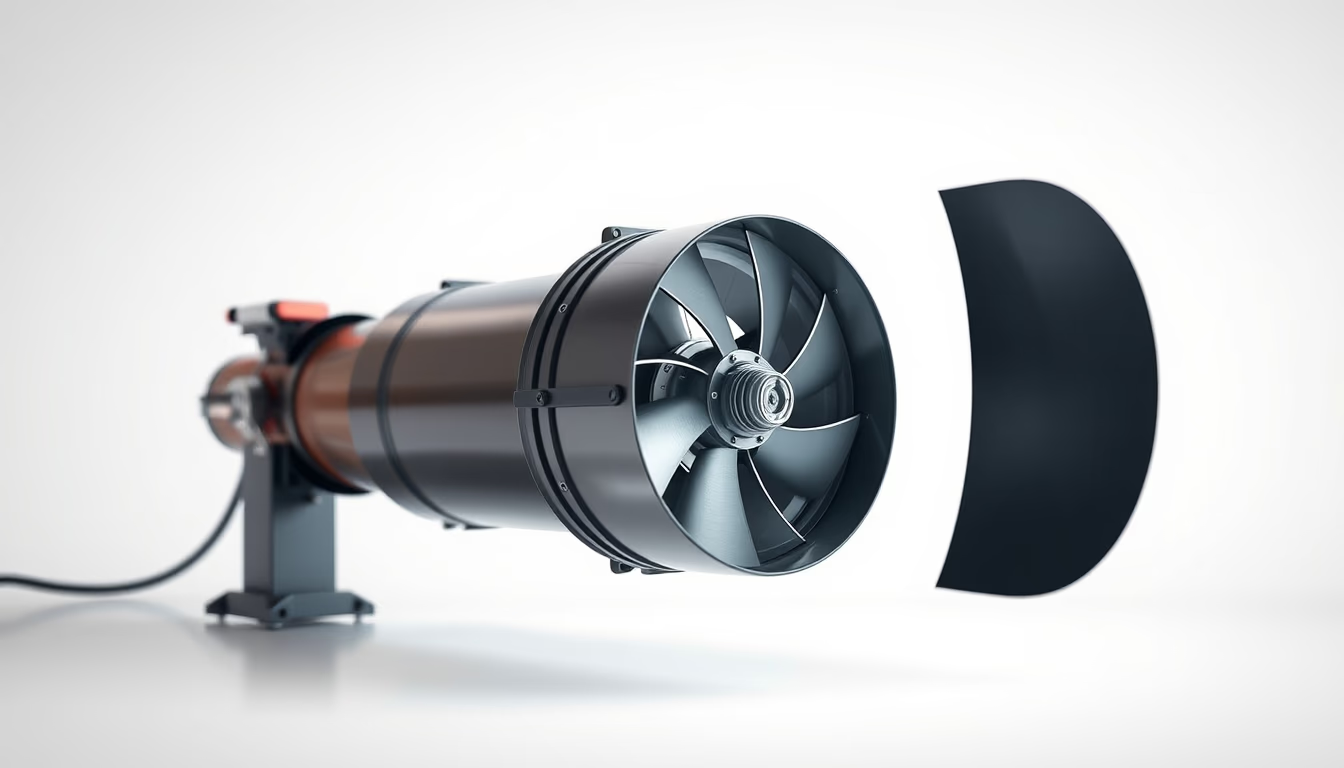
Tidal energy turbines convert the movement of ocean currents into renewable electricity, with growing application in coastal regions worldwide.
About this subject
Tidal energy turbines are devices that capture the kinetic energy of ocean currents, generated by the rising and falling tides. They work similarly to underwater wind turbines, with blades rotating as water flows past. Two main types exist: horizontal axis turbines, more common, and vertical axis turbines, which operate with flow from any direction. Notable commercial projects include the MeyGen array in Scotland, with over 6 MW installed capacity, and tests in the Pentland Firth, where currents can reach speeds of 5 m/s.
Installation requires high flow velocity sites, typically narrow channels between islands or river mouths with large tidal ranges. Leading countries include Canada, the United Kingdom, South Korea, and France. The global tidal energy resource is estimated at around 1 TW, but only a fraction is technically feasible. Costs remain high, around $0.15 to $0.30 per kWh, but are expected to decrease as technology matures.
A key environmental concern is the impact on marine life, especially fish and mammals. Studies indicate collision risk with blades is low if turbines are designed with slow rotation and shutdown mechanisms. Underwater noise and altered water flow can affect local ecosystems, but life cycle assessments show tidal energy has low carbon emissions and a small footprint compared to other sources.
Recent innovations include floating turbines that eliminate fixed foundations and mooring systems with low-voltage cables for power transmission. The generation is predictable, unlike solar and wind, because tides follow astronomical cycles. With advances in materials and engineering, tidal turbines could become a critical part of the global renewable mix, especially for islands and coastal regions dependent on fossil fuels.
Frequently Asked Questions
How does a tidal energy turbine work?
It works like an underwater wind turbine. Tidal currents spin the blades, which drive a generator to produce electricity. Power is transmitted via submerged cables to the shore.
What are the main environmental impacts of tidal turbines?
Main impacts include collision risk with fish and marine mammals, underwater noise, and alteration of natural flows. However, studies show effects are low if turbines are well designed and sited.
Where are commercial tidal energy projects?
Commercial projects operate in the UK (MeyGen in Scotland), Canada (Fundy Ocean Research Center), South Korea (Sihwa Lake), and France (La Rance tidal barrage plant, though it uses a dam).
Direct URL
https://pub-c7d6a6ea828543ac903a74a341ccb2e1.r2.dev/imagens/tidal-energy-turbine-commercial-product-photography-p3.avifHow to credit
Include a visible link back to UtilizAí. Copy one of the snippets below:
<a href="https://xn--utiliza-eza.com/en/midia/imagens/tidal-energy-turbine-commercial-product-photography-p3">Tidal energy turbine</a> by <a href="https://xn--utiliza-eza.com">UtilizAí</a>, licensed under <a href="https://creativecommons.org/licenses/by/4.0/">CC BY 4.0</a>.
[Tidal energy turbine](https://xn--utiliza-eza.com/en/midia/imagens/tidal-energy-turbine-commercial-product-photography-p3) by [UtilizAí](https://xn--utiliza-eza.com), CC BY 4.0
License: CC-BY-4.0