Speedboat racing wave
1344×768 · AVIF · CC BY 4.0
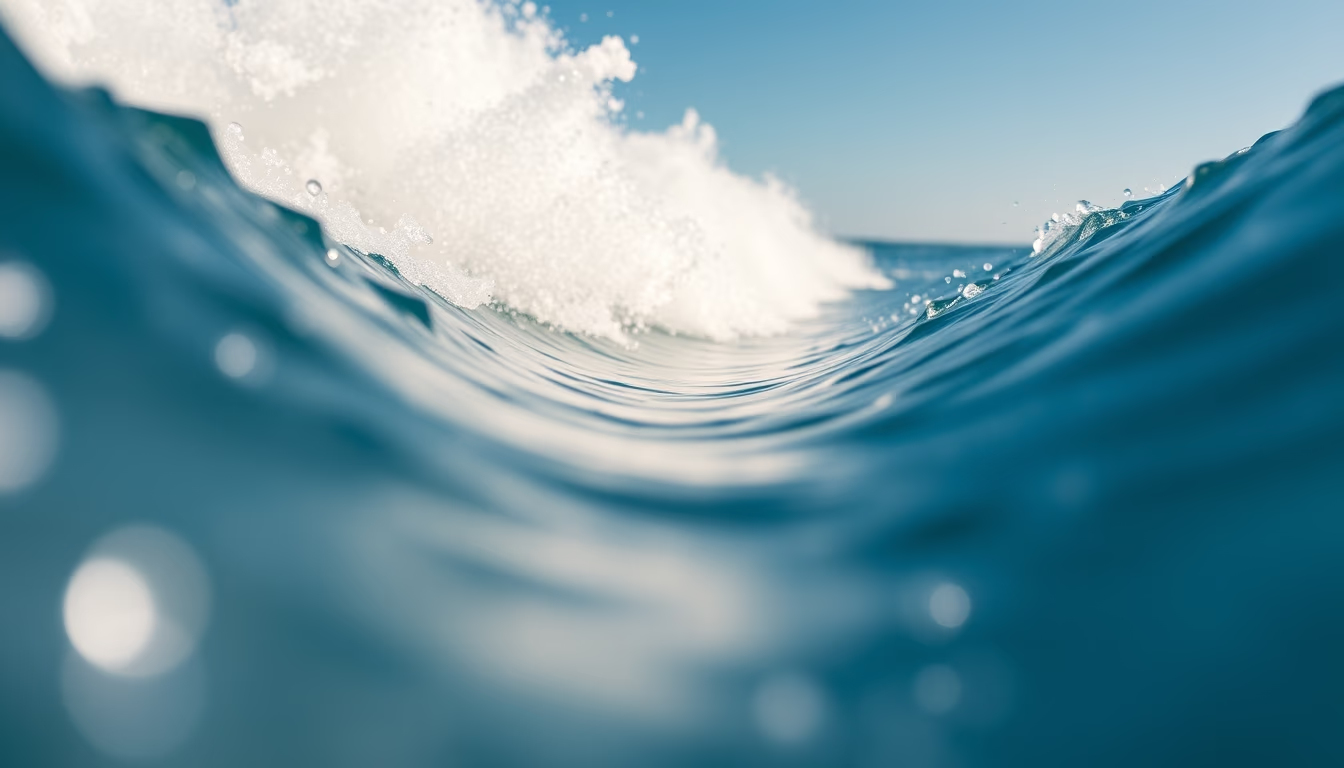
The wave created by a racing speedboat at high speed is an impressive physical phenomenon, combining engine power and hydrodynamics.
About this subject
The wave produced by a racing speedboat, known as a wake, results from the interaction between the hull and water at high speeds. In speedboat competitions such as F1 H2O or Powerboat P1, vessels reach speeds over 200 km/h, generating waves that can exceed one meter in height. The hull design, typically a deep V or stepped hull, aims to minimize drag and control wave formation, but the kinetic energy transferred to the water still creates a turbulent and visually striking trail.
The wave dynamics change with speed and boat tilt. In planing condition, the hull rises almost completely out of the water, reducing contact and wave force. However, during acceleration or sharp turns, the wake intensifies, potentially posing risks to other boats or the shore. For this reason, speedboat races are usually held in open waters or with buffer zones. Macro close-ups of these waves reveal turbulence details such as air bubbles and droplets, which are studied by naval engineers to optimize designs.
Interestingly, the world water speed record was set in 1978 by Ken Warby with Spirit of Australia, reaching 511 km/h. At that speed, the generated wave is so violent it can damage the boat itself. Today, electric racing boats like those in the E1 Series are beginning to compete, producing smaller and quieter waves, though still significant. The study of these waves also helps prevent coastal erosion and plan competitions.
Frequently Asked Questions
Why are speedboat waves so large?
They are large due to high speed and water displacement by the hull. The kinetic energy transferred to the water creates a turbulent wake that can exceed one meter in height during races.
How do designers reduce wake in racing boats?
They use deep V or stepped hulls that allow planing, lifting the boat onto the water and reducing friction and wave formation. They also adjust the center of gravity and engine trim.
What is the environmental impact of speedboat waves?
They can cause coastal erosion and disturb aquatic ecosystems. Therefore, competitions are regulated to minimize damage, and new technologies like electric boats aim to reduce impact.
Direct URL
https://pub-c7d6a6ea828543ac903a74a341ccb2e1.r2.dev/imagens/speedboat-racing-wave-macro-closeup-p2.avifHow to credit
Include a visible link back to UtilizAí. Copy one of the snippets below:
<a href="https://xn--utiliza-eza.com/en/midia/imagens/speedboat-racing-wave-macro-closeup-p2">Speedboat racing wave</a> by <a href="https://xn--utiliza-eza.com">UtilizAí</a>, licensed under <a href="https://creativecommons.org/licenses/by/4.0/">CC BY 4.0</a>.
[Speedboat racing wave](https://xn--utiliza-eza.com/en/midia/imagens/speedboat-racing-wave-macro-closeup-p2) by [UtilizAí](https://xn--utiliza-eza.com), CC BY 4.0
License: CC-BY-4.0