Spectrophotometer cuvettes
1344×768 · AVIF · CC BY 4.0

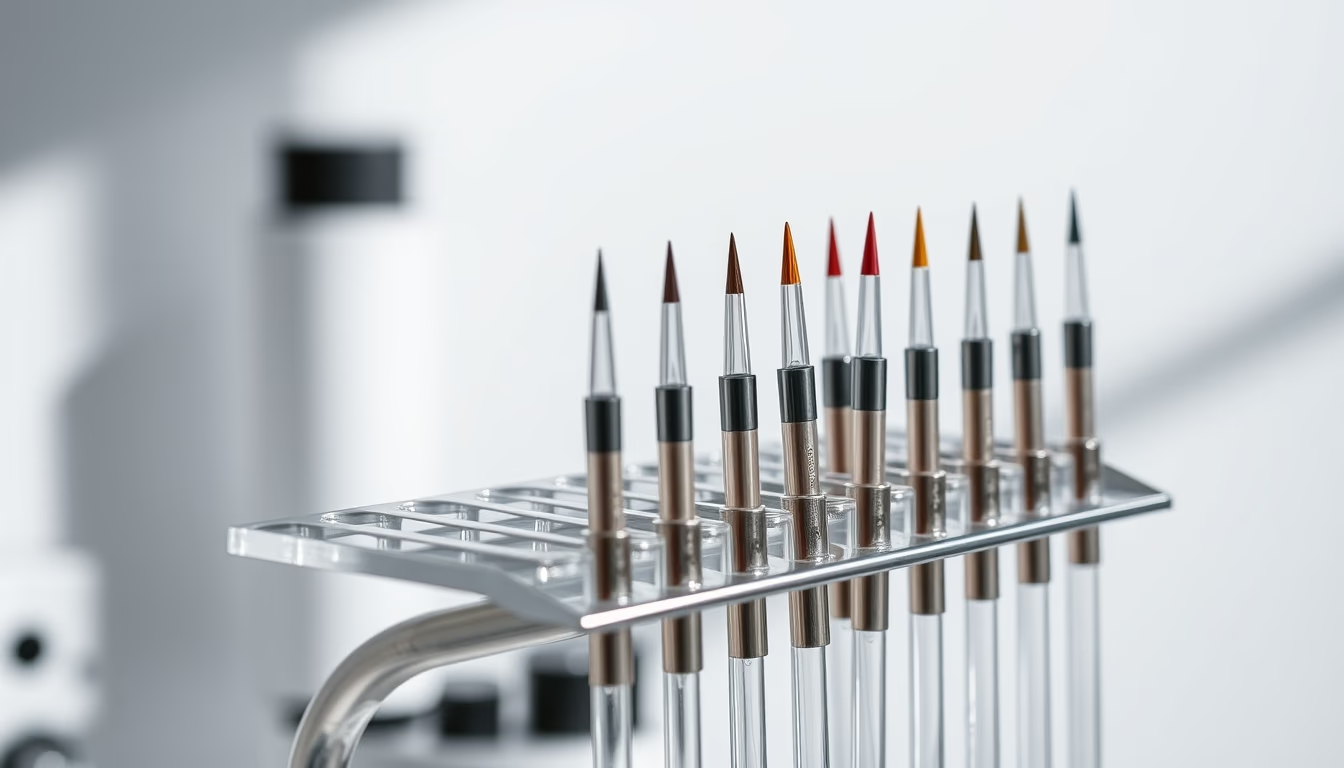
Spectrophotometer cuvettes are precise containers that hold liquid samples for absorbance and transmittance analyses in laboratories.
About this subject
Cuvettes are essential components in spectrophotometry, a technique that measures the intensity of light transmitted through a sample as a function of wavelength. They are made from materials such as glass, quartz, or plastic, each with specific transmittance across different spectral ranges. Quartz cuvettes, for instance, are crucial for ultraviolet (UV) measurements because they do not absorb in that region, while glass cuvettes work well for visible light.
The optical path length, typically 1 cm, is standardized to ensure reproducibility between instruments. The most common cuvettes are rectangular, with polished faces to minimize light scattering. There are also disposable versions made of polystyrene or PMMA, used for fast, high-throughput analyses like DNA or protein assays.
Proper cleaning is critical: residues or scratches on the optical faces alter results. Protocols include washing with solvents, mild detergents, or acid solutions, followed by rinsing with deionized water. Handling should be done by the frosted edges to avoid contaminating the smooth surfaces.
In Brazil, clinical analysis labs, universities, and pharmaceutical industries routinely use cuvettes. Material choice depends on the wavelength and chemical compatibility with the sample. Quartz cuvettes are more expensive but indispensable for UV, while plastic ones are economical for visible-range assays.
Frequently Asked Questions
What is the difference between quartz and glass cuvettes?
Quartz cuvettes transmit ultraviolet (UV) light below 350 nm, whereas glass cuvettes absorb UV and are only suitable for visible light (above 350 nm). Quartz is used for DNA, protein, and aromatic compound analyses.
How to properly clean spectrophotometer cuvettes?
Wash with an organic solvent (e.g., methanol) to remove organic residues, then rinse with deionized water. Avoid abrasive detergents. Dry with compressed air or let air dry, always handling by the frosted edges.
Why is the standard optical path length 1 cm?
The 1 cm path length is an international standard (Beer-Lambert law) that enables result comparison across instruments and simplifies concentration calculations using tabulated molar extinction coefficients.
Direct URL
https://pub-c7d6a6ea828543ac903a74a341ccb2e1.r2.dev/imagens/spectrophotometer-cuvettes-tilt-shift-miniature-fresh6.avifHow to credit
Include a visible link back to UtilizAí. Copy one of the snippets below:
<a href="https://xn--utiliza-eza.com/en/midia/imagens/spectrophotometer-cuvettes-tilt-shift-miniature-fresh6">Spectrophotometer cuvettes</a> by <a href="https://xn--utiliza-eza.com">UtilizAí</a>, licensed under <a href="https://creativecommons.org/licenses/by/4.0/">CC BY 4.0</a>.
[Spectrophotometer cuvettes](https://xn--utiliza-eza.com/en/midia/imagens/spectrophotometer-cuvettes-tilt-shift-miniature-fresh6) by [UtilizAí](https://xn--utiliza-eza.com), CC BY 4.0
License: CC-BY-4.0