Spectrophotometer cuvettes
1344×768 · AVIF · CC BY 4.0
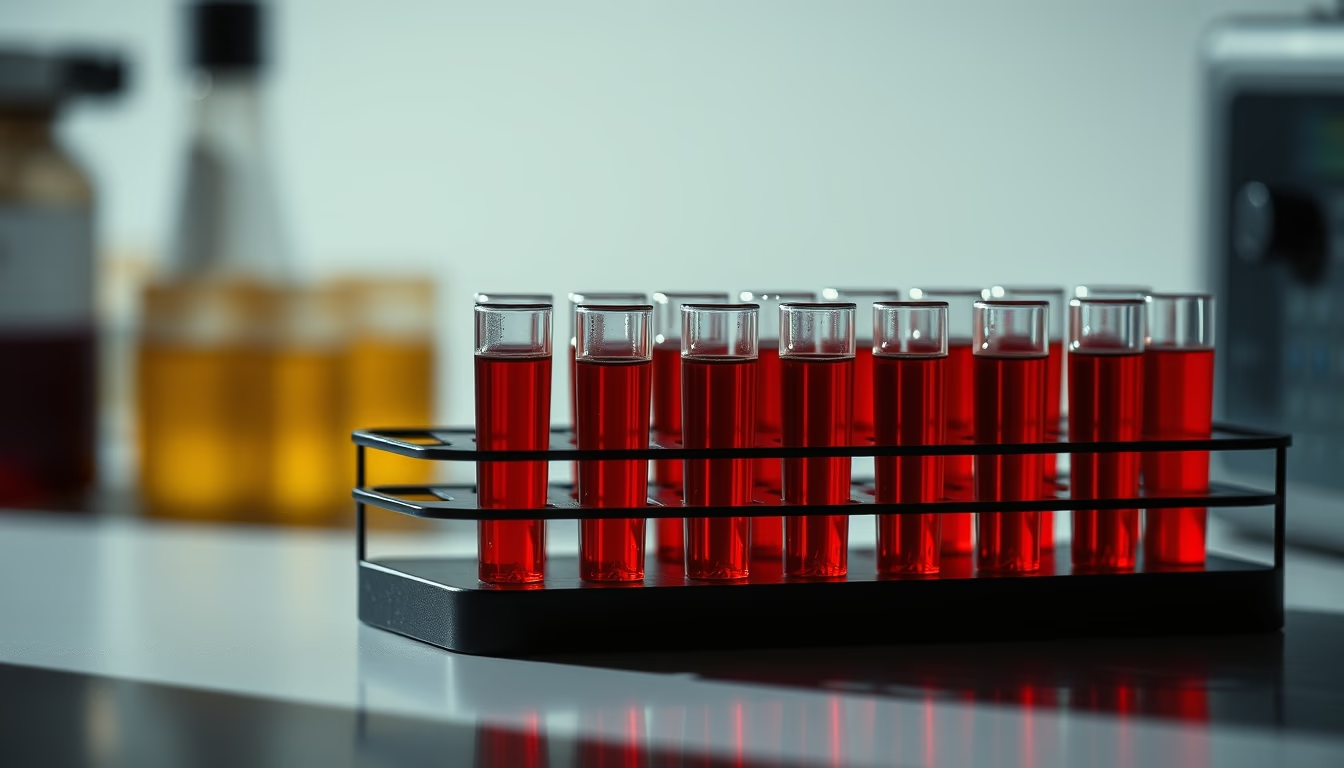
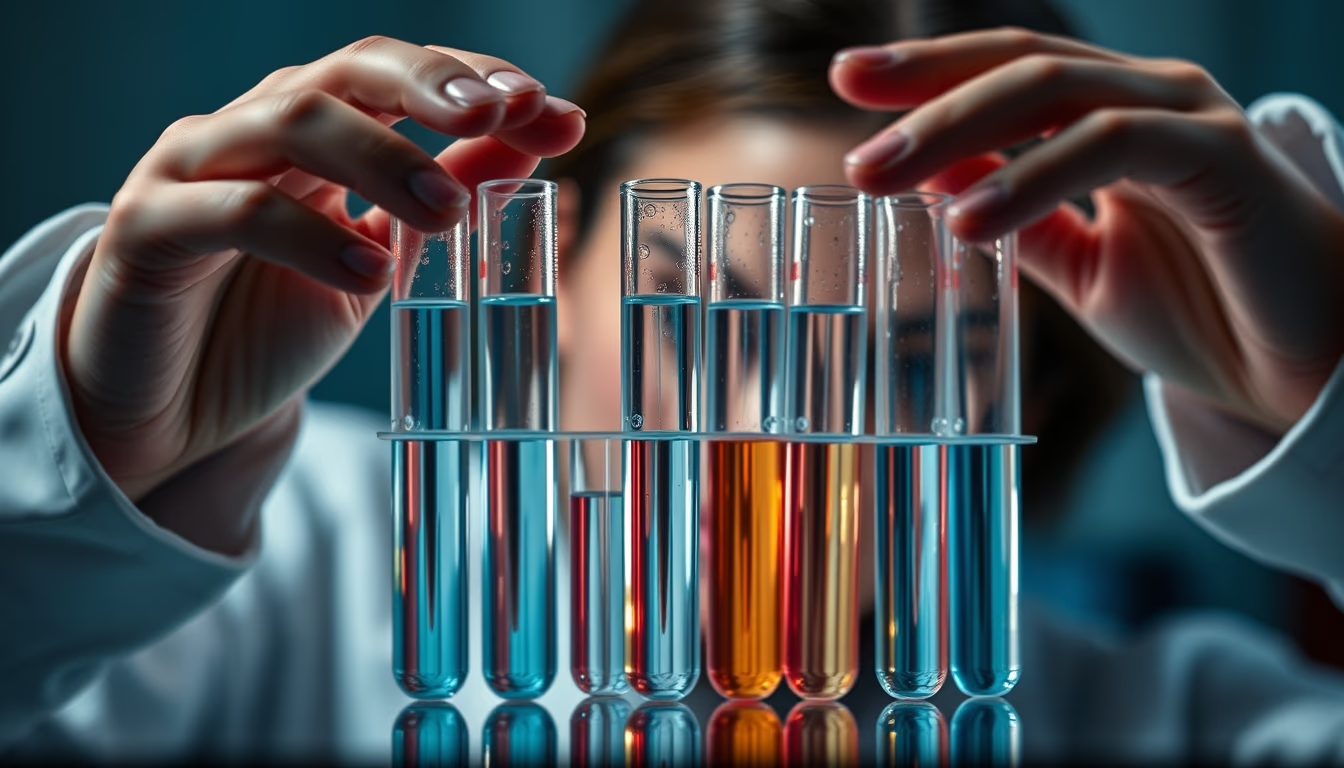
Spectrophotometer cuvettes are high-precision containers used to hold liquid samples in spectroscopic analysis, essential in chemistry and biology laboratories.
About this subject
Spectrophotometer cuvettes, also called sample cells, are critical components in spectrophotometry equipment. They allow light to pass through a liquid sample to measure absorbance or transmittance at specific wavelengths. Made primarily from optical glass, quartz, or special plastics, each material has distinct light transmission ranges: glass works for visible light, while quartz is necessary for ultraviolet (UV) below 350 nm. Disposable plastic cuvettes are common for quick analyses, but quartz ones are reusable and more expensive.
Cuvette design is standardized to ensure reproducibility. Most have a 1 cm optical path length, a width that optimizes signal-to-noise ratio. The optical faces where light enters and exits must be perfectly smooth and parallel to avoid distortions. Therefore, handling cuvettes requires care: only touch the opaque sides or use gloves to avoid fingerprints that interfere with readings.
In lab practice, cuvette choice depends on the analysis type. For proteins and DNA, quartz is used due to UV absorption by these biomolecules. Colorimetric assays in the visible range can use glass. There are also micro cuvettes (for 50, 500 µL volumes) and flow-through cuvettes for automated systems. Regular calibration with reference cuvettes (containing only solvent) is essential for blank correction.
Interesting fact: the term "cuvette" comes from French, meaning "little tub". While the square shape is most common, cylindrical and short-path models exist for special applications like fluorescence. International standard ISO 7059 governs dimensions and tolerances, ensuring compatibility across manufacturers.
Frequently Asked Questions
What is the difference between glass, quartz, and plastic cuvettes?
Glass cuvettes transmit visible light (380-780 nm), are inexpensive, and suitable for colorimetric assays. Quartz cuvettes transmit UV (down to 190 nm) and visible light, essential for protein and DNA analysis. Plastic cuvettes are disposable and convenient, but have a narrower spectral range and scratch easily.
How to properly clean spectrophotometer cuvettes?
For quartz or glass cuvettes, wash with distilled water and mild detergent, rinse thoroughly, and air dry or use a soft cloth. Avoid harsh solvents. For protein residues, use diluted nitric acid. Plastic cuvettes are disposable and should not be reused.
Why is the 1 cm optical path length the most common?
The 1 cm path is a balance between sensitivity and sample volume. Shorter paths (e.g., 0.1 cm) are used for concentrated samples, while longer paths (up to 10 cm) increase absorbance for dilute samples, following the Beer-Lambert law.
Direct URL
https://pub-c7d6a6ea828543ac903a74a341ccb2e1.r2.dev/imagens/spectrophotometer-cuvettes-rembrandt-lighting-dramatic-shadows-fresh7.avifHow to credit
Include a visible link back to UtilizAí. Copy one of the snippets below:
<a href="https://xn--utiliza-eza.com/en/midia/imagens/spectrophotometer-cuvettes-rembrandt-lighting-dramatic-shadows-fresh7">Spectrophotometer cuvettes</a> by <a href="https://xn--utiliza-eza.com">UtilizAí</a>, licensed under <a href="https://creativecommons.org/licenses/by/4.0/">CC BY 4.0</a>.
[Spectrophotometer cuvettes](https://xn--utiliza-eza.com/en/midia/imagens/spectrophotometer-cuvettes-rembrandt-lighting-dramatic-shadows-fresh7) by [UtilizAí](https://xn--utiliza-eza.com), CC BY 4.0
License: CC-BY-4.0