Spectrophotometer cuvettes
1344×768 · AVIF · CC BY 4.0
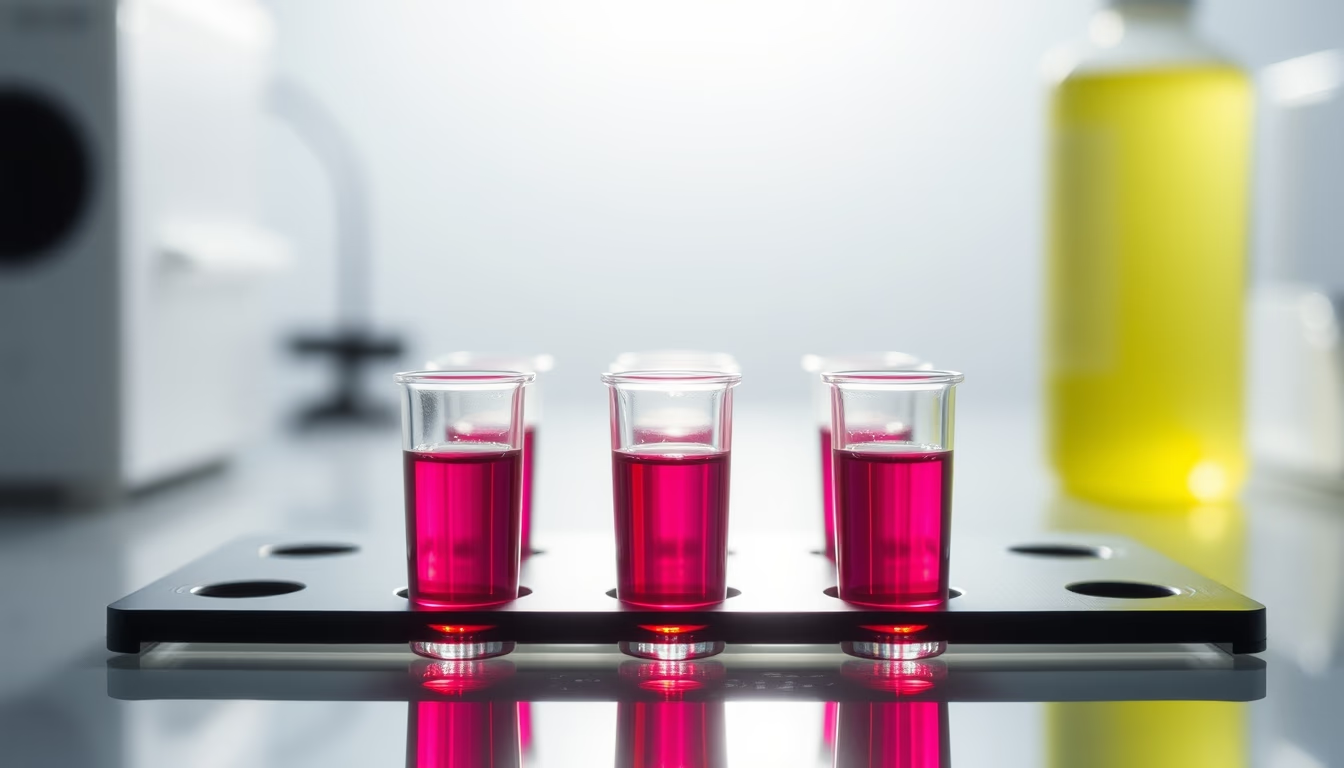
Spectrophotometer cuvettes: transparent containers used in spectroscopic analysis of liquids in laboratories.
About this subject
Spectrophotometer cuvettes are small containers designed to hold liquid samples during absorbance or transmittance measurements. They are typically made of plastic (polystyrene, PMMA) or quartz, each with specific transparency ranges: plastic for visible light (380-780 nm) and quartz for ultraviolet (190-380 nm). The standard optical path length is 1 cm, but variations such as 0.5 cm or 2 cm exist to adjust the sensitivity of the analysis.
The operating principle is based on the Beer-Lambert law, which relates the concentration of a substance to the measured absorbance. Therefore, cuvettes must be optically clear and free of scratches or stains that could scatter the light beam. Proper cleaning is critical: disposable plastic cuvettes prevent cross-contamination, while reusable quartz cuvettes require rinsing with appropriate solvents and careful drying.
In Brazil and globally, clinical, chemical, and pharmaceutical laboratories widely use cuvettes for quantifying proteins, DNA, enzymes, and contaminants. The proliferation of portable spectrophotometers and microcuvettes (with volumes of 50-100 µL) has reduced reagent waste. Interestingly, the term "cuvette" comes from French, meaning "small vat," reflecting its elongated shape and ability to hold liquids without spilling during handling.
Frequently Asked Questions
Why are quartz cuvettes necessary for ultraviolet measurements?
Quartz is transparent to UV light, unlike common plastic which absorbs in that range. Therefore, quartz cuvettes are indispensable for analyses requiring wavelengths between 190 and 380 nm, such as protein and nucleic acid quantification.
How to properly clean a reusable cuvette?
Rinse immediately after use with distilled water or appropriate solvent (e.g., ethanol) to remove residues. Avoid abrasive brushes; use mild detergent and rinse thoroughly. Air dry or use soft paper without touching the optical faces.
What is the difference between disposable and reusable cuvettes?
Disposable cuvettes are made of cheap plastic, used once to avoid cross-contamination, ideal for high-volume routines. Reusable ones are made of quartz or special glass, more expensive and durable, suitable for precise measurements and work with aggressive solvents.
Direct URL
https://pub-c7d6a6ea828543ac903a74a341ccb2e1.r2.dev/imagens/spectrophotometer-cuvettes-lo-fi-disposable-camera-fresh1.avifHow to credit
Include a visible link back to UtilizAí. Copy one of the snippets below:
<a href="https://xn--utiliza-eza.com/en/midia/imagens/spectrophotometer-cuvettes-lo-fi-disposable-camera-fresh1">Spectrophotometer cuvettes</a> by <a href="https://xn--utiliza-eza.com">UtilizAí</a>, licensed under <a href="https://creativecommons.org/licenses/by/4.0/">CC BY 4.0</a>.
[Spectrophotometer cuvettes](https://xn--utiliza-eza.com/en/midia/imagens/spectrophotometer-cuvettes-lo-fi-disposable-camera-fresh1) by [UtilizAí](https://xn--utiliza-eza.com), CC BY 4.0
License: CC-BY-4.0