Spectrophotometer cuvettes
1344×768 · AVIF · CC BY 4.0
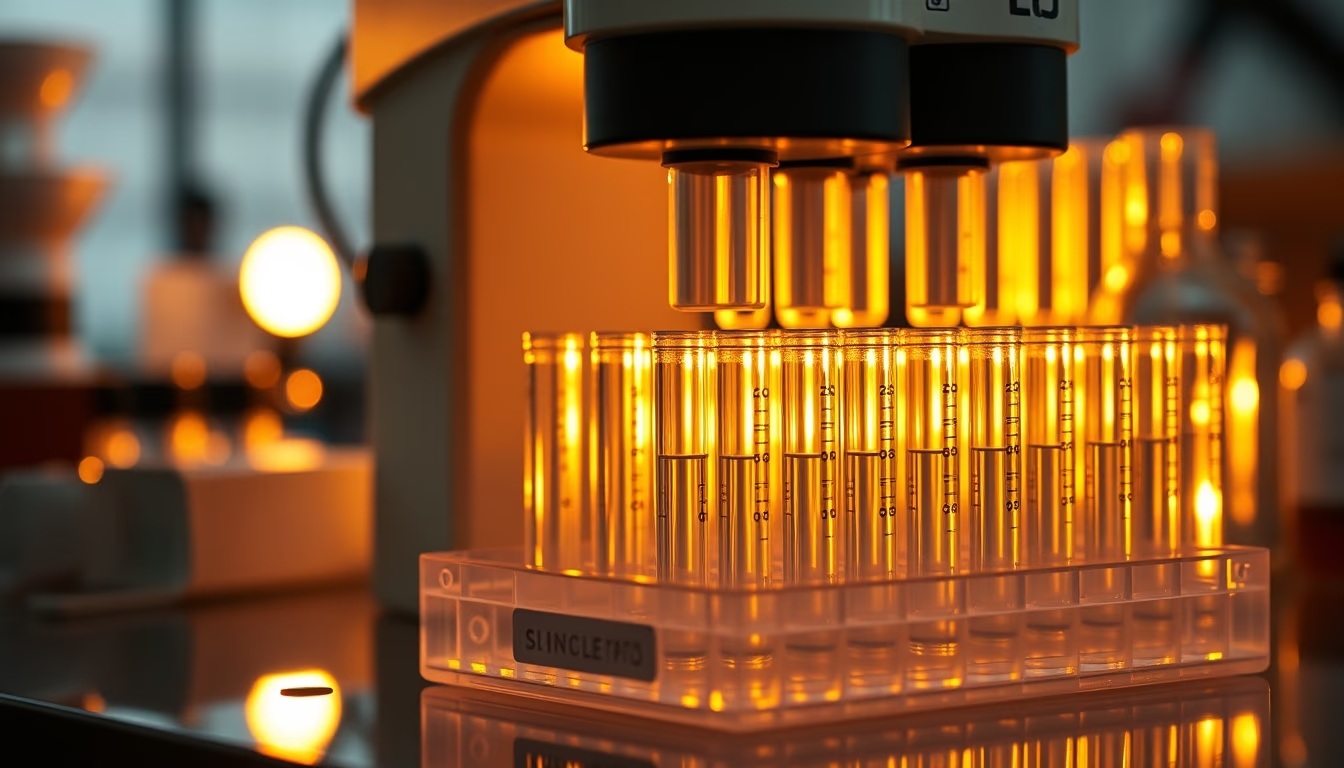
Spectrophotometer cuvettes are precise sample holders for absorbance analysis, essential in chemistry and biology laboratories.
About this subject
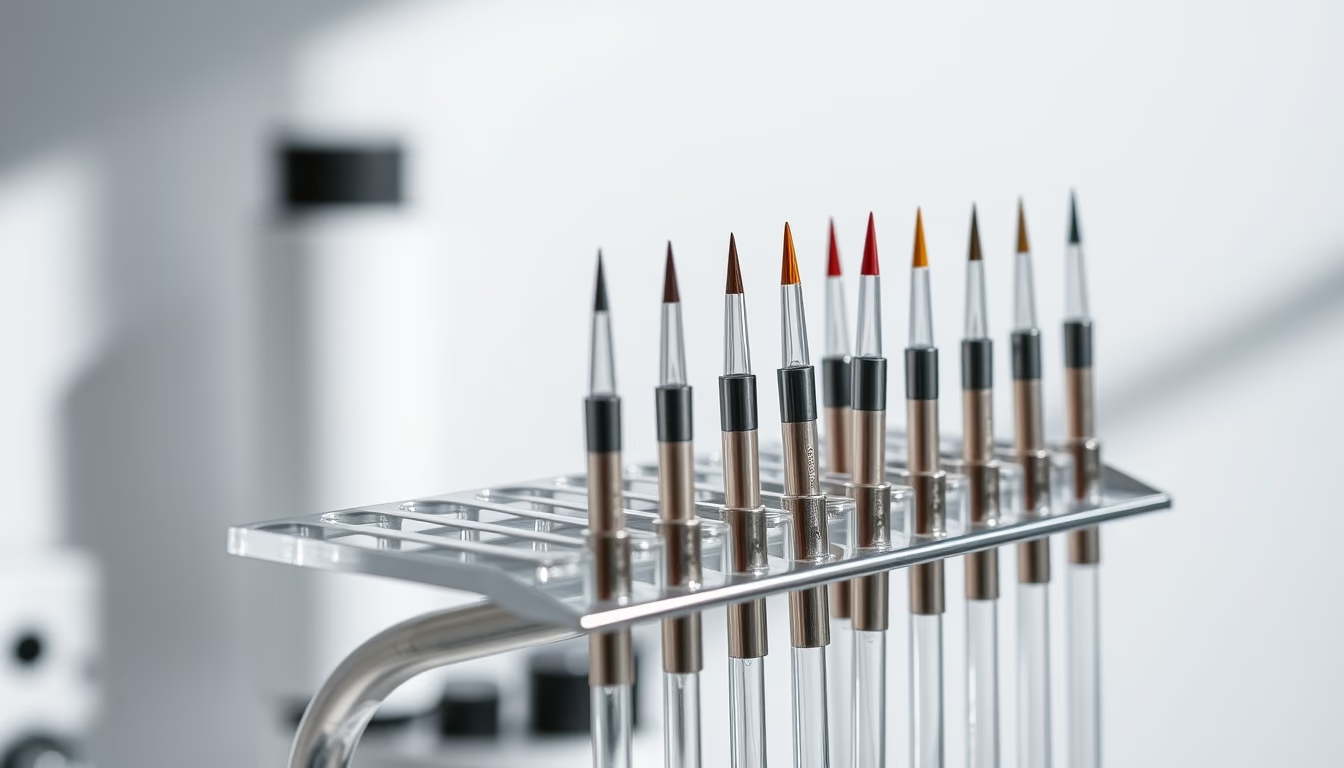
Spectrophotometer cuvettes are critical components for measuring the transmittance or absorbance of light by a liquid sample. Typically made of glass, quartz, or plastic, each material has specific transmittance ranges: quartz allows UV light (below 300 nm), glass is suitable for visible light (350-800 nm), and disposable plastic (polystyrene or PMMA) covers visible and some near-UV ranges. The standard geometry, with a 1 cm (10 mm) optical path length, follows the Beer-Lambert law, where absorbance is proportional to concentration. Cuvettes have two smooth (transparent) faces for beam passage and two frosted faces for handling. Choosing the wrong material can render measurements invalid, especially in the ultraviolet region. Cleaning must be done with appropriate solvents without scratching the optical surfaces; quartz cuvettes require extra care, such as avoiding hydrofluoric acid. Routine blanking with a reference solution ensures result accuracy. In high-throughput laboratories, disposable cuvettes eliminate cross-contamination risks. The micro-cuvette variant (50-100 µL volume) is used for scarce samples, like purified DNA or proteins. Correct alignment in the sample compartment, with transparent faces perpendicular to the beam, is crucial to avoid refraction errors.
Frequently Asked Questions
What is the difference between quartz and plastic cuvettes?
Quartz cuvettes transmit ultraviolet light (down to about 200 nm), while plastic cuvettes (polystyrene) are only suitable for wavelengths above 340 nm. Quartz is reusable and more expensive; plastic is disposable and cheap.
How to properly clean spectrophotometer cuvettes?
Rinse with deionized water, then with ethanol or acetone to remove residues. Use mild detergent for stubborn dirt, but avoid abrasives. Quartz cuvettes must never be cleaned with hydrofluoric acid. Air dry or use filtered compressed air.
Why do some cuvettes have two frosted sides?
The frosted sides are for handling (avoid fingerprints on the optical path). The smooth transparent sides should be aligned perpendicular to the light beam for accurate readings.
Direct URL
https://pub-c7d6a6ea828543ac903a74a341ccb2e1.r2.dev/imagens/spectrophotometer-cuvettes-cinematic-wide-shot-fresh9.avifHow to credit
Include a visible link back to UtilizAí. Copy one of the snippets below:
<a href="https://xn--utiliza-eza.com/en/midia/imagens/spectrophotometer-cuvettes-cinematic-wide-shot-fresh9">Spectrophotometer cuvettes</a> by <a href="https://xn--utiliza-eza.com">UtilizAí</a>, licensed under <a href="https://creativecommons.org/licenses/by/4.0/">CC BY 4.0</a>.
[Spectrophotometer cuvettes](https://xn--utiliza-eza.com/en/midia/imagens/spectrophotometer-cuvettes-cinematic-wide-shot-fresh9) by [UtilizAí](https://xn--utiliza-eza.com), CC BY 4.0
License: CC-BY-4.0