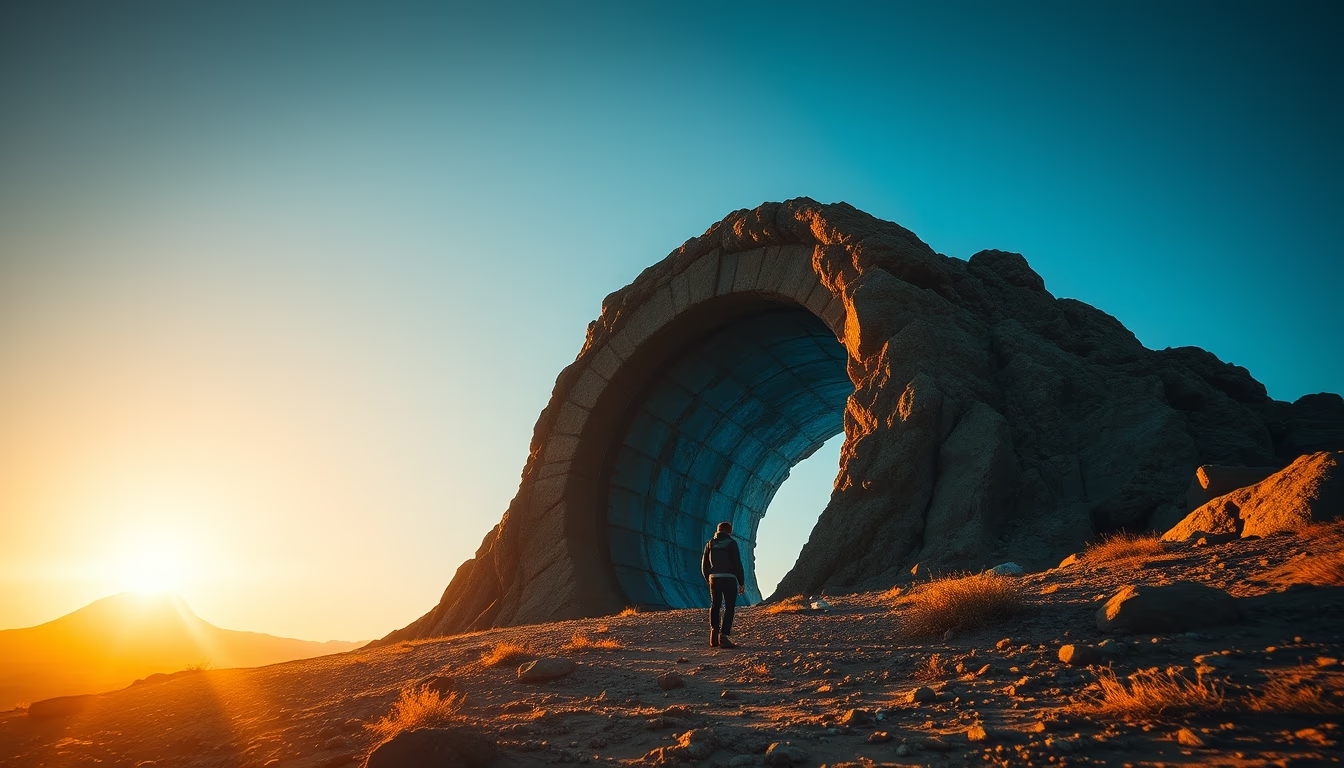
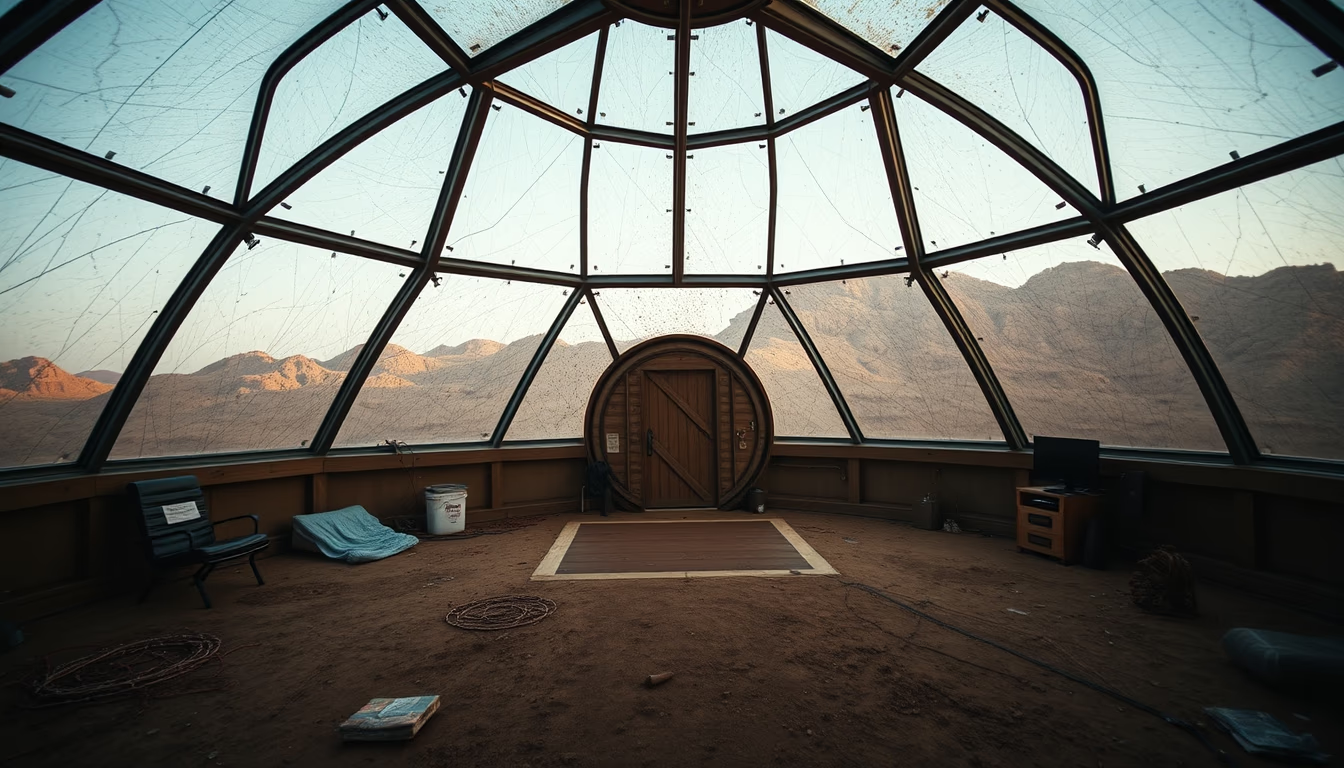
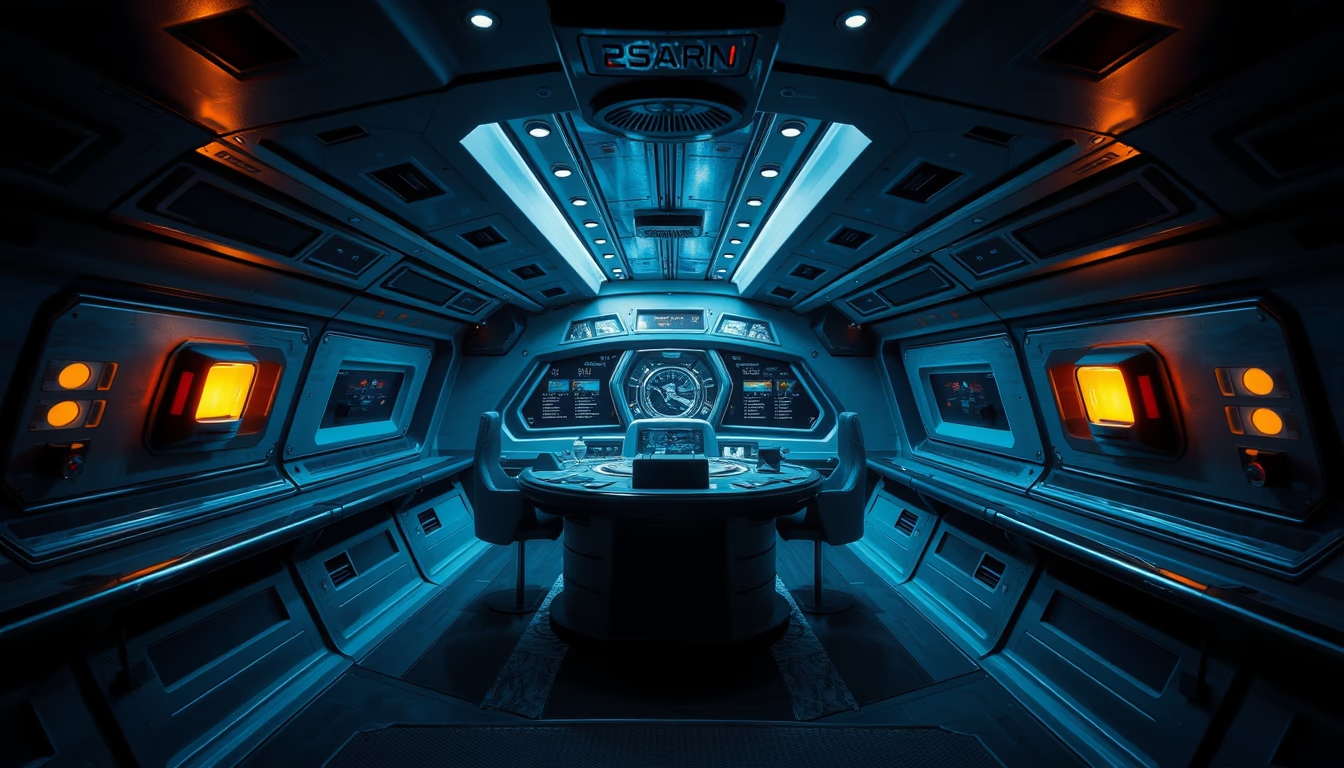
Space station futuristic
1344×768 · AVIF · CC BY 4.0

Futuristic space stations combine advanced engineering and modular design for human habitation in orbit, inspiring projects like the International Space Station and concepts for Mars.
About this subject
The concept of futuristic space stations dates back to early visionaries like Konstantin Tsiolkovsky and Wernher von Braun, who proposed wheel-shaped habitats for artificial gravity. Today, the International Space Station (ISS) serves as a microgravity laboratory, with its first module launched in 1998. Future projects like NASA's lunar Gateway and China's Tiangong station plan inflatable modules and closed-loop life support systems. Private initiatives are advancing as well: Axiom Space plans commercial modules attached to the ISS, while SpaceX proposes the Starship as an autonomous base for Mars missions. These structures must protect crews from cosmic radiation, provide food via hydroponics, and recycle water with near-total efficiency. Modular design allows continuous expansion: new modules can be added as needed, connected by pressurized nodes. The internal atmosphere is controlled by oxygen and carbon dioxide systems, while giant solar arrays generate power. One major challenge is artificial gravity: rotating parts of the station to prevent bone and muscle loss during long missions. The visionary space station from 2001: A Space Odyssey popularized the spinning ring, but real engineering still seeks feasible solutions. Emerging technologies include 3D printing of spare parts, plant growth chambers, and urine-to-drinking-water recycling. Interstellar films and sci-fi ships influence pop culture, but space agencies work with real budgets and decades-long timelines. The ISS orbits Earth at about 400 km altitude, traveling at 28,000 km/h, and has hosted over 200 astronauts from 19 countries. Future stations might be built around the Moon or at Lagrange points, like the James Webb Telescope at L2. Space tourism with luxury modules is also discussed by companies like Blue Origin and Virgin Galactic, but commercial viability depends on lowering launch costs. In summary, the futuristic space station is not just a dream but a concrete goal for the next decade.
Frequently Asked Questions
How would artificial gravity work on a futuristic space station?
Artificial gravity can be created by rotating part of the station, generating centrifugal force that mimics gravity. This helps prevent bone and muscle loss during long missions but requires large, complex structures.
What are the main challenges of building a space station beyond Earth orbit?
Challenges include protection from cosmic radiation, food and water supply, waste recycling, power generation, and life support system maintenance. Transporting materials is also expensive and time-consuming.
Are there real plans for commercial space stations?
Yes, companies like Axiom Space plan commercial modules attached to the ISS, and Bigelow Aerospace has tested inflatable modules. Blue Origin and Virgin Galactic also study space habitats for tourism and research.
Direct URL
https://pub-c7d6a6ea828543ac903a74a341ccb2e1.r2.dev/imagens/space-station-futuristic-lo-fi-disposable-camera-fresh15.avifHow to credit
Include a visible link back to UtilizAí. Copy one of the snippets below:
<a href="https://xn--utiliza-eza.com/en/midia/imagens/space-station-futuristic-lo-fi-disposable-camera-fresh15">Space station futuristic</a> by <a href="https://xn--utiliza-eza.com">UtilizAí</a>, licensed under <a href="https://creativecommons.org/licenses/by/4.0/">CC BY 4.0</a>.
[Space station futuristic](https://xn--utiliza-eza.com/en/midia/imagens/space-station-futuristic-lo-fi-disposable-camera-fresh15) by [UtilizAí](https://xn--utiliza-eza.com), CC BY 4.0
License: CC-BY-4.0